2014 Honda Accord recalls and problems

The 2014 Honda Accord has 4 recalls and 982 owner complaints on file with NHTSA; the most reported problem area is electrical system.

2014 Honda Accord
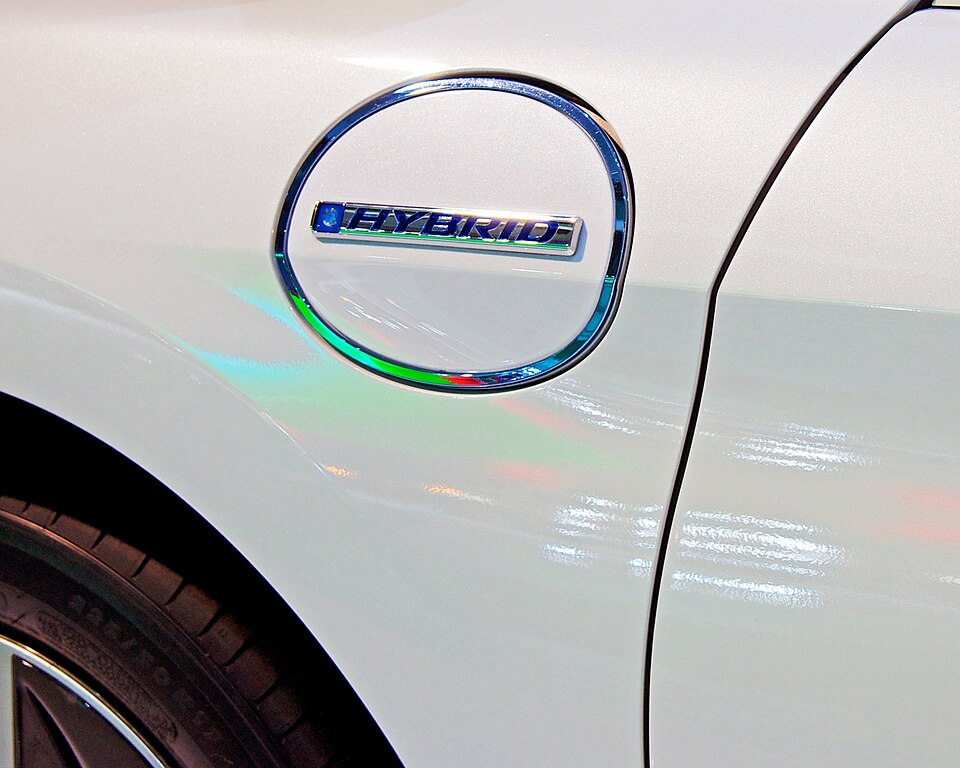
Photo: 2014 Honda Accord by stevelyon, CC BY-SA 2.0, via Wikimedia Commons
How the 2014 compares
Fewest complaintsMost complaints

High complaint count among 27 Accord model years — 8th most.

4recalls
982complaints
52crashes
9fires
52injuries
46,000median miles

Owner complaints filed with NHTSA, not verified and not adjusted for sales. Ranking compares this model's own years only.

Does your car have an open recall?
Recalls apply to specific vehicles. Only a VIN lookup on NHTSA's official site shows whether yours is affected and still unrepaired.
Check your VIN →

4 recalls

Fuel System

Dec 18, 2023 · NHTSA campaign 23V858000 · 2,490,460 vehicles

Problem: Honda (American Honda Motor Co.) is recalling certain 2013-2023 Honda Accord, Civic Coupe, Civic Sedan, Civic Hatchback, Civic Type R, CR-V, HR-V, Ridgeline, Odyssey, Acura ILX, MDX, MDX Hybrid, RDX, RLX, TLX, 2019-2022 Honda Insight, Passport, 2020 Honda CR-V Hybrid, 2018-2019 Honda Clarity PHEV, Fit, and 2015-2020 Honda Accord Hybrid, Pilot, Acura NSX vehicles. The fuel pump inside the fuel tank may fail.

Risk: Fuel pump failure can cause an engine stall while driving, increasing the risk of a crash.

Remedy & notes

Dealers will replace the fuel pump module, free of charge. Owner letters were mailed September 6, 2024. Owners may contact Honda customer service at 1-888-234-2138. Honda's numbers for this recall are KGC and KGD. This recall is an expansion of NHTSA recall numbers 21V-215 and 20V-314.

Owners may also contact the National Highway Traffic Safety Administration Vehicle Safety Hotline at 1-888-327-4236 (TTY 1-800-424-9153), or go to www.nhtsa.gov.

Power Train

Dec 10, 2020 · NHTSA campaign 20V769000 · 235,034 vehicles

Problem: Honda (American Honda Motor Co.) is recalling certain 2013-2015 Accord vehicles equipped with a 4-cylinder engine and a continuously-variable transmission that were originally sold, or ever registered, in Connecticut, Delaware, District of Columbia, Illinois, Indiana, Iowa, Kentucky, Maine, Maryland, Massachusetts, Michigan, Minnesota, Missouri, New Hampshire, New Jersey, New York, Ohio, Pennsylvania, Rhode Island, Vermont, Virginia, West Virginia, and Wisconsin. The drive shafts were assembled with a lubricant that may have degraded the drive shafts' protective coating, making it more susceptible to damage from road salt or other contaminants, and potentially cause it to break.

Risk: A broken drive shaft may cause a sudden loss of drive power. The vehicle could also roll away if the parking brake has not been applied before the vehicle has been exited. Either condition can increase the risk of a crash or injury.

Remedy & notes

Honda will notify owners, and dealers will inspect the drive shafts, replacing both the left and right drive shafts, if necessary, free of charge. The recall began February 4, 2021. Owners may contact Honda customer service at 1-888-234-2138.

Owners may also contact the National Highway Traffic Safety Administration Vehicle Safety Hotline at 1-888-327-4236 (TTY 1-800-424-9153), or go to www.safercar.gov.

Electrical System

Jun 29, 2017 · NHTSA campaign 17V418000 · 1,148,550 vehicles

Problem: Honda (American Honda Motor Co.) is recalling certain 2013-2016 Honda Accord vehicles. The case for the battery sensor, part of the battery management system, may allow water to get in, potentially causing an electrical short.

Risk: An electrical short increases the risk of a fire.

Remedy & notes

Honda will notify owners, and dealers will replace the sensor, free of charge. Dealers will perform an interim remedy of applying adhesive to the case to prevent water intrusion. The recall began November 8, 2017. Owners may contact American Honda Customer Support Center at 1-888-234-2138. Honda's number for this recall is KG0.

Owners may also contact the National Highway Traffic Safety Administration Vehicle Safety Hotline at 1-888-327-4236 (TTY 1-800-424-9153), or go to www.safercar.gov.

Engine

Mar 2, 2015 · NHTSA campaign 15V121000 · 137 vehicles

Problem: American Honda Motor Co. (Honda) is recalling certain model year 2014 Accord L4 vehicles manufactured July 29, 2014, to July 31, 2014, 2015 Accord L4 vehicles manufactured August 14, 2014, to January 30, 2015, and 2015 CR-V vehicles manufactured September 9, 2014, to February 6, 2015. The affected vehicles may have been assembled with improperly torqued connecting rod bolts, which can cause the engine to lose power or leak oil.

Risk: Loss of engine power may result in a vehicle stall, increasing the risk of a crash. If the engine leaks oil in the proximity of hot engine or exhaust components, there is an increased risk of a fire.

Remedy & notes

Honda will notify owners, and dealers will replace the engine short block, free of charge. The recall began on March 27, 2015. Owners may contact Honda customer service at 1-888-234-2138. Honda's number for this recall is JP2 (for Accord models) and JP3 (for CR-V models).

Owners may also contact the National Highway Traffic Safety Administration Vehicle Safety Hotline at 1-888-327-4236 (TTY 1-800-424-9153), or go to www.safercar.gov.

Recall text as published by NHTSA and the manufacturer.

What owners complain about

Owner complaints filed with NHTSA; one complaint can name several areas. Not verified by NHTSA.

Complaints by year filed

2013: 3 complaints20132014: 70 complaints2015: 65 complaints20152016: 53 complaints2017: 88 complaints20172018: 114 complaints2019: 127 complaints20191272020: 81 complaints2021: 109 complaints20212022: 61 complaints2023: 73 complaints20232024: 53 complaints2025: 57 complaints20252026: 28 complaints202628

NHTSA investigations

Loss of Direction Control

EA21001 · opened May 6, 2021 · closed Aug 25, 2023
Summary

On May 6, 2021, the Office of Defects Investigation (ODI) opened Engineering Analysis (EA21-001) to assess a sudden loss of steering control, in Model Year (MY) 2013-2015 Honda Accord vehicles. Consumers alleged while driving the steering wheel would pull to the left or the right independently. Steering pull may pose a risk of loss of directional control. Honda stated that they believed the inadvertent steering input was caused by a loose magnet located within the electronic power steering (EPS) system. Due to poor formulation of the adhesive, this magnet can become loose and move up to 2 degrees around the steering column. When the magnet moves, the torque sensor generates a signal that results in unwanted steering in either direction. Honda stated the steering force required to maintain directional control with a loose magnet is a maximum of 3-pound feet. The maximum force of the unwanted steering input can be overcome by the driver and is similar to driving on grooved pavement.The Vehicle Research Test Center (VRTC) sent over 4,000 questionnaires to 2013-2015 Honda Accord vehicle owners. Of the 637 responses, 58 consumers experienced unwanted steering. Consumers experiencing unwanted steering did not report difficulties maintaining directional control. There were no crashes or injuries reported to VRTC. Testing done by VRTC was not able to reproduce the allegations. Analysis of all relevant data indicates that the subject condition has a relatively low failure rate. The po…

Electrical overstress

EA19001 · opened Apr 19, 2019 · closed Sep 19, 2024 · led to recall 20V024
Summary

The Office of Defects Investigation (ODI) opened this investigation to determine if the failure of airbags to deploy during severe crashes, in certain vehicles, was the result of a safety related defect.  During the investigation a complex failure was studied that can result in non-deployment of subject vehicle air bags and other restraint system devices in severe crash events. The subject vehicles may be equipped with an airbag control unit (ACU) for the supplemental restraint system (SRS) Electronic Control Unit (ECU) manufactured by ZF-TRW.  The ECU receives signals from crash sensors mounted in the vehicle and deploys the vehicle air bags and seat belt pretensioners in accordance with manufacturer design specifications.  The ECU in the subject vehicles contains a model DS84 application-specific integrated circuit (ASIC) which controls the communication of the crash sensor signal, firing commands (i.e., when to deploy the airbag(s) and/or pretensioners), and fault information (e.g., diagnostic trouble codes). In September 2016, FCA announced recall 16V-668 for certain model year (MY) 2010 to 2014 Chrysler, Dodge and Jeep products manufactured with the subject ZF-TRW ACU.  In this recall, FCA discussed an EOS condition that resulted in a failure of the subject DS84 ASIC, which caused air bag non-deployment.  FCA noted that the defect condition had only been observed in vehicles equipped with sensor harnessing routed across the front of the vehicle.  Other FCA vehicles…

2014 vs. other Honda Accord years

Owner complaints by model year; the darker bar is the 2014. Click a bar to switch year.

Questions

Does the 2014 Honda Accord have recalls?

Yes — NHTSA lists 4 recall campaigns covering the 2014 Honda Accord, the latest from Dec 18, 2023 (fuel system). A recall applies to specific vehicles: enter your VIN at nhtsa.gov/recalls to see whether yours is affected and still open.

What are the most common problems with the 2014 Honda Accord?

Owner complaints filed with NHTSA most often mention electrical system (378), engine (184), unknown or other (147). Complaints are consumer reports and are not verified by NHTSA.