2026 Hyundai Tucson recalls and problems

The 2026 Hyundai Tucson has 5 recalls and 67 owner complaints on file with NHTSA; the most reported problem area is forward collision avoidance.

2025 Hyundai Tucson
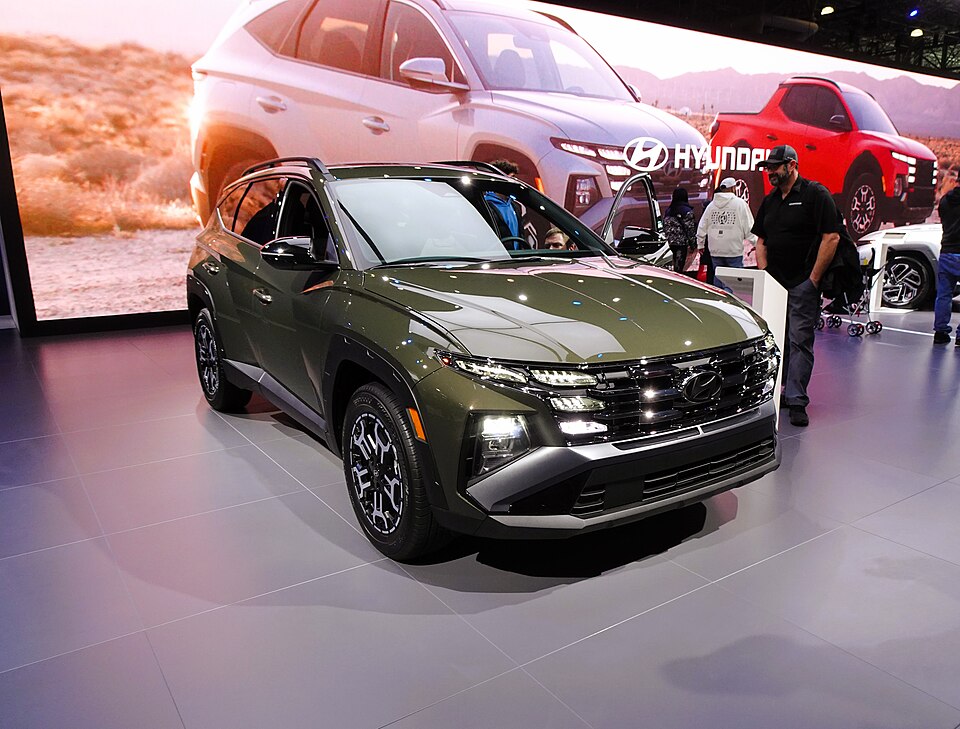
Pictured: a 2025 model; the 2026 may differ in details. Photo: 2025 Hyundai Tucson by Charles, CC BY 2.0, via Wikimedia Commons
How the 2026 compares
Fewest complaintsMost complaints

Low complaint count among 22 Tucson model years — 18th most. Newer model years have had less time on the road, so their counts are still growing.

5recalls
67complaints
15crashes
0fires
8injuries
2,664median miles

Owner complaints filed with NHTSA, not verified and not adjusted for sales. Ranking compares this model's own years only.

Does your car have an open recall?
Recalls apply to specific vehicles. Only a VIN lookup on NHTSA's official site shows whether yours is affected and still unrepaired.
Check your VIN →

5 recalls

Electrical System

Jun 23, 2026 · NHTSA campaign 26V400000 · 96,310 vehicles

Problem: Hyundai Motor America (Hyundai) is recalling certain 2025-2026 Tucson, Tucson Hybrid, Tucson Plug-In Hybrid Electric (PHEV) vehicles. Due to a software error, the instrument panel display may fail. As such, these vehicles fail to comply with the requirements of Federal Motor Vehicle Safety Standard (FMVSS) number 101, "Controls and Displays."

Risk: An instrument panel display that fails to show critical safety information, such as the speedometer or warning lights, increases the risk of a crash.

Remedy

The instrument panel display software will be updated over-the-air (OTA) or by a dealer, free of charge. Owner notification letters are expected to be mailed August 22, 2026. Owners may contact Hyundai's customer service at 855-371-9460. Hyundai's number for this recall is 304. Vehicle Identification Numbers (VINs) involved in this recall became searchable on NHTSA.gov on June 25, 2026.

Forward Collision Avoidance

May 18, 2026 · NHTSA campaign 26V316000 · 423,062 vehicles

Problem: Hyundai Motor America (Hyundai) is recalling certain 2025-2026 Santa Cruz, Tucson, Tucson Hybrid, and Tucson Plug-In Hybrid Electric (PHEV) vehicles. Software in the front cameras may cause the forward collision avoidance system to activate prematurely and unexpectedly apply the brakes.

Risk: Unexpected braking increases the risk of a crash.

Remedy

Dealers will update the front camera software, free of charge. Owner notification letters are expected to be mailed July 17, 2026. Owners may contact Hyundai customer service at 1-855-371-9460. Hyundai's number for this recall is 302. Vehicle Identification Numbers (VINs) involved in this recall became searchable on NHTSA.gov on May 20, 2026.

Air Bags

Apr 20, 2026 · NHTSA campaign 26V254000 · 2,931 vehicles

Problem: Hyundai Motor America (Hyundai) is recalling certain 2025 Elantra N, 2026 Tucson, Tucson Hybrid, Tucson Plug-In Hybrid Electric (PHEV), and Elantra vehicles. The B-pillar impact sensors may have been misassembled, which can delay air bag deployment.

Risk: Air bags that do not deploy as intended increase the risk of injury in a crash.

Remedy

Dealers will inspect and replace the impact sensor(s), as necessary, free of charge. Owner notification letters were mailed June 11, 2026. Owners may contact Hyundai's customer service at 855-371-9460. Hyundai's number for this recall is 299. Vehicle Identification Numbers (VINs) involved in this recall became searchable on NHTSA.gov on April 22, 2026.

Electrical System

Jan 26, 2026 · NHTSA campaign 26V047000 · 41,651 vehicles

Problem: Hyundai Motor America (Hyundai) is recalling certain 2025-2026 Tucson Hybrid, Tucson Plug-In Hybrid Electric (PHEV), 2026 IONIQ 5, Santa Cruz, Kona, Palisade, Palisade Hybrid, Santa Fe, Santa Fe Hybrid, Sonata, Sonata Hybrid, and Tucson vehicles. Due to a software error, the instrument panel display may fail. As such, these vehicles fail to comply with the requirements of Federal Motor Vehicle Safety Standard (FMVSS) number 101, "Controls and Displays."

Risk: An instrument panel display that fails to show critical safety information, such as the speedometer or warning lights, increases the risk of a crash.

Remedy

The instrument panel display software will be updated over-the-air (OTA) or by a dealer, free of charge. Owner notification letters were mailed March 24, 2026. Owners may contact Hyundai's customer service at 855-371-9460. Hyundai's number for this recall is 293. Vehicle Identification Numbers (VINs) involved in this recall became searchable on NHTSA.gov on January 28, 2026.

Engine

Aug 25, 2025 · NHTSA campaign 25V549000 · 29 vehicles

Problem: Hyundai Motor America (Hyundai) is recalling certain 2025-2026 Tucson and Santa Fe vehicles. The connecting rod bolts in the engine may have been improperly tightened, which can cause a loss of drive power and engine damage, possibly resulting in an oil leak.

Risk: A loss of drive power increases the risk of a crash. An oil leak in the presence of hot engine components can increase the risk of an engine compartment fire.

Remedy

Dealers will replace the engine, free of charge. Owner notification letters were mailed October 23, 2025. Owners may contact Hyundai customer service at 1-855-371-9460. Hyundai's number for this recall is 281.

Recall text as published by NHTSA and the manufacturer.

What owners complain about

Owner complaints filed with NHTSA; one complaint can name several areas. Not verified by NHTSA.

2026 vs. other Hyundai Tucson years

Owner complaints by model year; the darker bar is the 2026. Click a bar to switch year.

Questions

Does the 2026 Hyundai Tucson have recalls?

Yes — NHTSA lists 5 recall campaigns covering the 2026 Hyundai Tucson, the latest from Jun 23, 2026 (electrical system). A recall applies to specific vehicles: enter your VIN at nhtsa.gov/recalls to see whether yours is affected and still open.

What are the most common problems with the 2026 Hyundai Tucson?

Owner complaints filed with NHTSA most often mention forward collision avoidance (35), service brakes (15), unknown or other (12). Complaints are consumer reports and are not verified by NHTSA.