2000 Ford F-150 recalls and problems

The 2000 Ford F-150 has 6 recalls and 1,076 owner complaints on file with NHTSA; the most reported problem area is electrical system.

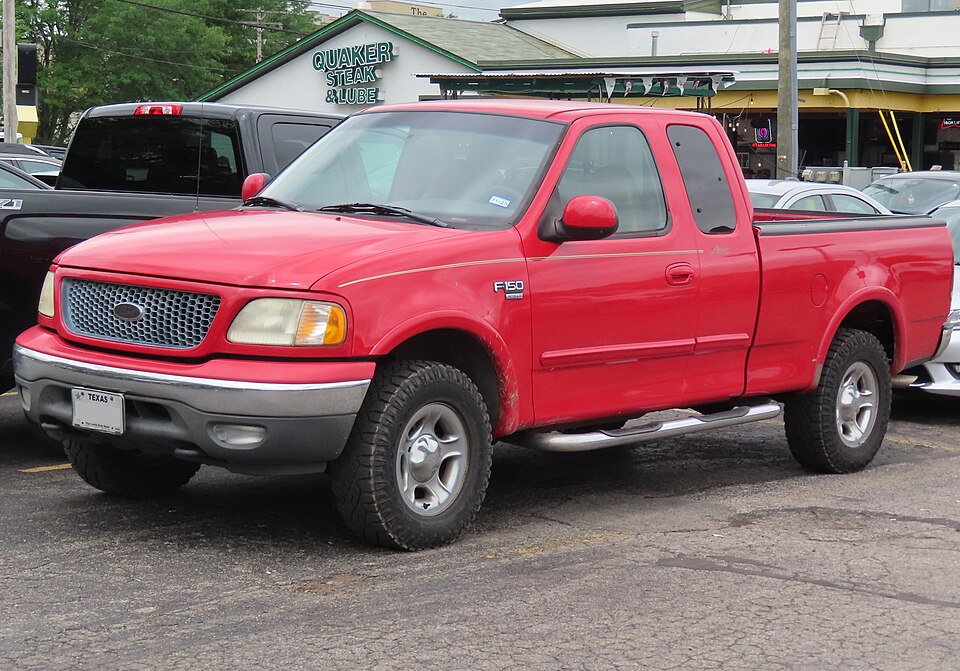
1999 Ford F-150
Pictured: a 1999 model; the 2000 may differ in details. Photo: 1999 Ford F-150 by MercurySable99, CC BY-SA 4.0, via Wikimedia Commons
How the 2000 compares
Fewest complaintsMost complaints

Average complaint count among 27 F-150 model years — 13th most.

6recalls
1,076complaints
81crashes
343fires
71injuries
92,000median miles

Owner complaints filed with NHTSA, not verified and not adjusted for sales. Ranking compares this model's own years only.

Does your car have an open recall?
Recalls apply to specific vehicles. Only a VIN lookup on NHTSA's official site shows whether yours is affected and still unrepaired.
Check your VIN →

6 recalls

Fuel System

Jul 29, 2011 · NHTSA campaign 11V385000 · 1,100,000 vehicles

Problem: Ford is recalling certain 1997 through 2003 model year Ford f-150, 2004 model year Ford f-150 heritage, 1997 through 1999 model year f-250 less than 8,500 LBS. Gross vehicle weight rating (GVWR), and 2002 and 2003 Lincoln blackwood vehicles manufactured from June 20, 1995, through August 4, 2004, originally sold, or currently registered in, Connecticut, Delaware, Illinois, Indiana, Iowa, Kentucky, Maine, Maryland, Massachusetts, Michigan, Minnesota, Missouri, New Hampshire, New Jersey, New York, Ohio, Pennsylvania, Rhode Island, Vermont, West Virginia, Wisconsin, and the District of Columbia. Prolonged exposure to road deicing chemicals May cause severe corrosion of the fuel tank straps which secure the tank to the vehicle.

Original NHTSA wording

FORD IS RECALLING CERTAIN 1997 THROUGH 2003 MODEL YEAR FORD F-150, 2004 MODEL YEAR FORD F-150 HERITAGE, 1997 THROUGH 1999 MODEL YEAR F-250 LESS THAN 8,500 LBS. GROSS VEHICLE WEIGHT RATING (GVWR), AND 2002 AND 2003 LINCOLN BLACKWOOD VEHICLES MANUFACTURED FROM JUNE 20, 1995, THROUGH AUGUST 4, 2004, ORIGINALLY SOLD, OR CURRENTLY REGISTERED IN, CONNECTICUT, DELAWARE, ILLINOIS, INDIANA, IOWA, KENTUCKY, MAINE, MARYLAND, MASSACHUSETTS, MICHIGAN, MINNESOTA, MISSOURI, NEW HAMPSHIRE, NEW JERSEY, NEW YORK, OHIO, PENNSYLVANIA, RHODE ISLAND, VERMONT, WEST VIRGINIA, WISCONSIN, AND THE DISTRICT OF COLUMBIA. PROLONGED EXPOSURE TO ROAD DEICING CHEMICALS MAY CAUSE SEVERE CORROSION OF THE FUEL TANK STRAPS WHICH SECURE THE TANK TO THE VEHICLE.

Risk: As a result of the corrosion, one or both straps May fail allowing the fuel lines to separate from the tank, or in some cases, causing the tank to contact the ground. Either scenario May result in a fuel leak presenting a fire hazard.

Original NHTSA wording

AS A RESULT OF THE CORROSION, ONE OR BOTH STRAPS MAY FAIL ALLOWING THE FUEL LINES TO SEPARATE FROM THE TANK, OR IN SOME CASES, CAUSING THE TANK TO CONTACT THE GROUND. EITHER SCENARIO MAY RESULT IN A FUEL LEAK PRESENTING A FIRE HAZARD.

Remedy & notes

Ford will notify owners and instruct them to take their vehicles to a Ford or Lincoln dealer to have the fuel tank straps replaced with straps that have increased corrosion protection. Early in this campaign, if replacement straps are not available, dealers May install a cable support under the strap as an interim repair or a steel reinforcement over the existing strap as a permanent repair. Any repairs will be performed free of charge. The safety recall began on September 16, 2011. Owners May contact Ford motor company customer relationship center at 1-866-436-7332. Ford's recall campaign number is 11S21

Ford's recall campaign number is 11S21.owners May also contact the national highway traffic safety administration's vehicle safety hotline at 1-888-327-4236 (tty 1-800-424-9153), or go to <a href=http://www.safercar.gov>http://www.safercar.gov</a> .

Vehicle Speed Control

Sep 7, 2005 · NHTSA campaign 05V388000 · 4,500,000 vehicles

Problem: On certain pickup trucks and sport utility vehicles equipped with speed control, the speed control deactivation switch May overheat, smoke, or burn.

Original NHTSA wording

ON CERTAIN PICKUP TRUCKS AND SPORT UTILITY VEHICLES EQUIPPED WITH SPEED CONTROL, THE SPEED CONTROL DEACTIVATION SWITCH MAY OVERHEAT, SMOKE, OR BURN.

Risk: A fire at the switch could occur.

Original NHTSA wording

A FIRE AT THE SWITCH COULD OCCUR.

Remedy & notes

By letter dated September 12, 2005, owners were instructed to return their vehicles to their dealers to have the speed control deactivation switch disconnected. Owners who have had their speed control deactivated are being notified that parts will be available and advised to make an appointment to reconnect the speed control beginning in February 2006. Owners who did not have their speed control deactivated are being notified to have their system remedied beginning in February 2006. Owners are urged to avail themselves of the free disconnect service as soon as possible because of the significant risk of fire. Owners May contact Ford at 1-800-392-3673. (note: Also see recalls 05V017 and 06V286)

Ford recall no. 05S28.customers May also contact the national highway traffic safety administration's vehicle safety hotline at 1-888-327-4236 (tty 1-800-424-9153), or go to http://www.safercar.gov.

Vehicle Speed Control

Jan 27, 2005 · NHTSA campaign 05V017000 · 738,490 vehicles

Problem: On certain sport utility vehicles and pickup trucks, the speed control deactivation switch May overheat, smoke, or burn.

Original NHTSA wording

ON CERTAIN SPORT UTILITY VEHICLES AND PICKUP TRUCKS, THE SPEED CONTROL DEACTIVATION SWITCH MAY OVERHEAT, SMOKE, OR BURN.

Risk: This condition could lead to a fire. Fires have occurred while the vehicles were parked with the ignition 'off.'

Original NHTSA wording

THIS CONDITION COULD LEAD TO A FIRE. FIRES HAVE OCCURRED WHILE THE VEHICLES WERE PARKED WITH THE IGNITION 'OFF.'

Remedy & notes

As an interim repair, owners will be instructed to return their vehicles to their dealers to have the speed control deactivation switch disconnected. As soon as replacement parts are available (early April 2005), owners will be instructed to return to the dealers for installation of a new switch free of charge. Owners May contact Ford at 1-800-392-3673. (note: Also see recalls 05V388 and 06V286)

Ford recall no. 05S28.customers May also contact the national highway traffic safety administration's vehicle safety hotline at 1-888-327-4236 (tty 1-800-424-9153), or go to http://www.safercar.gov.

Visibility

Aug 8, 2001 · NHTSA campaign 01V258000 · 1,083,000 vehicles

Problem: Vehicle description: Passenger cars, sport utility vehicles, and light and medium duty pickup trucks. A switch located in the plastic cover of the wiper motor gear case could malfunction and overheat, potentially resulting in loss of intermittent wiper function, loss of wiper park function, complete loss of wiper function, or ignition of the plastic cover material. Switch malfunction is most likely to occur when the intermittent setting of the wipers is being used, or when snow or ice obstructs the blades from returning to the "parked" position at the bottom of the windshield. These vehicles were built at the following assembly plants: Atlanta plant from 2/11/00 through 7/31/00; chicago plant from 2/14/00 through 8/4/00; Kansas city plant from 2/26/00 to 9/4/00; Kentucky truck plant from 2/18/00 to 8/31/00; Michigan truck plant from 2/23/00 through 8/3/00; norfolk plant from 2/21/00 through 7/27/00; wayne stamping and assembly plant from 2/25/00 through 8/15/00; and wixom plant from 2/15/00 through 8/8/00.

Original NHTSA wording

VEHICLE DESCRIPTION: PASSENGER CARS, SPORT UTILITY VEHICLES, AND LIGHT AND MEDIUM DUTY PICKUP TRUCKS. A SWITCH LOCATED IN THE PLASTIC COVER OF THE WIPER MOTOR GEAR CASE COULD MALFUNCTION AND OVERHEAT, POTENTIALLY RESULTING IN LOSS OF INTERMITTENT WIPER FUNCTION, LOSS OF WIPER PARK FUNCTION, COMPLETE LOSS OF WIPER FUNCTION, OR IGNITION OF THE PLASTIC COVER MATERIAL. SWITCH MALFUNCTION IS MOST LIKELY TO OCCUR WHEN THE INTERMITTENT SETTING OF THE WIPERS IS BEING USED, OR WHEN SNOW OR ICE OBSTRUCTS THE BLADES FROM RETURNING TO THE "PARKED" POSITION AT THE BOTTOM OF THE WINDSHIELD. THESE VEHICLES WERE BUILT AT THE FOLLOWING ASSEMBLY PLANTS: ATLANTA PLANT FROM 2/11/00 THROUGH 7/31/00; CHICAGO PLANT FROM 2/14/00 THROUGH 8/4/00; KANSAS CITY PLANT FROM 2/26/00 TO 9/4/00; KENTUCKY TRUCK PLANT FROM 2/18/00 TO 8/31/00; MICHIGAN TRUCK PLANT FROM 2/23/00 THROUGH 8/3/00; NORFOLK PLANT FROM 2/21/00 THROUGH 7/27/00; WAYNE STAMPING AND ASSEMBLY PLANT FROM 2/25/00 THROUGH 8/15/00; AND WIXOM PLANT FROM 2/15/00 THROUGH 8/8/00.

Risk: Loss of visibility while driving increases the risk of a crash.

Original NHTSA wording

LOSS OF VISIBILITY WHILE DRIVING INCREASES THE RISK OF A CRASH.

Remedy & notes

Dealers will inspect the date code on the wiper motor. Motors built with the suspect time frame will have the wiper motor gear case cover replaced. Owner notification began August 20, 2001. Owners who take their vehicles to an authorized dealer on an agreed upon service date and do not receive the free remedy within a reasonable time should contact Ford at 1-866-436-7332.

Also contact the national highway traffic safety administration's auto safety hotline at 1-888-DASH-2-DOT (1-888-327-4236).

Equipment

Sep 21, 2000 · NHTSA campaign 00V284000 · 4,500 vehicles

Problem: Vehicle description: Bi-fuel CNG pickup trucks and bi-fuel CNG vans, modified by cfi control systems, INC., fail to conform to the requirements of FMVSS no. 303, "fuel system integrity of compressed natural gas vehicles." the label affixed to the fuel filler door by the vehicle modifier contains the inspection date and expiration date of the CNG tank. However, it does not contain the statement "see instructions on the fuel container for inspection and service life."

Original NHTSA wording

VEHICLE DESCRIPTION: BI-FUEL CNG PICKUP TRUCKS AND BI-FUEL CNG VANS, MODIFIED BY CFI CONTROL SYSTEMS, INC., FAIL TO CONFORM TO THE REQUIREMENTS OF FMVSS NO. 303, "FUEL SYSTEM INTEGRITY OF COMPRESSED NATURAL GAS VEHICLES." THE LABEL AFFIXED TO THE FUEL FILLER DOOR BY THE VEHICLE MODIFIER CONTAINS THE INSPECTION DATE AND EXPIRATION DATE OF THE CNG TANK. HOWEVER, IT DOES NOT CONTAIN THE STATEMENT "SEE INSTRUCTIONS ON THE FUEL CONTAINER FOR INSPECTION AND SERVICE LIFE."

Risk: These vehicles do not comply with the requirements.

Original NHTSA wording

THESE VEHICLES DO NOT COMPLY WITH THE REQUIREMENTS.

Remedy & notes

Owners will be provided a label with the required statement, along with instructions for affixing the label at the fuel filler door. Owner notification began November 2, 2000. Owners who take their vehicles to an authorized dealer on an agreed upon service date and do not receive the free remedy within a reasonable time should contact Ford at 1-800-392-3673.

Also contact the national highway traffic safety administration's auto safety hotline at 1-888-DASH-2-DOT (1-888-327-4236).

Seat Belts

Aug 18, 2000 · NHTSA campaign 00V228001 · 144,435 vehicles

Problem: Vehicle description: Passenger vehicles, light duty trucks, sport utility vehicles, and MINI vans equipped with trw seat belt buckle assemblies. The buckle base of these seat belt assemblies were not properly heat treated and therefore do not pass the load bearing requirement of federal motor vehicle safety standard no. 209, "seat belt assemblies."

Original NHTSA wording

VEHICLE DESCRIPTION: PASSENGER VEHICLES, LIGHT DUTY TRUCKS, SPORT UTILITY VEHICLES, AND MINI VANS EQUIPPED WITH TRW SEAT BELT BUCKLE ASSEMBLIES. THE BUCKLE BASE OF THESE SEAT BELT ASSEMBLIES WERE NOT PROPERLY HEAT TREATED AND THEREFORE DO NOT PASS THE LOAD BEARING REQUIREMENT OF FEDERAL MOTOR VEHICLE SAFETY STANDARD NO. 209, "SEAT BELT ASSEMBLIES."

Risk: In the event of a vehicle crash, the occupant May not be properly restrained.

Original NHTSA wording

IN THE EVENT OF A VEHICLE CRASH, THE OCCUPANT MAY NOT BE PROPERLY RESTRAINED.

Remedy & notes

Dealers will inspect the date code on certain seat belt buckles of your vehicle and replace all seat belt buckles that fall within the suspect date code range. Owner notification began October 26, 2000. Owners who take their vehicles to an authorized dealer on an agreed upon service date and do not receive the free remedy within a reasonable time should contact Ford at 1-800-392-3673.

Also contact the national highway traffic safety administration's auto safety hotline at 1-888-DASH-2-DOT (1-888-327-4236).

Recall text as published by NHTSA and the manufacturer.

What owners complain about

Owner complaints filed with NHTSA; one complaint can name several areas. Not verified by NHTSA.

Complaints by year filed

1999: 2 complaints19992000: 67 complaints2001: 81 complaints2002: 59 complaints20022003: 90 complaints2004: 112 complaints2005: 198 complaints20051982006: 53 complaints2007: 56 complaints2008: 36 complaints20082009: 32 complaints2010: 45 complaints2011: 133 complaints20112012: 22 complaints2013: 15 complaints2014: 18 complaints20142015: 8 complaints2016: 11 complaints2017: 7 complaints20172018: 3 complaints2019: 5 complaints2020: 3 complaints20202021: 5 complaints2022: 1 complaints2023: 3 complaints20232024: 1 complaints2025: 6 complaints2026: 4 complaints20264

NHTSA investigations

Fuel Tank Strap Failure Due to Corrosion

EA11006 · opened May 4, 2011 · closed Aug 19, 2011 · led to recall 11V385000
Summary

One or both of the steel straps holding up the fuel tank and attaching it to the truck frame can corrode and fail (break or separate).If one strap fails, the tank may tilt and drop and possibly contact the road surface.If both straps break, the entire tank may drop to the road.If either failure occurs while the vehicle is being driven, contact with the road can abrade the tank and create a hole from which gasoline can spill.When the tank drops, it remains attached to the vehicle only by the fuel filler hose and/or supply lines, or in rare instances, by the skid plate, if present.In some cases the weight of the tank sufficiently strained the hoses and fittings and caused separation and subsequent fuel leaks from those connections.The fire hazard created by leaking gasoline is increased by the possible presence of sparks created by the metal tank being dragged along the road.Corrosion of the straps appears to be caused by prolonged exposure to road deicers, frequently road salt, used to treat snow or ice covered roads.States in which large quantities of deicers are applied to roads during the winter season (salt belt states) account for the predominant portion of strap failures.Vehicles in these salt belt states are prone to experience corrosion related failures more frequently and earlier in a vehicle?s life cycle.Ford reports approximately 97 percent of reports it received relating to strap failure involve vehicles that were operated in these high corrosion areas, and 95 perc…

Fuel Tank Strap Corrosion/Rust

PE10036 · opened Sep 7, 2010 · closed May 23, 2011
Summary

One or both of the steel straps holding up the fuel tank and attaching it to the truck frame can corrode and break.If one strap breaks, the tank may tilt and drop and possibly contact the road surface.If both straps break, the entire tank may drop to the road.If either failure occurs while the vehicle is being driven, contact with the road can abrade the tank and create a hole from which gasoline can spill.When the tank drops, it remains attached to the vehicle only by the fuel filler hose and/or supply lines, or in rare instances, by the skid plate, if present.This raises the possibility that the weight of the dropped tank could sufficiently strain the hoses and fittings to cause separation and fuel leaks between those components.The fire hazard created by the leaking gasoline is increased by the possible presence of sparks created by the metal tank being dragged along the road.The sparks could ignite the escaped fuel.ODI has included in its incident counts reports it has received from consumers and reports provided by Ford in which either the complaint involved confirmed strap corrosion or ODI's investigation yielded information that strongly suggests the subject defect as the cause of the reported problem.Among the incidents reported to NHTSA or Ford, 243 involved the fuel tank dropping below the vehicle and/or dragging on the ground, 95 involved fuel leakage, and nine included reports of sparks from the tank being dragged on the road.ODI has received one report of strap f…

SPARK PLUG EJECTION FROM CYLINDER HEAD

DP05005 · opened Sep 22, 2005 · closed Jan 4, 2006
Summary

ON SEPTEMBER 6, 2005, ODI RECEIVED A PETITION REQUESTING THAT THE AGENCY INVESTIGATE ALLEGATIONS OF ENGINE SPARK PLUG EJECTION IN CERTAIN MODEL YEAR 1997 THROUGH 2004 FORD VEHICLES WITH TRITON V-8 AND V-10 ENGINES.ODI RECEIVED A TOTAL OF 474 NON-DUPLICATIVE COMPLAINTS ON THE SUBJECT VEHICLES WHERE THE COMPLAINANT, OR THE DEALER REPAIRING THE VEHICLE, REPORTED THAT A SPARK PLUG DETACHED FROM THE CYLINDER AND/OR EJECTED FROM THE ENGINE.AS OF DECEMBER 8, 2005, ODI IS NOT AWARE OF ANY ALLEGATIONS WHERE THE ALLEGED DEFECT RESULTED IN A LOSS OF VEHICLE CONTROL, A CRASH, AN INJURY, OR A FATALITY IN ANY OF THE 10,319,810 SUBJECT VEHICLES.IN ADDITION, ODI IS AWARE OF ONLY TWO INCIDENTS WHERE THE VEHICLE STALLED WITHOUT RESTART.INFORMATION CONTAINED IN THE ODI CONSUMER COMPLAINTS AND OBTAINED FROM 72 TELEPHONE INTERVIEWS WITH COMPLAINANTS SHOWED THE FOLLOWING:(1) 99% OF THE COMPLAINTS WERE ON MY 1997 TO 2002 SUBJECT VEHICLES.(2) MOST THE COMPLAINANTS REPORTED HEARING A LOUD POP WHILE DRIVING OR UPON STARTING UP THE VEHICLE FOLLOWED BY A LOUD, REPETITIVE CLICKING OR POPPING SOUND.(3) MANY OF THE COMPLAINANTS REPORTED THAT THE POPPING SOUND WAS ACCOMPANIED BY SOME LOSS OF VEHICLE POWER; HOWEVER, IN 99% OF THE INCIDENTS REPORTED, THE VEHICLE DID NOT STALL.IN THE VERY FEW INCIDENTS WHERE THE VEHICLE DID STALL, MOST VEHICLES COULD BE RESTARTED.(4) ONLY A SMALL PERCENTAGE OF THE COMPLAINANTS CITED THAT THEY SMELLED GAS OR A SLIGHT BURNING SMELL WHEN THE INCIDENT OCCURRED.(5) IN ALL BUT A VER…

SPEED CONTROL DEACTIVATION SWITCH FIRE

PE04078 · opened Nov 19, 2004 · closed Mar 22, 2005 · led to recall 05V017000
Summary

IN ITS LETTER DATED JANUARY 27, 2005 TO ODI, FORD INDICATED THAT IT WOULD CONDUCT A SAFETY RECALL (NHTSA RECALL # 05V-017) TO REMEDY AN OVERHEATING SPEED CONTROL DEACTIVATION SWITCH IN APPROXIMATELY 738,490 SUBJECT VEHICLES.THE VEHICLES AFFECTED BY THE RECALL ARE CERTAIN 2000 MODEL YEAR (MY) FORD F150, FORD EXPEDITION AND LINCOLN NAVIGATOR EQUIPPED WITH SPEED CONTROL AND CERTAIN 2001 MODEL YEAR F150 SUPERCREW VEHICLES BUILT THROUGH AUGUST 7, 2000.SINCE OPENING PE04-078, ODI HAS IDENTIFIED OTHER REPORTS OF KEY OFF ENGINE COMPARTMENT FIRES IN FORD VEHICLES WITH SIMILAR SPEED CONTROL DEACTIVATION SWITCHES THAT WERE NOT THE SUBJECT OF THIS PRELIMINARY EVALUATION OR FORD'S RECALL 05V-017.FORD'S RESPONSE TO THE ODI INFORMATION REQUEST LETTER DATED DECEMBER 3, 2004, PROVIDED AN ADDITIONAL 107 ALLEGATIONS OF KEY OFF ENGINE COMPARTMENT FIRES THAT WERE ALSO IN VEHICLES NOT SUBJECT TO THIS INVESTIGATION OR INCLUDED IN THE FORD RECALL 05V-017.AN ENGINEERING ANALYSIS (EA) IS WARRANTED TO DETERMINE IF A SAFETY DEFECT TREND EXISTS RELATING TO KEY OFF ENGINE COMPARTMENT FIRES IN VEHICLES OUTSIDE THE SCOPE OF THIS PRELIMINARY EVALUATION.ODI WILL EXPAND THE SCOPE OF IT'S INVESTIGATION AT THE EA PHASE TO INCLUDE THE 1995 THROUGH 2002 MODEL YEARS OF THE FORD F150, FORD EXPEDITION AND LINCOLN NAVIGATOR VEHICLES.

2000 vs. other Ford F-150 years

Owner complaints by model year; the darker bar is the 2000. Click a bar to switch year.

Questions

Does the 2000 Ford F-150 have recalls?

Yes — NHTSA lists 6 recall campaigns covering the 2000 Ford F-150, the latest from Jul 29, 2011 (fuel system). A recall applies to specific vehicles: enter your VIN at nhtsa.gov/recalls to see whether yours is affected and still open.

What are the most common problems with the 2000 Ford F-150?

Owner complaints filed with NHTSA most often mention electrical system (192), vehicle speed control (188), engine (158). Complaints are consumer reports and are not verified by NHTSA.