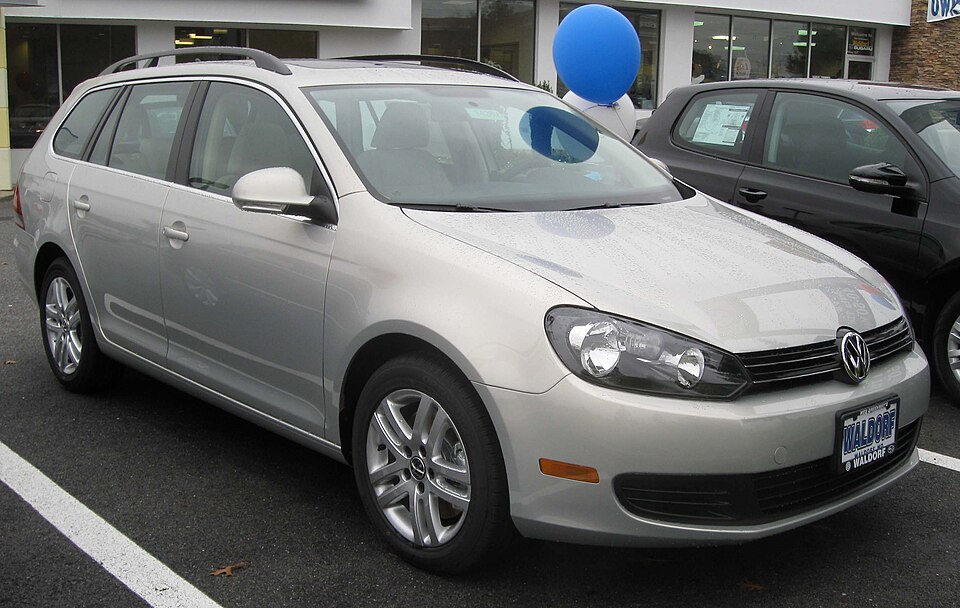
Highest complaint count among 28 Jetta model years — 2nd most.
4recalls
852complaints
23crashes
5fires
11injuries
54,000median miles
Owner complaints filed with NHTSA, not verified and not adjusted for sales. Ranking compares this model's own years only.
Does your car have an open recall? Recalls apply to specific vehicles. Only a VIN lookup on NHTSA's official site shows whether yours is affected and still unrepaired.
Dec 20, 2016 · NHTSA campaign 16V913000 · 135,683 vehicles
Problem: Volkswagen Group of America, Inc. (Volkswagen) is recalling certain model year 2009-2010 Volkswagen Jetta A5 Sedan, 2009 Volkswagen Jetta SportWagen, Eos, GTI, Rabbit and Audi A3 vehicles, and 2010 Volkswagen Golf A6 vehicles. The Antilock Brake System (ABS) control unit may fail during ABS or Electronic Stability Control (ESC) activation, possibly causing a loss of vehicle control.
Risk: A loss of vehicle control can increase the risk of a crash.
Remedy & notes
Volkswagen will notify owners, and dealers will update the ABS control module software to improve the module's self-testing abilities. Any module that fails the new diagnostic test will be replaced. These repairs will be made free of charge. The recall began February 2017. Owners may contact Volkswagen customer service at 1-800-893-5298.
Owners may also contact the National Highway Traffic Safety Administration Vehicle Safety Hotline at 1-888-327-4236 (TTY 1-800-424-9153), or go to www.safercar.gov.
Fuel System
Oct 3, 2011 · NHTSA campaign 11V490000 · 168,275 vehicles
Problem: Volkswagen is recalling certain model 2009-2012 jetta and jetta sportwagen vehicles, manufactured from May 2008 through September 2011, model year 2010-2012 Volkswagen golf vehicles, manufactured from May 2009 through September 2011, and model year 2010-2012 Audi A3 vehicles, manufactured from September 2009 through September 2011, that are equipped with a 2.0L tdi common rail diesel engine/clean diesel engine. The fuel injection pulses could coincide with the natural frequency of the injector line #2, in specific load and rpm conditions. This resonance creates additional stress in the fuel line.
Original NHTSA wording
VOLKSWAGEN IS RECALLING CERTAIN MODEL 2009-2012 JETTA AND JETTA SPORTWAGEN VEHICLES, MANUFACTURED FROM MAY 2008 THROUGH SEPTEMBER 2011, MODEL YEAR 2010-2012 VOLKSWAGEN GOLF VEHICLES, MANUFACTURED FROM MAY 2009 THROUGH SEPTEMBER 2011, AND MODEL YEAR 2010-2012 AUDI A3 VEHICLES, MANUFACTURED FROM SEPTEMBER 2009 THROUGH SEPTEMBER 2011, THAT ARE EQUIPPED WITH A 2.0L TDI COMMON RAIL DIESEL ENGINE/CLEAN DIESEL ENGINE. THE FUEL INJECTION PULSES COULD COINCIDE WITH THE NATURAL FREQUENCY OF THE INJECTOR LINE #2, IN SPECIFIC LOAD AND RPM CONDITIONS. THIS RESONANCE CREATES ADDITIONAL STRESS IN THE FUEL LINE.
Risk: Due to the resonance condition, injector line number 2 could develop small cracks which could lead to fuel leakage. Leaking fuel in the presence of an ignition source, May lead to a fire.
Original NHTSA wording
DUE TO THE RESONANCE CONDITION, INJECTOR LINE NUMBER 2 COULD DEVELOP SMALL CRACKS WHICH COULD LEAD TO FUEL LEAKAGE. LEAKING FUEL IN THE PRESENCE OF AN IGNITION SOURCE, MAY LEAD TO A FIRE.
Remedy & notes
Volkswagen will install an improved fuel injector line for the number 2 cylinder on certain vehicles and will install vibration dampers on all of the injector lines. Volkswagen and Audi will notify owners to have the vehicles repaired free of charge. The safety recall is expected to begin during November 2011. Owners May contact Volkswagen at 1-800-822-8987.
Volkswagen recall campaign number is 23J9/V5 & 23J8/K5.owners May also contact the national highway traffic safety administration's vehicle safety hotline at 1-888-327-4236 (tty 1-800-424-9153), or go to <a href=http://www.safercar.gov>http://www.safercar.gov</a> .
Fuel System
Dec 10, 2010 · NHTSA campaign 10V621000 · 228,236 vehicles
Problem: Volkswagen is recalling certain model year 2006-2010 jetta, new beetle, new beetle convertible, model year 2009 jetta sportwagen and model year 2007-2009 rabbit vehicles equipped with 2.5L engines. The jetta, jetta sportwagen, and rabbit vehicles May have a small plastic tab located on the windshield washer fluid reservoir that May chafe against an underhood fuel supply line. The new beetle and the new beetle convertible vehicles May have a fastening clamp on a hydraulic hose of the power steering system that May be located in an improper position which could cause chafing against an underhood fuel supply line.
Original NHTSA wording
VOLKSWAGEN IS RECALLING CERTAIN MODEL YEAR 2006-2010 JETTA, NEW BEETLE, NEW BEETLE CONVERTIBLE, MODEL YEAR 2009 JETTA SPORTWAGEN AND MODEL YEAR 2007-2009 RABBIT VEHICLES EQUIPPED WITH 2.5L ENGINES. THE JETTA, JETTA SPORTWAGEN, AND RABBIT VEHICLES MAY HAVE A SMALL PLASTIC TAB LOCATED ON THE WINDSHIELD WASHER FLUID RESERVOIR THAT MAY CHAFE AGAINST AN UNDERHOOD FUEL SUPPLY LINE. THE NEW BEETLE AND THE NEW BEETLE CONVERTIBLE VEHICLES MAY HAVE A FASTENING CLAMP ON A HYDRAULIC HOSE OF THE POWER STEERING SYSTEM THAT MAY BE LOCATED IN AN IMPROPER POSITION WHICH COULD CAUSE CHAFING AGAINST AN UNDERHOOD FUEL SUPPLY LINE.
Risk: If chafing occurs, there is the potential for a fuel leak to develop. Fuel leakage, in the presence of an ignition source, could result in a fire.
Original NHTSA wording
IF CHAFING OCCURS, THERE IS THE POTENTIAL FOR A FUEL LEAK TO DEVELOP. FUEL LEAKAGE, IN THE PRESENCE OF AN IGNITION SOURCE, COULD RESULT IN A FIRE.
Remedy & notes
Dealers will inspect and if necessary replace the underhood fuel line. Additionally, depending on the vehicle model, dealers will either remove the plastic tab from the windshield washer fluid reservoir, or inspect the position of the fastening clamp and adjust the related fastening clamp into the correct position. This service will be performed free of charge. The safety recall is expected to begin on or before January 31, 2011. Owners May contact Volkswagen at 1-800-822-8987.
Volkswagen safety recall no. 20I4/U1.owners May also contact the national highway traffic safety administration's vehicle safety hotline at 1-888-327-4236 (tty 1-800-424-9153), or go to <a href=http://www.safercar.gov>http://www.safercar.gov</a> .
Power Train
Aug 20, 2009 · NHTSA campaign 09V333000 · 16,000 vehicles
Problem: Volkswagen is recalling certain model year 2009 and 2010 passenger cars manufactured between September 2008 and August 2009. The wiring harness of a temperature sensor in the direct shift gearbox (DSG) May have connector wires that were insufficiently crimped. With insufficiently crimped connector wires, a temperature sensor has the potential to falsely detect a high gearbox oil temperature, causing the transmission to abruptly shift to neutral. If this happens, the selector lever position indicator within the instrument panel will flash. In addition, the "depress brake pedal" indicator light will be illuminated, alerting the driver to apply the brakes.
Original NHTSA wording
VOLKSWAGEN IS RECALLING CERTAIN MODEL YEAR 2009 AND 2010 PASSENGER CARS MANUFACTURED BETWEEN SEPTEMBER 2008 AND AUGUST 2009. THE WIRING HARNESS OF A TEMPERATURE SENSOR IN THE DIRECT SHIFT GEARBOX (DSG) MAY HAVE CONNECTOR WIRES THAT WERE INSUFFICIENTLY CRIMPED. WITH INSUFFICIENTLY CRIMPED CONNECTOR WIRES, A TEMPERATURE SENSOR HAS THE POTENTIAL TO FALSELY DETECT A HIGH GEARBOX OIL TEMPERATURE, CAUSING THE TRANSMISSION TO ABRUPTLY SHIFT TO NEUTRAL. IF THIS HAPPENS, THE SELECTOR LEVER POSITION INDICATOR WITHIN THE INSTRUMENT PANEL WILL FLASH. IN ADDITION, THE "DEPRESS BRAKE PEDAL" INDICATOR LIGHT WILL BE ILLUMINATED, ALERTING THE DRIVER TO APPLY THE BRAKES.
Risk: The abrupt shift to neutral could lead to a crash without warning.
Original NHTSA wording
THE ABRUPT SHIFT TO NEUTRAL COULD LEAD TO A CRASH WITHOUT WARNING.
Remedy & notes
Volkswagen will reprogram the transmission control module with updated software free of charge. The recall began on October 20, 2009. Owners May contact Volkswagen at 1-800-822-8987.
Vw recall no.37E3/S7 & Audi recall no. 37E5/J7.owners May also contact the national highway traffic safety administration's vehicle safety hotline at 1-888-327-4236 (tty 1-800-424-9153), or go to <a href=http://www.safercar.gov>http://www.safercar.gov</a> .
Recall text as published by NHTSA and the manufacturer.
Owner complaints filed with NHTSA; one complaint can name several areas. Not verified by NHTSA.
Complaints by year filed
NHTSA investigations
Clockspring failure
EA18003 · opened Apr 18, 2018 · closed Nov 6, 2026
Summary
In August 2015, VW launched Safety Recall 15V-483 to address the loss of the protection provided by the front driver air bag in several models due to the failure of the clock spring. VWâs recall indicated that debris entry into the steering wheel hub can result in the contamination and ultimately failure of the clock spring in 2010-2014 MY CC, Eos, GTI, Golf, Jetta, Jetta Sportwagen, Passat, and Tiguan models. The contamination of the clock spring by debris, such as human hair, can cause the flat ribbon cable to tear. This results in the loss of the electrical connection to the front driver air bag and any steering wheel mounted controls. The clock spring is designed so that the flat cable inside will break with minimum force to prevent it from impeding movement of the steering wheel. The loss of the electrical connection to the front driver air bag results in the immediate illumination of the air bag warning light and prevents the deployment of the front driver air bag in a collision of sufficient severity. A torn clock spring also causes audible grinding noises from the area of the steering wheel/driver air bag or steering column while steering. The failure of the clock spring does not impair vehicle control or drivability (steering, brakes, acceleration). In November 2017, the Office of Defects Investigation (ODI) opened Recall Query RQ17009 after receiving complaints that alleged the failure of the clock spring in the subject models. While the majority of these complain…
Diesel Fuel Injector Line Leakage
PE11023 · opened Aug 2, 2011 · closed Dec 2, 2011 · led to recall 11V490000
Summary
By letter dated October 3, 2011, Volkswagen Group of America, Inc. (VW) notified the National Highway Traffic Safety Administration (NHTSA) that it will conduct a safety recall to address a defect in approximately 168,275 model year (MY) 2009-2012 Volkswagen Jetta, Jetta Sportwagen, Golf, and Audi A3 vehicles equipped with the 2.0L TDI Common Rail Clean Diesel engine (NHTSA Recall No. 11V-490).The recalled Jetta and Jetta Sportwagen vehicles were built from May 2008 through September 2011, the Golf vehicles were built from May 2009 through September 2011, and the Audi A3 vehicles were built from September 2009 through September 2011.According to Volkswagen, in U.S. applications of the above cited TDI vehicles including engine codes CJAA and CBEA, the fuel injection pulses could coincide with the natural frequency of the injector line #2 in specific load and RPM conditions.This resonance creates additional stress on the fuel line which a small number of parts (based on the statistic spread of line strength) cannot withstand over its lifetime.As a contributing factor, VW indicated that a supplier used tube material with scratch marks from a grinding process during certain production periods.Lines manufactured in these periods were installed in vehicles produced in the following 10 months:December 2008, January-February 2009, October 2009, March-April 2010 and September-December 2010.Injector lines using this material exhibit a significantly higher failure rate.Dealers will repl…
High-Pressure Fuel Pump Failure
EA11003 · opened Feb 7, 2011 · closed Mar 27, 2015
Summary
The Office of Defects Investgation (ODI) opened EA11-003 on February 7, 2011, based on 160 complaints to ODI and Volkswagen involving high pressure fuel pump (HPFP) failures in model year (MY) 2009 through 2010 Volkswagen Jetta and Golf and Audi A3 TDI vehicles and questions regarding fuel sample results provided by Volkswagen as part of its response to PE10-034.During EA11-003, ODI analyzed design information, field experience and test data for MY 2009 through 2012 Volkswagen Jetta, Golf and Touareg and Audi A3 and Q7 vehicles equipped with TDI engines. Volkswagen has not identified any design or manufacturing defects in the subject TDI Clean Diesel pumps and has stated that the subject pumps were designed, tested and approved for use in the United States market, with substantial design margins for fuels that are out of specification.Volkswagen believes that misfueling with gasoline is the primary cause of HPFP drivetrain failures in the field.Only the Q7 vehicles were built with misfuel protection devices.In May 2013 Volkswagen initiated a service campaign to install misfuel protection devices in all MY 2009 through 2012 Jetta, Golf and A3 vehicles.Volkswagen implemented misfuel protection devices in all of the subject models beginning in MY 2013. ODI?s analysis of HPFP drivetrain failure incidents indicates that most failures do not result in engine stall while driving and, when pump drivetrain failure does result in stall while driving, it is usually preceded by numerous …
High Pressure Fuel Pump Failure (HPFP)
PE10034 · opened Aug 26, 2010 · closed Feb 8, 2011
Summary
The Office of Defects Investigation (ODI) and Volkswagen (VW) have received a total of 160 complaints and field reports alleging incidents of engine stall and/or loss of power that appear to be related to high pressure fuel pump (HPFP) failures in certain model year (MY) 2009 through 2010 Volkswagen Jetta and MY 2010 Volkswagen Golf and Audi A3 vehicles equipped with TDI clean diesel engines.Approximately half of the reports indicate that the failure resulted in an engine stall incident, with many of these alleging stall incidents at highway speeds in traffic with no restart.There has been one minor crash alleged to have resulted from HPFP failure in the subject vehicles.In response to ODI's information request for PE10-034, VW indicated that it had found no defect related to motor vehicle safety with relation to the TDI Clean Diesel fuel system at issue in this investigation and attributed problems with HPFP failure to operation with gasoline contaminated diesel fuel.Volkswagen stated that even a small amount of gasoline in the diesel fuel may disrupt the necessary lubrication required and may cause the HPFP to fail.In response to concerns that fuel contamination was the major cause of HPFP and related fuel system failures, VW issued a Technical Service Bulletin in May 2010 (VW TB V011011 2023624 and Audi TB A011008 2023360-1), with instructions to inspect the diesel fuel for vehicles requiring fuel system service that have symptoms associated with HPFP failure.The bulletin …
2010 vs. other Volkswagen Jetta years
Owner complaints by model year; the darker bar is the 2010. Click a bar to switch year.
Questions
Does the 2010 Volkswagen Jetta have recalls?
Yes — NHTSA lists 4 recall campaigns covering the 2010 Volkswagen Jetta, the latest from Dec 20, 2016 (electronic stability control). A recall applies to specific vehicles: enter your VIN at nhtsa.gov/recalls to see whether yours is affected and still open.
What are the most common problems with the 2010 Volkswagen Jetta?
Owner complaints filed with NHTSA most often mention fuel system (303), electrical system (233), engine (188). Complaints are consumer reports and are not verified by NHTSA.
 Recalls by Model