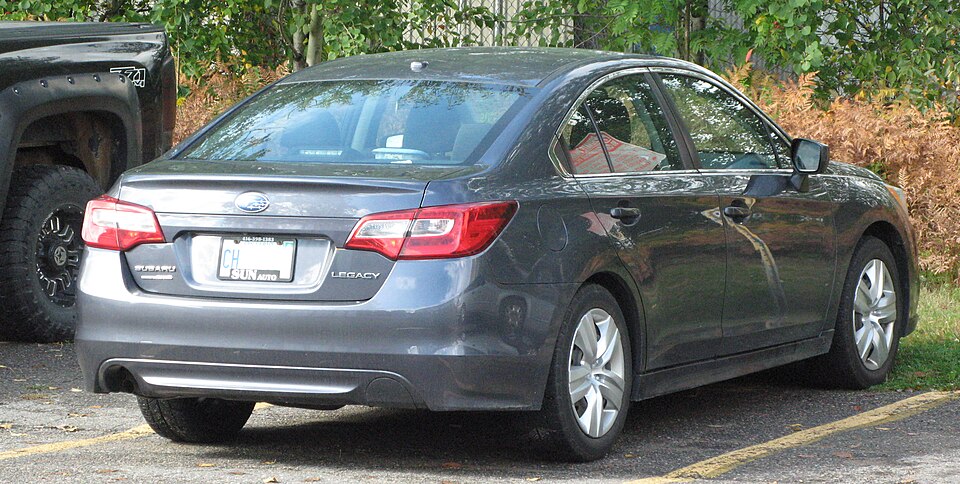
The 2016 Subaru Legacy has 3 recalls and 147 owner complaints on file with NHTSA; the most reported problem area is electrical system.
Do not drive warning. NHTSA and the manufacturer advise owners not to drive affected vehicles until the recall repair is done. Affected campaign: 16V292000.
High complaint count among 26 Legacy model years — 5th most.
3recalls
147complaints
9crashes
0fires
3injuries
35,000median miles
Owner complaints filed with NHTSA, not verified and not adjusted for sales. Ranking compares this model's own years only.
Does your car have an open recall? Recalls apply to specific vehicles. Only a VIN lookup on NHTSA's official site shows whether yours is affected and still unrepaired.
May 11, 2016 · NHTSA campaign 16V292000 · 48,819 vehicles
Do not drive
Problem: Subaru of America, Inc. (Subaru) is recalling certain model year 2016-2017 Legacy and Outback vehicles manufactured February 29, 2016, to May 6, 2016. The steering column on the affected vehicles may have been improperly machined, and as a result, turning the steering wheel may have no effect on the direction of the wheels.
Risk: The loss of steering ability would increase the risk of a crash.
Remedy & notes
Subaru will notify owners, and dealers will inspect the lot number on the steering column, replacing the steering column, as necessary, free of charge. The recall began May 13, 2016. Owners may contact Subaru customer service at 1-800-782-2783 or by visiting http://www.wtd65.service-campaign.com. Subaru's number for this recall is WTD-65. Note: Until the vehicles have been inspected, owners are advised not to drive their vehicles.
Owners may also contact the National Highway Traffic Safety Administration Vehicle Safety Hotline at 1-888-327-4236 (TTY 1-800-424-9153), or go to www.safercar.gov.
Power Train
Nov 24, 2015 · NHTSA campaign 15V794000 · 3,251 vehicles
Problem: Subaru of America, Inc. (Subaru) is recalling certain model year 2016 Legacy vehicles manufactured October 24, 2015, to November 16, 2015, and Outback vehicles manufactured October 24, 2015, to November 17, 2015. Due to the improper tightening of the securing nuts, the drive shaft may separate from the rear differential.
Risk: If the drive shaft detaches from the rear differential, it may strike the fuel tank and result in a fuel leak, increasing the risk of a fire.
Remedy & notes
Subaru has notified owners, and dealers will inspect the fastening nuts, and tighten or replace them, as necessary, free of charge. The recall began on December 10, 2015. Owners may contact Subaru customer service at 1-856-488-8500. Subaru's number for this recall is WQV-57.
Owners may also contact the National Highway Traffic Safety Administration Vehicle Safety Hotline at 1-888-327-4236 (TTY 1-800-424-9153), or go to www.safercar.gov.
Power Train
Aug 10, 2015 · NHTSA campaign 15V502000 · 2,893 vehicles
Problem: Subaru of America, Inc. (Subaru) is recalling certain 2015 and 2016 model year Subaru Legacy 4-Door and Outback vehicles manufactured July 3, 2015, to July 27, 2015. Transmission oil may leak from a deformed seal cap on the propeller shaft yoke.
Risk: If the transmission oil leaks onto the exhaust pipe, there is a possible risk of fire.
Remedy & notes
Subaru will notify owners, and dealers will replace the propeller shaft, free of charge. The recall began on August 28, 2015. Owners may contact 1-800-782-2783. Subaru's number for this recall is WQU-56.
Owners may also contact the National Highway Traffic Safety Administration Vehicle Safety Hotline at 1-888-327-4236 (TTY 1-800-424-9153), or go to www.safercar.gov.
Recall text as published by NHTSA and the manufacturer.
Owner complaints filed with NHTSA; one complaint can name several areas. Not verified by NHTSA.
Complaints by year filed
NHTSA investigations
Desiccated Air Bag Inflator Rupture
EA21002 · opened Sep 17, 2021 · open
Summary
From 2000 through 2017, Takata produced millions of air bag inflators using two types of phase-stabilized ammonium nitrate ("PSAN") propellant -- propellant 2004 and propellant 2004L. After prolonged exposure to high temperature cycles and humidity, inflators using propellant 2004 can degrade, causing the propellant to burn too quickly when ignited. The rapid burning can cause the inflator to rupture during deployment, potentially causing serious or even fatal injury to vehicle occupants. See 2016 Blomquist Report at www.nhtsa.gov/sites/nhtsa.gov/files/documents/expert_report-hrblomquist.pdf.Consequently, all frontal inflators using propellant 2004 that do not contain a "desiccant" (a substance that traps and holds moisture) in US vehicles are under recall. These "non-desiccated" inflators either have been or are required to be replaced.In some cases, the remedy part for these recalled inflators was, or will be, an inflator using either propellant 2004 or 2004L that does contain a desiccant. None of these "desiccated" remedy parts (which were installed in older model year vehicles) are currently under recall for a degradation concern. Certain subsets of desiccated PSAN inflators using propellant 2004 for use as original equipment, however, have been recalled for a degradation concern. All Takata inflators produced with propellant 2004L contain desiccant, and none of these desiccated inflators using propellant 2004L are under recall for a degradation concern. There have been n…
2016 vs. other Subaru Legacy years
Owner complaints by model year; the darker bar is the 2016. Click a bar to switch year.
Questions
Does the 2016 Subaru Legacy have recalls?
Yes — NHTSA lists 3 recall campaigns covering the 2016 Subaru Legacy, the latest from May 11, 2016 (steering). A recall applies to specific vehicles: enter your VIN at nhtsa.gov/recalls to see whether yours is affected and still open.
What are the most common problems with the 2016 Subaru Legacy?
Owner complaints filed with NHTSA most often mention electrical system (51), unknown or other (41), visibility (18). Complaints are consumer reports and are not verified by NHTSA.
Is it safe to drive the 2016 Subaru Legacy?
1 recall for this model year carries a "Do Not Drive" advisory. Only vehicles with the recall open are affected — check your VIN at nhtsa.gov/recalls.
 Recalls by Model