2016 Ford Fusion Hybrid recalls and problems

The 2016 Ford Fusion Hybrid has 0 recalls and 56 owner complaints on file with NHTSA; the most reported problem area is engine.

2017 Ford Fusion Hybrid
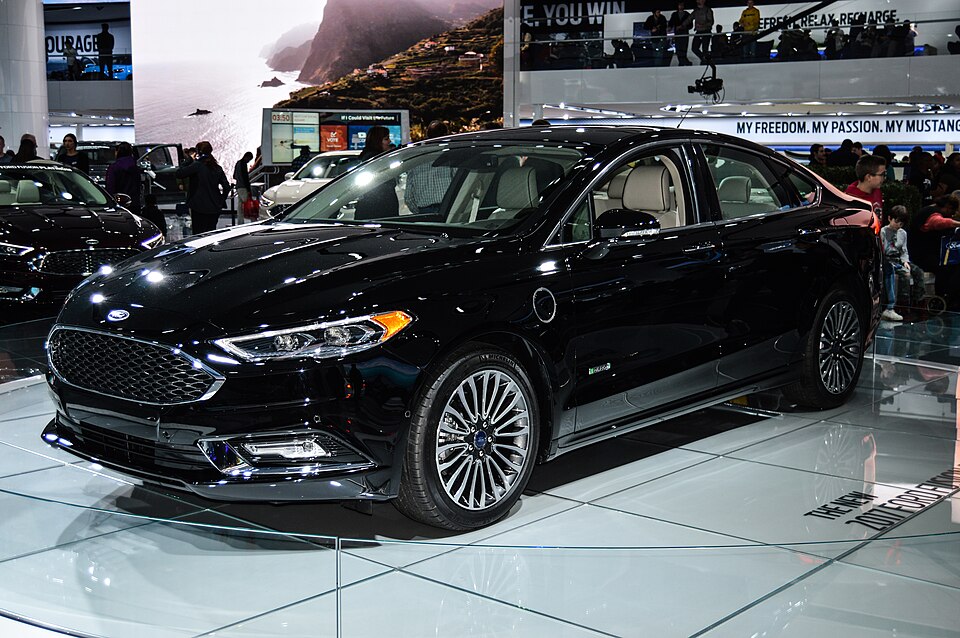
Pictured: a 2017 model; the 2016 may differ in details. Photo: 2017 Ford Fusion Hybrid by Yahya S. from Livonia, United States, CC BY 2.0, via Wikimedia Commons
How the 2016 compares
Fewest complaintsMost complaints

Low complaint count among 11 Fusion Hybrid model years — 8th most.

0recalls
56complaints
0crashes
0fires
0injuries
36,000median miles

Owner complaints filed with NHTSA, not verified and not adjusted for sales. Ranking compares this model's own years only.

Does your car have an open recall?
Recalls apply to specific vehicles. Only a VIN lookup on NHTSA's official site shows whether yours is affected and still unrepaired.
Check your VIN →

0 recalls

No recall campaigns on file.

Recall text as published by NHTSA and the manufacturer.

What owners complain about

Owner complaints filed with NHTSA; one complaint can name several areas. Not verified by NHTSA.

Complaints by year filed

2016: 4 complaints20162017: 5 complaints20172018: 3 complaints20182019: 4 complaints20192020: 8 complaints20202021: 4 complaints20212022: 10 complaints2022102023: 5 complaints20232024: 2 complaints20242025: 2 complaints20252026: 9 complaints20269

NHTSA investigations

Pedestrian alert sounds

DP22005 · opened Jan 27, 2023 · closed Aug 7, 2023 · led to recall 22V063000
Summary

NHTSA received a petition on or about July 18, 2022, requesting that Federal Motor Vehicle Safety Standard (FMVSS) 141 be applied to all electric and hybrid vehicles operating in the United States. The petition can be reviewed at NHTSA.gov under ODI Number 11486072. FMVSS 141 establishes performance requirements for pedestrian alert sounds for motor vehicles. The standard applies to hybrid and electric vehicles that have a gross vehicle weight rating of 4,536 KG or less or are defined as low-speed vehicles. The standard became fully applicable to all such vehicles manufactured on or after March 1, 2021.On January 27, 2023, NHTSA opened Defect Petition (DP) 22-005 to evaluate the subject matter described in the petition. On June 24, 2023 and as supplemented on June 25, 2023, the petitioner notified NHTSA he was withdrawing his petition. The petitioner indicated that, based on his review of data, there is no justification for asserting potential benefits that could be derived from actions sought by my petition. Based on the petitioner's withdrawal, DP22-005 is closed. Closure of this DP does not represent a determination by NHTSA regarding the subject matter of the petition.

Front Brake Jounce Hose Failures

RQ22004 · opened Aug 8, 2022 · closed Mar 24, 2023 · led to recall 23V162000
Summary

On August 8, 2022, the Office of Defects Investigation (ODI) opened this investigation based on 50 Vehicle Owner Questionnaires (VOQs) alleging front brake jounce hose ruptures on model year (MY) 2013-2018 Ford Fusion and Lincoln MKZ vehicles. A ruptured front brake hose results in a brake fluid leak. As a result, the driver may experience an increase in pedal travel and a reduction in the rate of deceleration, increasing the risk of a crash. It should be noted that the subject vehicles identified fell outside the scope of NHTSA Safety Recall 20V-469, which addressed front brake hoses rupturing on certain MY 2015-2018 Ford Edge and 2016-2018 Lincoln MKX vehicles. The result causes a brake fluid leak, lengthening the distance needing to stop the vehicle, increasing the risk of a crash.On March 10, 2023, Ford Motor Company (Ford) submitted to NHTSA Safety Recall 23V-162 (Ford Recall 23S12) to address front brake jounce hoses that may rupture. Ford found the rupture occurs from a localized failure of the internal reinforcement braid due to cyclic fatigue through tensile/bending and torsional inputs during suspension and steering articulations. The supplier for the front brake jounce hoses is Hitachi. This recall affects the subject vehicles equipped with non-hybrid engines and the suspect front brake jounce hoses (a total of 1,280,726 vehicles). The recall covers subject vehicles built from February 3, 2012 to July 19, 2017 when the suspect hoses were used in vehicle production.…

Desiccated Air Bag Inflator Rupture

EA21002 · opened Sep 17, 2021 · open
Summary

From 2000 through 2017, Takata produced millions of air bag inflators using two types of phase-stabilized ammonium nitrate ("PSAN") propellant -- propellant 2004 and propellant 2004L. After prolonged exposure to high temperature cycles and humidity, inflators using propellant 2004 can degrade, causing the propellant to burn too quickly when ignited. The rapid burning can cause the inflator to rupture during deployment, potentially causing serious or even fatal injury to vehicle occupants. See 2016 Blomquist Report at www.nhtsa.gov/sites/nhtsa.gov/files/documents/expert_report-hrblomquist.pdf.Consequently, all frontal inflators using propellant 2004 that do not contain a "desiccant" (a substance that traps and holds moisture) in US vehicles are under recall. These "non-desiccated" inflators either have been or are required to be replaced.In some cases, the remedy part for these recalled inflators was, or will be, an inflator using either propellant 2004 or 2004L that does contain a desiccant. None of these "desiccated" remedy parts (which were installed in older model year vehicles) are currently under recall for a degradation concern. Certain subsets of desiccated PSAN inflators using propellant 2004 for use as original equipment, however, have been recalled for a degradation concern. All Takata inflators produced with propellant 2004L contain desiccant, and none of these desiccated inflators using propellant 2004L are under recall for a degradation concern. There have been n…

Door Latch Failures

RQ19005 · opened Dec 19, 2019 · closed Feb 7, 2022 · led to recall 20V177000
Summary

In December 2019, the Office of Defects Investigation (ODI) opened this investigation based on 235 Vehicle Owner Questionnaires (VOQs) alleging doors failed to latch when closed, and/or inadvertently opened while driving, on model year (MY) 2012-2014 Ford Fiesta, and 2013-2014 Fusion and Lincoln MKZ. Some VOQs reported the failure occurred after the latch had been remedied under a prior recall which involved fracture of the latch pawl spring tab due to thermally induced cyclic fatigue. Other VOQs alleged a similar failure in vehicles not previously recalled. A latch with a fractured pawl spring tab typically results in a ?door will not close? condition, however in certain somewhat rare circumstances, may result in the door coming open while driving. In response to ODI?s investigation, Ford has announced three field actions, as discussed below.On March 23, 2020, Ford submitted Safety Recall 20V-177 (Ford 20S15), a regional recall campaign to address door latch failures in vehicles not previously recalled under Safety Recalls 15V-246, 16V-643 and 17V-210. The recall affects vehicles currently or ever registered in certain high ambient temperature states (see 20V-177 for affected states). As a remedy, Ford will replace all four door latches free of charge.On August 24, 2020, Ford issued a non-safety regional field action (Ford 20R01) to address door latch failures on the same model/MY vehicles not covered under 20V-177 (i.e., not currently/ever registered in affected states). Ac…

2016 vs. other Ford Fusion Hybrid years

Owner complaints by model year; the darker bar is the 2016. Click a bar to switch year.

Questions

Does the 2016 Ford Fusion Hybrid have recalls?

NHTSA lists no recall campaigns for the 2016 Ford Fusion Hybrid. Check your VIN at nhtsa.gov/recalls to be sure.

What are the most common problems with the 2016 Ford Fusion Hybrid?

Owner complaints filed with NHTSA most often mention engine (15), unknown or other (10), back over prevention (8). Complaints are consumer reports and are not verified by NHTSA.