2019 Chevrolet Volt recalls and problems

The 2019 Chevrolet Volt has 2 recalls and 35 owner complaints on file with NHTSA; the most reported problem area is power train.

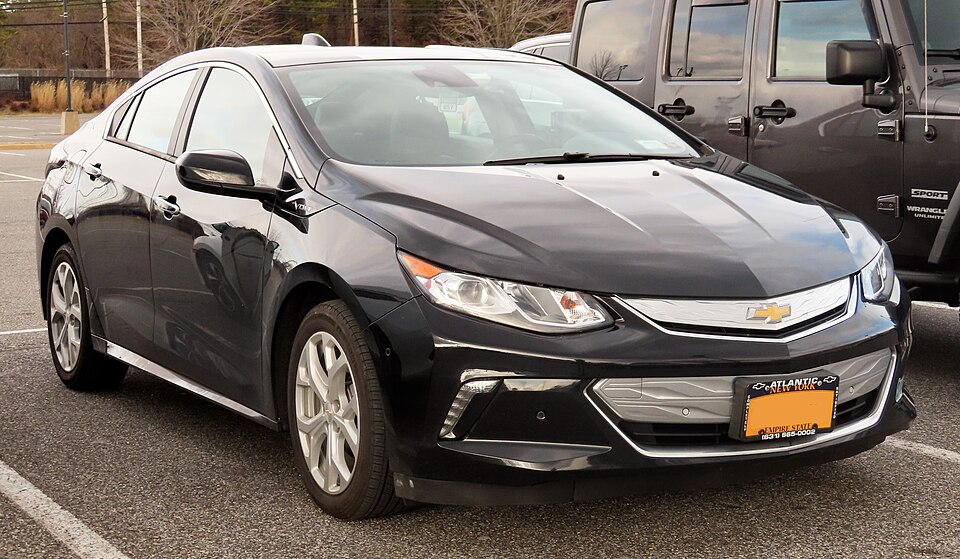
2018 Chevrolet Volt
Pictured: a 2018 model; the 2019 may differ in details. Photo: 2018 Chevrolet Volt by Kevauto, CC BY-SA 4.0, via Wikimedia Commons
How the 2019 compares
Fewest complaintsMost complaints

Lowest complaint count among 9 Volt model years — 9th most.

2recalls
35complaints
3crashes
0fires
1injuries
35,000median miles

Owner complaints filed with NHTSA, not verified and not adjusted for sales. Ranking compares this model's own years only.

Does your car have an open recall?
Recalls apply to specific vehicles. Only a VIN lookup on NHTSA's official site shows whether yours is affected and still unrepaired.
Check your VIN →

2 recalls

Seat Belts

Sep 26, 2018 · NHTSA campaign 18V673000 · 15,800 vehicles

Problem: General Motors LLC (GM) is recalling certain 2018-2019 Cadillac CT6, Escalade ESV, Chevrolet Suburban, Volt, and GMC Yukon XL vehicles. Certain second-row or third-row rear seatbelts retractor assemblies may not automatically lock when the seatbelt is fully pulled out of the retractor, possibly preventing a child seat from being properly secured. As such, these vehicles fail to comply with the requirements of Federal Motor Vehicle Safety Standard (FMVSS) number 208, "Occupant Crash Protection."

Risk: If the child seat is not properly secured in the event of a crash, it can increase the risk of injury.

Remedy & notes

GM will notify owners, and dealers will inspect the rear seatbelt retractors and replace them if necessary, free of charge. The recall began November 7, 2018. Owners may contact Cadillac customer service at 1-800-458-8006, Chevrolet customer service at 1-800-222-1020 or GMC customer service at 1-800-462-8782. GM's number for this recall is 18315.

Owners may also contact the National Highway Traffic Safety Administration Vehicle Safety Hotline at 1-888-327-4236 (TTY 1-800-424-9153), or go to www.safercar.gov.

Service Brakes

Aug 30, 2018 · NHTSA campaign 18V576000 · 210,628 vehicles

Problem: General Motors LLC (GM) is recalling certain 2018-2019 Chevrolet Equinox, Impala, Cruze, Volt and Bolt EV vehicles, GMC Terrain vehicles, Buick Lacrosse and Regal vehicles, Cadillac XTS and XTS Professional vehicles and 2018 Chevrolet Malibu vehicles. The rear brake caliper pistons may have an insufficient coating causing gas pockets to form, potentially reducing rear brake performance.

Risk: A reduction of braking performance can increase the risk of a crash.

Remedy & notes

GM will notify owners, and dealers will bleed the vehicle's brake system, free of charge. The recall began October 11, 2018. Owners may contact Buick customer service at 1-800-521-7300, Cadillac customer service at 1-800-458-8006, Chevrolet customer service at 1-800-222-1020, or GMC customer service at 1-800-462-8782. GM's number for this recall is 18279.

Owners may also contact the National Highway Traffic Safety Administration Vehicle Safety Hotline at 1-888-327-4236 (TTY 1-800-424-9153), or go to www.safercar.gov.

Recall text as published by NHTSA and the manufacturer.

What owners complain about

Owner complaints filed with NHTSA; one complaint can name several areas. Not verified by NHTSA.

Complaints by year filed

2018: 1 complaints20182019: 1 complaints20192020: 2 complaints20202021: 3 complaints20212022: 13 complaints2022132023: 8 complaints20232024: 4 complaints20242025: 2 complaints20252026: 1 complaints20261

NHTSA investigations

Loss of Motive Power due to the Battery Energy Control Module

PE23022 · opened Nov 29, 2023 · closed Mar 3, 2025
Summary

On November 29, 2023, the Office of Defects Investigations (ODI) opened PE23022 to investigate allegations of a loss of motive power, including a stall, reduced power state, and/or a no start condition due to the Battery Energy Control Module (BECM) in model year (MY) 2016-2019 Chevrolet Volt passenger car vehicles manufactured by General Motors (GM). The BECM is located within the high voltage electric vehicle (EV) battery pack and monitors the temperature, current, and voltage of the high voltage battery cell groups. GM stated that the root cause was identified as an internal failure leading to a loss of communication within the BECM and does not pose a risk to motor vehicle safety. GM further stated that the failure cannot result in a complete stall, only a reduced power mode, no start condition, or a no charge condition. GM additionally stated that if these conditions occur, the driver will be warned via a Malfunction Indicator Lamp (MIL) and/or a reduced-propulsion message in the Driver Information Center (DIC). Data received and analyzed by ODI from all sources indicates that nearly all related BECM failures caused conditions aligning with GM’s predicted outcomes. Despite the large number of warranty claims, nearly all failures were not safety-related, i.e., not a stall or reduced power mode. ODI isaware of a single minor crash and no injuries or deaths. In March 2024, GM issued Special Coverage N232432680, which was mailed to consumers, addressing BECM failures in ce…

Pedestrian alert sounds

DP22005 · opened Jan 27, 2023 · closed Aug 7, 2023 · led to recall 22V063000
Summary

NHTSA received a petition on or about July 18, 2022, requesting that Federal Motor Vehicle Safety Standard (FMVSS) 141 be applied to all electric and hybrid vehicles operating in the United States. The petition can be reviewed at NHTSA.gov under ODI Number 11486072. FMVSS 141 establishes performance requirements for pedestrian alert sounds for motor vehicles. The standard applies to hybrid and electric vehicles that have a gross vehicle weight rating of 4,536 KG or less or are defined as low-speed vehicles. The standard became fully applicable to all such vehicles manufactured on or after March 1, 2021.On January 27, 2023, NHTSA opened Defect Petition (DP) 22-005 to evaluate the subject matter described in the petition. On June 24, 2023 and as supplemented on June 25, 2023, the petitioner notified NHTSA he was withdrawing his petition. The petitioner indicated that, based on his review of data, there is no justification for asserting potential benefits that could be derived from actions sought by my petition. Based on the petitioner's withdrawal, DP22-005 is closed. Closure of this DP does not represent a determination by NHTSA regarding the subject matter of the petition.

2019 vs. other Chevrolet Volt years

Owner complaints by model year; the darker bar is the 2019. Click a bar to switch year.

Questions

Does the 2019 Chevrolet Volt have recalls?

Yes — NHTSA lists 2 recall campaigns covering the 2019 Chevrolet Volt, the latest from Sep 26, 2018 (seat belts). A recall applies to specific vehicles: enter your VIN at nhtsa.gov/recalls to see whether yours is affected and still open.

What are the most common problems with the 2019 Chevrolet Volt?

Owner complaints filed with NHTSA most often mention power train (17), electrical system (12), unknown or other (8). Complaints are consumer reports and are not verified by NHTSA.