The 2005 Chevrolet Tahoe has 5 recalls and 293 owner complaints on file with NHTSA; the most reported problem area is electrical system.
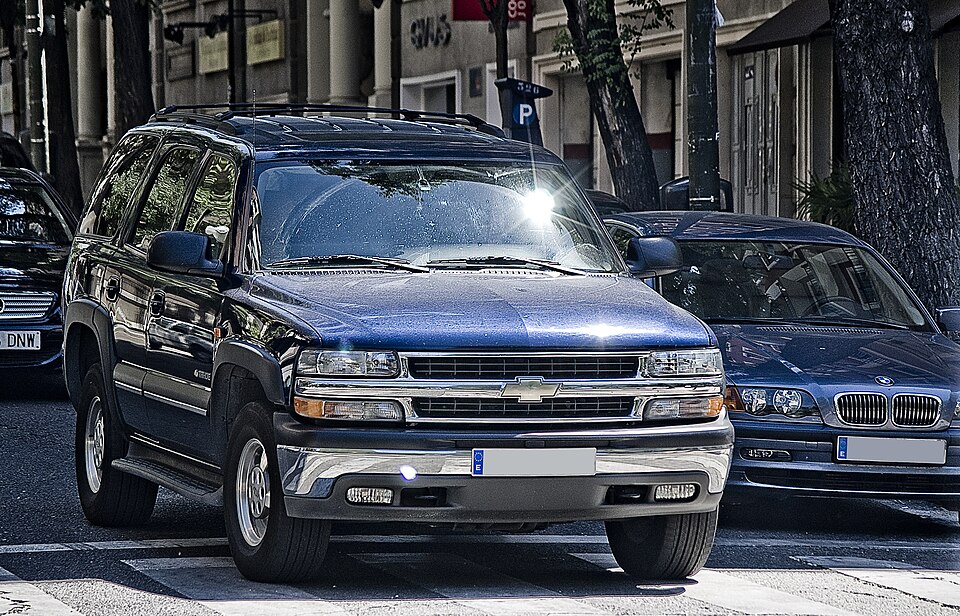
Pictured: a 2004 model; the 2005 may differ in details. Photo: 2004 Chevrolet Tahoe by Spanish Coches, CC BY 2.0, via Wikimedia Commons
How the 2005 compares
High
Fewest complaintsMost complaints
High complaint count among 27 Tahoe model years — 11th most.
5recalls
293complaints
9crashes
14fires
12injuries
80,000median miles
Owner complaints filed with NHTSA, not verified and not adjusted for sales. Ranking compares this model's own years only.
Does your car have an open recall? Recalls apply to specific vehicles. Only a VIN lookup on NHTSA's official site shows whether yours is affected and still unrepaired.
Feb 11, 2014 · NHTSA campaign 14V070000 · 22 vehicles
Problem: Monroe Truck Equipment (Monroe) is recalling certain model year 2006, 2008 and 2009 Chevrolet C7500 vehicles, 2005-2006 Chevrolet Tahoe vehicles, and 2009 Ford F-350, and F-450 vehicles, equipped with Sure Power-brand battery equalizers or DC-DC converters containing a particular epoxy sealing, aka 'potting', compound. The specific potting compound used in the subject products for insulation was found to be capable of conducting electricity after being exposed to heat.
Risk: Once electrically conductive, the material is capable of melting and burning, increasing the risk of a fire.
Remedy & notes
Monroe will notify owners, and Sure Power will replace the equalizers or converters, free of charge. The recall began on March 24, 2014. Owners may contact Monroe at 1-608-328-8127.
Owners may also contact the National Highway Traffic Safety Administration Vehicle Safety Hotline at 1-888-327-4236 (TTY 1-800-424-9153), or go to www.safercar.gov.
Air Bags
Oct 31, 2006 · NHTSA campaign 06V417000 · 794 vehicles
Problem: Certain vehicles originally built with cloth seats that were equipped with an automatic air bag passenger sensing system and later reupholstered with aftermarket leather seat cover kits are involved. Testing has indicated that the aftermarket leather seat covers can cause the passenger sensing system to malfunction.
Original NHTSA wording
CERTAIN VEHICLES ORIGINALLY BUILT WITH CLOTH SEATS THAT WERE EQUIPPED WITH AN AUTOMATIC AIR BAG PASSENGER SENSING SYSTEM AND LATER REUPHOLSTERED WITH AFTERMARKET LEATHER SEAT COVER KITS ARE INVOLVED. TESTING HAS INDICATED THAT THE AFTERMARKET LEATHER SEAT COVERS CAN CAUSE THE PASSENGER SENSING SYSTEM TO MALFUNCTION.
Risk: If the passenger sensing system malfunctions, the front air bag on the passenger side May be disabled when it should be enabled, or enabled when it should be disabled. In either case, in the event of a crash that requires air bag deployment, a front passenger's level of injury May be increased.
Original NHTSA wording
IF THE PASSENGER SENSING SYSTEM MALFUNCTIONS, THE FRONT AIR BAG ON THE PASSENGER SIDE MAY BE DISABLED WHEN IT SHOULD BE ENABLED, OR ENABLED WHEN IT SHOULD BE DISABLED. IN EITHER CASE, IN THE EVENT OF A CRASH THAT REQUIRES AIR BAG DEPLOYMENT, A FRONT PASSENGER'S LEVEL OF INJURY MAY BE INCREASED.
Remedy & notes
Because a replacement leather seat cover that is compatible with the passenger sensing system is not available, general motors (gm) will repurchase these vehicles in accordance with the terms stated in gm's letter to owners. The recall began on November 6, 2006. Owners should contact gm at 1-877-477-1022 to begin the process of repurchasing their vehicle.
Gm recall no. 06102.customers May also contact the national highway traffic safety administration's vehicle safety hotline at 1-888-327-4236 (tty 1-800-424-9153), or go to http://www.safercar.gov.
Problem: On certain crew cab pickup trucks and sport utility vehicles, the 2ND row center occupant seat belt routing May make it difficult to position the lap portion of the safety belt low around the hips of occupants, especially smaller occupants, seated in this position. Appropriate use of a child seat or booster seat, as recommended for small children, does improve the fit condition for this user group. In addition to instructions on proper infant and young child restraint (with child seats or boosters), special verbiage for restraining older child is included in the owner's manual. Also, the suggested seat belt fit/routing for adults, irrespective of seating position, is described in the owner's manual text.
Original NHTSA wording
ON CERTAIN CREW CAB PICKUP TRUCKS AND SPORT UTILITY VEHICLES, THE 2ND ROW CENTER OCCUPANT SEAT BELT ROUTING MAY MAKE IT DIFFICULT TO POSITION THE LAP PORTION OF THE SAFETY BELT LOW AROUND THE HIPS OF OCCUPANTS, ESPECIALLY SMALLER OCCUPANTS, SEATED IN THIS POSITION. APPROPRIATE USE OF A CHILD SEAT OR BOOSTER SEAT, AS RECOMMENDED FOR SMALL CHILDREN, DOES IMPROVE THE FIT CONDITION FOR THIS USER GROUP. IN ADDITION TO INSTRUCTIONS ON PROPER INFANT AND YOUNG CHILD RESTRAINT (WITH CHILD SEATS OR BOOSTERS), SPECIAL VERBIAGE FOR RESTRAINING OLDER CHILD IS INCLUDED IN THE OWNER'S MANUAL. ALSO, THE SUGGESTED SEAT BELT FIT/ROUTING FOR ADULTS, IRRESPECTIVE OF SEATING POSITION, IS DESCRIBED IN THE OWNER'S MANUAL TEXT.
Risk: A lap portion of the seat belt routing that is not low and snug on the hips can allow the lap belt to ride up on an occupant's abdomen instead of fitting low around their hipbones, and therefore, can expose them to more risk of abdominal and internal organ injury.
Original NHTSA wording
A LAP PORTION OF THE SEAT BELT ROUTING THAT IS NOT LOW AND SNUG ON THE HIPS CAN ALLOW THE LAP BELT TO RIDE UP ON AN OCCUPANT'S ABDOMEN INSTEAD OF FITTING LOW AROUND THEIR HIPBONES, AND THEREFORE, CAN EXPOSE THEM TO MORE RISK OF ABDOMINAL AND INTERNAL ORGAN INJURY.
Remedy & notes
Dealers will cut open the guide loop, remove a portion of the loop, and then the remaining two sides should be folded over and secured with a retainer free of charge. The recall began on July 21, 2005. Owners May contact Cadillac at 1-866-982-2339, Chevrolet at 1-800-630-2438, GMC at 1-866-996-9463, or Hummer at 1-800-732-5493.
Gm recall no. 05037.customers May also contact the national highway traffic safety administration's vehicle safety hotline at 1-888-327-4236 (tty 1-800-424-9153), or go to http://www.safercar.gov.
Service Brakes
Mar 18, 2005 · NHTSA campaign 05V103000 · 707 vehicles
Problem: On certain sport utility vehicles, the brake pedal pushrod retainer May be missing. If the retainer is missing, the brake booster pushrod could disengage from the brake pedal.
Original NHTSA wording
ON CERTAIN SPORT UTILITY VEHICLES, THE BRAKE PEDAL PUSHROD RETAINER MAY BE MISSING. IF THE RETAINER IS MISSING, THE BRAKE BOOSTER PUSHROD COULD DISENGAGE FROM THE BRAKE PEDAL.
Risk: This could result in a loss of brakes which could result in a crash.
Original NHTSA wording
THIS COULD RESULT IN A LOSS OF BRAKES WHICH COULD RESULT IN A CRASH.
Remedy & notes
Dealers will inspect the vehicles for the brake pedal pushrod retainer and install one if it is missing free of charge. The manufacturer began contacting owners by telephone on March 10, 2005. Owners May contact Chevrolet at 1-800-630-2438 or GMC at 1-866-996-9463.
Gm recall no. 05039.customers May also contact the national highway traffic safety administration's vehicle safety hotline at 1-888-327-4236 (tty 1-800-424-9153), or go to http://www.safercar.gov.
Power Train
Feb 14, 2005 · NHTSA campaign 05V055000 · 7,194 vehicles
Problem: Certain sport utility vehicles equipped with an automatic transmission, fail to comply with the requirements of federal motor vehicle safety standard no. 102, "transmission shift lever sequence, starter interlock and transmission braking effect." under certain vehicle starting conditions, the shift lever position indicator located in the instrument panel cluster May not illuminate. If the shift lever position indicator does not illuminate, the driver May not know which gear the vehicle is in.
Original NHTSA wording
CERTAIN SPORT UTILITY VEHICLES EQUIPPED WITH AN AUTOMATIC TRANSMISSION, FAIL TO COMPLY WITH THE REQUIREMENTS OF FEDERAL MOTOR VEHICLE SAFETY STANDARD NO. 102, "TRANSMISSION SHIFT LEVER SEQUENCE, STARTER INTERLOCK AND TRANSMISSION BRAKING EFFECT." UNDER CERTAIN VEHICLE STARTING CONDITIONS, THE SHIFT LEVER POSITION INDICATOR LOCATED IN THE INSTRUMENT PANEL CLUSTER MAY NOT ILLUMINATE. IF THE SHIFT LEVER POSITION INDICATOR DOES NOT ILLUMINATE, THE DRIVER MAY NOT KNOW WHICH GEAR THE VEHICLE IS IN.
Risk: The vehicle May move in an unintended direction resulting in possible injury to others outside of the vehicle.
Original NHTSA wording
THE VEHICLE MAY MOVE IN AN UNINTENDED DIRECTION RESULTING IN POSSIBLE INJURY TO OTHERS OUTSIDE OF THE VEHICLE.
Remedy & notes
Dealers will reprogram the instrument panel cluster free of charge. The recall began on February 14, 2005. Owners May contact Cadillac at 1-866-982-2339, Chevrolet at 1-800-630-2438, and GMC at 1-866-996-9463.
Gm recall no. 05023.customers May also contact the national highway traffic safety administration's vehicle safety hotline at 1-888-327-4236 (tty 1-800-424-9153), or go to http://www.safercar.gov.
Recall text as published by NHTSA and the manufacturer.
Owner complaints filed with NHTSA; one complaint can name several areas. Not verified by NHTSA.
Complaints by year filed
2005 vs. other Chevrolet Tahoe years
Owner complaints by model year; the darker bar is the 2005. Click a bar to switch year.
Questions
Does the 2005 Chevrolet Tahoe have recalls?
Yes — NHTSA lists 5 recall campaigns covering the 2005 Chevrolet Tahoe, the latest from Feb 11, 2014 (electrical system). A recall applies to specific vehicles: enter your VIN at nhtsa.gov/recalls to see whether yours is affected and still open.
What are the most common problems with the 2005 Chevrolet Tahoe?
Owner complaints filed with NHTSA most often mention electrical system (126), fuel system (30), power train (24). Complaints are consumer reports and are not verified by NHTSA.
 Recalls by Model