2001 BMW X5 recalls and problems

The 2001 BMW X5 has 12 recalls and 160 owner complaints on file with NHTSA; the most reported problem area is engine.

Do not drive warning. NHTSA and the manufacturer advise owners not to drive affected vehicles until the recall repair is done. Affected campaigns: 25V748000, 17V047000.
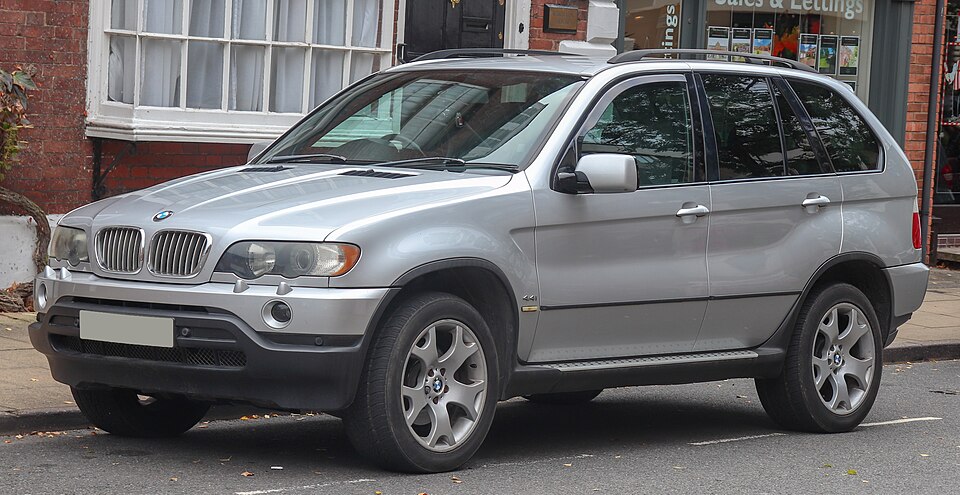
2002 Bmw X5
Pictured: a 2002 model; the 2001 may differ in details. Photo: 2002 Bmw X5 by Vauxford, CC BY-SA 4.0, via Wikimedia Commons
How the 2001 compares
Fewest complaintsMost complaints

High complaint count among 27 X5 model years — 6th most.

12recalls
160complaints
4crashes
16fires
11injuries
80,157median miles

Owner complaints filed with NHTSA, not verified and not adjusted for sales. Ranking compares this model's own years only.

Does your car have an open recall?
Recalls apply to specific vehicles. Only a VIN lookup on NHTSA's official site shows whether yours is affected and still unrepaired.
Check your VIN →

12 recalls

Air Bags

Oct 31, 2025 · NHTSA campaign 25V748000 · 5,361 vehicles
Do not drive

Problem: BMW of North America, LLC (BMW) is recalling certain 2000-2001 X5 vehicles that may be equipped with a sport steering wheel containing a Takata PSDI-4 air bag inflator. The inflator may explode during deployment due to propellant degradation occurring after long-term exposure to high absolute humidity, temperature, and temperature cycling.

Risk: An inflator explosion may result in sharp metal fragments striking the driver or other occupants, resulting in serious injury or death.

Remedy

Owners are advised not to drive their vehicles until the remedy is complete. Dealers will inspect and replace the driver's front air bag, as necessary, free of charge. Owner notification letters were mailed December 29, 2025. Owners may contact BMW customer service at 1-800-525-7417. Vehicle Identification Numbers (VINs) involved in this recall will be searchable on NHTSA.gov beginning December 23, 2025. This recall expands previous NHTSA recall number 19V015.

Air Bags

Jan 20, 2017 · NHTSA campaign 17V047000 · 230,117 vehicles
Do not drive

Problem: BMW of North America, LLC (BMW) is recalling certain 2000-2002 BMW 320i, 323i, 325i, 325xi, 330i, 330xi, 323Ci, 325Ci, 330Ci, M3, 323iT, 325iT and 325xiT vehicles, 2001-2002 525i, 530i, 540i, M5, 525iT and 540iT vehicles, and 2001-2003 X5 3.0i, X5 4.4i, and X5 4.6is vehicles. These vehicles may have had a driver-side air bag module installed as replacement equipment such as after a vehicle crash necessitating replacement of the original air bag, or as a remedy part for a prior recall. These replacement modules contain an air bag inflator that may rupture due to propellant degradation occurring after long-term exposure to lower absolute humidity, temperature and temperature cycling.

Risk: In the event of a crash necessitating deployment of the driver's frontal air bag, the inflator could rupture with metal fragments striking the driver or other occupants resulting in serious injury or death.

Remedy & notes

Owners are advised not to drive their vehicles until the vehicle has been remedied. BMW will notify owners, and dealers will inspect the driver side air bag module, replacing it as necessary, free of charge. The recall began March 15, 2017. Owners may contact BMW customer service at 1-800-525-7417.

Owners may also contact the National Highway Traffic Safety Administration Vehicle Safety Hotline at 1-888-327-4236 (TTY 1-800-424-9153), or go to www.safercar.gov.

Service Brakes

Jan 9, 2003 · NHTSA campaign 03V001000 · 84,000 vehicles

Problem: On certain sport utility vehicles, it May be possible for the front brake line to slip out of the retaining bracket located at the front strut. The brake hose that is attached to the brake line could come in contact with the tire and be subjected to wear and abrasion.

Original NHTSA wording

ON CERTAIN SPORT UTILITY VEHICLES, IT MAY BE POSSIBLE FOR THE FRONT BRAKE LINE TO SLIP OUT OF THE RETAINING BRACKET LOCATED AT THE FRONT STRUT. THE BRAKE HOSE THAT IS ATTACHED TO THE BRAKE LINE COULD COME IN CONTACT WITH THE TIRE AND BE SUBJECTED TO WEAR AND ABRASION.

Risk: This could initially cause some brake fluid leakage, and eventually lead to a substantial loss of brake fluid. There could be a noticeable reduction in brake performance if a loss of front brake performance occurs.

Original NHTSA wording

THIS COULD INITIALLY CAUSE SOME BRAKE FLUID LEAKAGE, AND EVENTUALLY LEAD TO A SUBSTANTIAL LOSS OF BRAKE FLUID. THERE COULD BE A NOTICEABLE REDUCTION IN BRAKE PERFORMANCE IF A LOSS OF FRONT BRAKE PERFORMANCE OCCURS.

Remedy & notes

Dealers will install an additional retaining clip to further secure the brake line to the front strut. Additionally, if inspection of any brake hose indicates that it has experienced damage, the hose will be replaced. Owner notification began February 14, 2003. Owners who take their vehicles to an authorized dealer on an agreed upon service date and do not receive the free remedy within a reasonable time should contact BMW at 1-800-831-1117.

Customers can also contact the national highway traffic safety administration's auto safety hotline at 1-888-DASH-2-DOT (1-888-327-4236).

Service Brakes

Jul 24, 2002 · NHTSA campaign 02V194000 · 34,860 vehicles

Problem: On certain passenger vehicles, due to a manufacturing problem, the brake pedal arm pivot shaft could loosen from its support bracket.

Original NHTSA wording

ON CERTAIN PASSENGER VEHICLES, DUE TO A MANUFACTURING PROBLEM, THE BRAKE PEDAL ARM PIVOT SHAFT COULD LOOSEN FROM ITS SUPPORT BRACKET.

Risk: Eventually, the brake pedal arm could detach from the bracket, rendering the service braking system ineffective, increasing the risk of a crash.

Original NHTSA wording

EVENTUALLY, THE BRAKE PEDAL ARM COULD DETACH FROM THE BRACKET, RENDERING THE SERVICE BRAKING SYSTEM INEFFECTIVE, INCREASING THE RISK OF A CRASH.

Remedy & notes

Dealers will check the brake pedal arm pivot shaft for proper seating in its support bracket. In addition, a pin will be installed to secure the shaft to the bracket. Owner notification began August 14, 2002. Owners who take their vehicles to an authorized dealer on an agreed upon service date and do not receive the free remedy within a reasonable time should contact BMW at 1-800-332-4269.

Also, customers can contact the national highway traffic safety administration's auto safety hotline at 1-888-DASH-2-DOT (1-888-327-4236).

Engine

May 16, 2002 · NHTSA campaign 02V138000 · 1,550 vehicles

Problem: On certain passenger vehicles, the engine auxiliary/cooling fan operation, including variable speed, is electronically controlled. Failure of the fan motor can cause the electrical circuitry of the fan control unit to overload and fail, causing the fan to stop operating.

Original NHTSA wording

ON CERTAIN PASSENGER VEHICLES, THE ENGINE AUXILIARY/COOLING FAN OPERATION, INCLUDING VARIABLE SPEED, IS ELECTRONICALLY CONTROLLED. FAILURE OF THE FAN MOTOR CAN CAUSE THE ELECTRICAL CIRCUITRY OF THE FAN CONTROL UNIT TO OVERLOAD AND FAIL, CAUSING THE FAN TO STOP OPERATING.

Risk: If this were to occur, engine overheating and subsequent engine damage could result. In addition, it is possible for the failure of the electrical circuitry to cause a fire in the fan control unit located in the front of the engine compartment.

Original NHTSA wording

IF THIS WERE TO OCCUR, ENGINE OVERHEATING AND SUBSEQUENT ENGINE DAMAGE COULD RESULT. IN ADDITION, IT IS POSSIBLE FOR THE FAILURE OF THE ELECTRICAL CIRCUITRY TO CAUSE A FIRE IN THE FAN CONTROL UNIT LOCATED IN THE FRONT OF THE ENGINE COMPARTMENT.

Remedy & notes

Dealers will replace the fan. Owner notification began September 28, 2001. This is a supplement to a recall that began during September 2001 (see recall campaign 01V206). Owners who take their vehicles to an authorized dealer on an agreed upon service date and do not receive the free remedy within a reasonable time should contact BMW at 1-800-831-1117.

Also contact the national highway traffic safety administration's auto safety hotline at 1-888-DASH-2-DOT (1-888-327-4236).

Engine

Jun 21, 2001 · NHTSA campaign 01V206000 · 76,469 vehicles

Problem: Vehicle description: Passenger vehicles. The engine auxiliary/cooling fan operation, including variable speed, is electronically controlled. Failure of the fan motor can cause the electrical circuitry of the fan control unit to overload and fail, causing the fan to stop operating.

Original NHTSA wording

VEHICLE DESCRIPTION: PASSENGER VEHICLES. THE ENGINE AUXILIARY/COOLING FAN OPERATION, INCLUDING VARIABLE SPEED, IS ELECTRONICALLY CONTROLLED. FAILURE OF THE FAN MOTOR CAN CAUSE THE ELECTRICAL CIRCUITRY OF THE FAN CONTROL UNIT TO OVERLOAD AND FAIL, CAUSING THE FAN TO STOP OPERATING.

Risk: If this were to occur, engine overheating and subsequent engine damage could result. In addition, it is possible for the failure of the electrical circuitry to cause a fire in the fan control unit located in the front of the engine compartment.

Original NHTSA wording

IF THIS WERE TO OCCUR, ENGINE OVERHEATING AND SUBSEQUENT ENGINE DAMAGE COULD RESULT. IN ADDITION, IT IS POSSIBLE FOR THE FAILURE OF THE ELECTRICAL CIRCUITRY TO CAUSE A FIRE IN THE FAN CONTROL UNIT LOCATED IN THE FRONT OF THE ENGINE COMPARTMENT.

Remedy & notes

Dealers will replace the fan. Owner notification began September 28, 2001. Owners who take their vehicles to an authorized dealer on an agreed upon service date and do not receive the free remedy within a reasonable time should contact BMW at 1-800-831-1117.

Also contact the national highway traffic safety administration's auto safety hotline at 1-888-DASH-2-DOT (1-888-327-4236).

Service Brakes

Jun 14, 2001 · NHTSA campaign 01V197000 · 36 vehicles

Problem: Vehicle description: Sport utility vehicles. Due to an assembly error, one or both self-locking nuts that secure the pedal assembly to the booster May have been cross-threaded on the booster studs that protrude through the firewall. In such a case, the nut(s) would not be fully seated on the stud(s).

Original NHTSA wording

VEHICLE DESCRIPTION: SPORT UTILITY VEHICLES. DUE TO AN ASSEMBLY ERROR, ONE OR BOTH SELF-LOCKING NUTS THAT SECURE THE PEDAL ASSEMBLY TO THE BOOSTER MAY HAVE BEEN CROSS-THREADED ON THE BOOSTER STUDS THAT PROTRUDE THROUGH THE FIREWALL. IN SUCH A CASE, THE NUT(S) WOULD NOT BE FULLY SEATED ON THE STUD(S).

Risk: If this occurred, the effective brake pedal travel could be reduced due to relative movement between the pedal and booster. Braking performance while driving could be adversely affected. In addition, it is possible that the booster could develop a leak after an extended period of time resulting in a reduction in brake power assist.

Original NHTSA wording

IF THIS OCCURRED, THE EFFECTIVE BRAKE PEDAL TRAVEL COULD BE REDUCED DUE TO RELATIVE MOVEMENT BETWEEN THE PEDAL AND BOOSTER. BRAKING PERFORMANCE WHILE DRIVING COULD BE ADVERSELY AFFECTED. IN ADDITION, IT IS POSSIBLE THAT THE BOOSTER COULD DEVELOP A LEAK AFTER AN EXTENDED PERIOD OF TIME RESULTING IN A REDUCTION IN BRAKE POWER ASSIST.

Remedy & notes

Dealers will inspect the two lock nuts to determine if they are properly seated. If the nuts are not properly seated or are cross-threaded, the brake booster will be replaced. Owner notification began August 17, 2001. Owners who take their vehicles to an authorized dealer on an agreed upon service date and do not receive the free remedy within a reasonable time should contact BMW at 1-800-831-1117.

Also contact the national highway traffic safety administration's auto safety hotline at 1-888-DASH-2-DOT (1-888-327-4236).

Power Train

Jun 14, 2001 · NHTSA campaign 01V196000 · 14,300 vehicles

Problem: Vehicle description: 4.4I sport utility vehicles. Over an extended period of time, abrasion particles could deposit on the electrical contacts within the switch, causing a disruption of the electric current through the contacts. If the disruption occurs when the vehicle is stationary with the transmission in the neutral or park positions, the transmission will switch automatically into the emergency program, which is displayed in the instrument cluster via a warning lamp and a message, "trans. Fail-safe prog." in this case, the vehicle can be driven in lower gears only with limited engine output.

Original NHTSA wording

VEHICLE DESCRIPTION: 4.4I SPORT UTILITY VEHICLES. OVER AN EXTENDED PERIOD OF TIME, ABRASION PARTICLES COULD DEPOSIT ON THE ELECTRICAL CONTACTS WITHIN THE SWITCH, CAUSING A DISRUPTION OF THE ELECTRIC CURRENT THROUGH THE CONTACTS. IF THE DISRUPTION OCCURS WHEN THE VEHICLE IS STATIONARY WITH THE TRANSMISSION IN THE NEUTRAL OR PARK POSITIONS, THE TRANSMISSION WILL SWITCH AUTOMATICALLY INTO THE EMERGENCY PROGRAM, WHICH IS DISPLAYED IN THE INSTRUMENT CLUSTER VIA A WARNING LAMP AND A MESSAGE, "TRANS. FAIL-SAFE PROG." IN THIS CASE, THE VEHICLE CAN BE DRIVEN IN LOWER GEARS ONLY WITH LIMITED ENGINE OUTPUT.

Risk: If this problem occurs, the ability to maintain speed in traffic and/or accelerate could be greatly diminished, possibly leading to a crash.

Original NHTSA wording

IF THIS PROBLEM OCCURS, THE ABILITY TO MAINTAIN SPEED IN TRAFFIC AND/OR ACCELERATE COULD BE GREATLY DIMINISHED, POSSIBLY LEADING TO A CRASH.

Remedy & notes

Dealers will replace the transmission gear position indicator switch. Owner notification began August 14, 2001. Owners who take their vehicles to an authorized dealer on an agreed upon service date and do not receive the free remedy within a reasonable time should contact BMW at 1-800-831-1117.

Also contact the national highway traffic safety administration's auto safety hotline at 1-888-DASH-2-DOT (1-888-327-4236).

Steering

May 24, 2001 · NHTSA campaign 01V173000 · 47 vehicles

Problem: Vehicle description: Passenger vehicles. Due to an assembly error during vehicle production, any of the three bolts that secure the pulley to the pump May have been inadequately tightened.

Original NHTSA wording

VEHICLE DESCRIPTION: PASSENGER VEHICLES. DUE TO AN ASSEMBLY ERROR DURING VEHICLE PRODUCTION, ANY OF THE THREE BOLTS THAT SECURE THE PULLEY TO THE PUMP MAY HAVE BEEN INADEQUATELY TIGHTENED.

Risk: In such a case, the bolts could ultimately loosen causing the pulley to throw off the drive belt. This would result in the loss of certain engine auxiliary functions, i.e., power steering assist, water pump, or alternator. Steering effort would then be increased.

Original NHTSA wording

IN SUCH A CASE, THE BOLTS COULD ULTIMATELY LOOSEN CAUSING THE PULLEY TO THROW OFF THE DRIVE BELT. THIS WOULD RESULT IN THE LOSS OF CERTAIN ENGINE AUXILIARY FUNCTIONS, I.E., POWER STEERING ASSIST, WATER PUMP, OR ALTERNATOR. STEERING EFFORT WOULD THEN BE INCREASED.

Remedy & notes

Dealers will inspect the power steering pump pulley to see if it is loose. If the pulley is not loose on the pump, the retaining bolts will be torqued to specification. If the pulley is loose, the pump, pulley, attaching bolts, and drive belt will be replaced. Owner notification began August 17, 2001. Owners who take their vehicles to an authorized dealer on an agreed upon service date and do not receive the free remedy within a reasonable time should contact BMW at 1-800-831-1117.

Also contact the national highway traffic safety administration's auto safety hotline at 1-888-DASH-2-DOT (1-888-327-4236).

Steering

Feb 6, 2001 · NHTSA campaign 01V030000 · 13,791 vehicles

Problem: Vehicle description: Passenger vehicles. During assembly of these vehicles, the lower end of the spindle May not have been inserted completely into the coupling. In such a case, the fastening bolt used to secure the connection May not completely engage the spindle within the coupling. During driving, it would be possible for the spindle to disconnect.

Original NHTSA wording

VEHICLE DESCRIPTION: PASSENGER VEHICLES. DURING ASSEMBLY OF THESE VEHICLES, THE LOWER END OF THE SPINDLE MAY NOT HAVE BEEN INSERTED COMPLETELY INTO THE COUPLING. IN SUCH A CASE, THE FASTENING BOLT USED TO SECURE THE CONNECTION MAY NOT COMPLETELY ENGAGE THE SPINDLE WITHIN THE COUPLING. DURING DRIVING, IT WOULD BE POSSIBLE FOR THE SPINDLE TO DISCONNECT.

Risk: This could result in a loss of steering capability and increasing the risk of a crash.

Original NHTSA wording

THIS COULD RESULT IN A LOSS OF STEERING CAPABILITY AND INCREASING THE RISK OF A CRASH.

Remedy & notes

Dealers will inspect the spindle to ensure proper insertion in the coupling, and, if necessary, the spindle will be fully inserted and the fastening bolt replaced. Owner notification began February 6, 2001. Owners who take their vehicles to an authorized dealer on an agreed upon service date and do not receive the free remedy within a reasonable time should contact BMW at 1-800-831-1117.

Also contact the national highway traffic safety administration's auto safety hotline at 1-888-DASH-2-DOT (1-888-327-4236).

Steering

Oct 24, 2000 · NHTSA campaign 00V341000 · 2,643 vehicles

Problem: Vehicle description: Sport utility vehicles. The nut that secures the axial joint of the left steering tie rod to the steering gear box May have not have been tightened securely. This could lead to loosening of the nut and, initially to steering wheel play and/or misalignment, as well as noise from the steering linkage. If vehicle operation continues, the tie rod could disconnect from the steering gear box.

Original NHTSA wording

VEHICLE DESCRIPTION: SPORT UTILITY VEHICLES. THE NUT THAT SECURES THE AXIAL JOINT OF THE LEFT STEERING TIE ROD TO THE STEERING GEAR BOX MAY HAVE NOT HAVE BEEN TIGHTENED SECURELY. THIS COULD LEAD TO LOOSENING OF THE NUT AND, INITIALLY TO STEERING WHEEL PLAY AND/OR MISALIGNMENT, AS WELL AS NOISE FROM THE STEERING LINKAGE. IF VEHICLE OPERATION CONTINUES, THE TIE ROD COULD DISCONNECT FROM THE STEERING GEAR BOX.

Risk: If this were to occur, loss of steering control could result.

Original NHTSA wording

IF THIS WERE TO OCCUR, LOSS OF STEERING CONTROL COULD RESULT.

Remedy & notes

Dealers will inspect and re-torque the nut securing the axial joint of the left steering tie rod. If the torque of the nut is found to be loose, the right nut will also be checked and corrected if necessary, and a front wheel alignment will be performed.

Owner notification began November 14, 2000.owners who take their vehicles to an authorized dealer on an agreed upon service date and do not receive the free remedy within a reasonable time should contact BMW at 1-800-831-1117.also contact the national highway traffic safety administration's auto safety hotline at 1-888-DASH-2-DOT (1-888-327-4236).

Seat Belts

Sep 11, 2000 · NHTSA campaign 00V261000 · 490 vehicles

Problem: Vehicle description: Sport utility vehicles. The safety belt lower outboard anchorage bolt on the driver's and front passenger's seats May not have been secured properly.

Original NHTSA wording

VEHICLE DESCRIPTION: SPORT UTILITY VEHICLES. THE SAFETY BELT LOWER OUTBOARD ANCHORAGE BOLT ON THE DRIVER'S AND FRONT PASSENGER'S SEATS MAY NOT HAVE BEEN SECURED PROPERLY.

Risk: In the event of a crash, the safety belt system might not be able to provide its maximum restraint function.

Original NHTSA wording

IN THE EVENT OF A CRASH, THE SAFETY BELT SYSTEM MIGHT NOT BE ABLE TO PROVIDE ITS MAXIMUM RESTRAINT FUNCTION.

Remedy & notes

Dealers will inspect the bolts and correct the torque if necessary.

Owner notification began September 27,2000.owners who take their vehicles to an authorized dealer on an agreed upon service date and do not receive the free remedy within a reasonable time should contact BMW at 1-800-831-1117. Also contact the national highway traffic safety administration's auto safety hotline at 1-888-DASH-2-DOT (1-888-327-4236).

Recall text as published by NHTSA and the manufacturer.

What owners complain about

Owner complaints filed with NHTSA; one complaint can name several areas. Not verified by NHTSA.

Complaints by year filed

2000: 4 complaints20002001: 12 complaints2002: 16 complaints20022003: 14 complaints2004: 15 complaints20042005: 18 complaints182006: 9 complaints20062007: 5 complaints2008: 11 complaints20082009: 7 complaints2010: 6 complaints20102011: 6 complaints2012: 3 complaints20122013: 2 complaints2014: 5 complaints20142015: 1 complaints2016: 7 complaints20162017: 10 complaints2018: 3 complaints20182019: 1 complaints2020: 2 complaints20202024: 1 complaints2025: 1 complaints20252026: 1 complaints20261

2001 vs. other BMW X5 years

Owner complaints by model year; the darker bar is the 2001. Click a bar to switch year.

Questions

Does the 2001 BMW X5 have recalls?

Yes — NHTSA lists 12 recall campaigns covering the 2001 BMW X5, the latest from Oct 31, 2025 (air bags). A recall applies to specific vehicles: enter your VIN at nhtsa.gov/recalls to see whether yours is affected and still open.

What are the most common problems with the 2001 BMW X5?

Owner complaints filed with NHTSA most often mention engine (38), electrical system (24), latches/locks/linkages (18). Complaints are consumer reports and are not verified by NHTSA.

Is it safe to drive the 2001 BMW X5?

2 recalls for this model year carry a "Do Not Drive" advisory. Only vehicles with the recall open are affected — check your VIN at nhtsa.gov/recalls.