2015 Tesla Model X recalls and problems

The 2015 Tesla Model X has 2 recalls and 0 owner complaints on file with NHTSA.

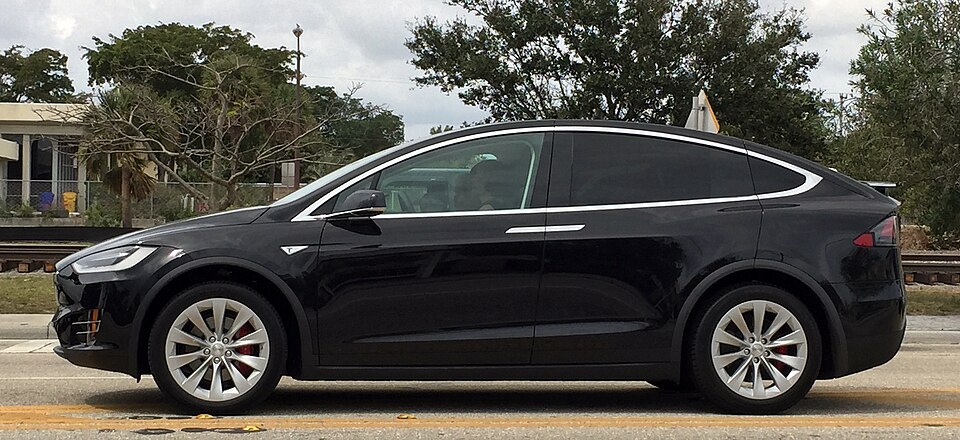
2016 Tesla Model X
Pictured: a 2016 model; the 2015 may differ in details. Photo: 2016 Tesla Model X by CZmarlin — Christopher Ziemnowicz — a photo credit is required if this image is used anywhere other than Wikipedia., CC BY-SA 4.0, via Wikimedia Commons
How the 2015 compares

Too few model years with complaints to compare.

2recalls
0complaints
0crashes
0fires
0injuries
—median miles

Owner complaints filed with NHTSA, not verified and not adjusted for sales. Ranking compares this model's own years only.

Does your car have an open recall?
Recalls apply to specific vehicles. Only a VIN lookup on NHTSA's official site shows whether yours is affected and still unrepaired.
Check your VIN →

2 recalls

Seat Belts

May 28, 2024 · NHTSA campaign 24V376000 · 125,233 vehicles

Problem: Tesla, Inc. (Tesla) is recalling certain 2012-2024 Model S, 2015-2024 Model X, 2017-2023 Model 3, and 2020-2023 Model Y vehicles. In the event of an unbelted driver, the seat belt warning light and audible chime may not activate as intended. As such, these vehicles fail to comply with the requirements of Federal Motor Vehicle Safety Standard number 208, "Occupant Crash Protection."

Risk: A seat belt warning system that fails to alert occupants of an unbelted seat belt can increase the risk of injury during a crash.

Remedy & notes

Tesla will release an over-the-air (OTA) software update. Owner notification letters were mailed July 26, 2024. Owners may contact Tesla customer service at 1-877-798-3752. Tesla's number for this recall is SB-24-00-008.

Owners may also contact the National Highway Traffic Safety Administration Vehicle Safety Hotline at 1-888-327-4236 (TTY 1-800-424-9153), or go to www.nhtsa.gov.

Steering

Feb 5, 2020 · NHTSA campaign 20V062000 · 14,113 vehicles

Problem: Tesla, Inc. (Tesla) is recalling certain 2015-2016 Model X vehicles. The aluminum bolts that attach the power steering gear assist motor to the gear housing may corrode and fracture causing a reduction or complete loss of power steering assist.

Risk: Loss of power steering assist would require a higher steering effort, especially at lower speeds, which may increase the risk of a crash.

Remedy & notes

Tesla will notify owners, and Tesla Service Centers will replace the steering gear mounting bolts with coated steel bolts, and add a corrosion-preventative sealer to the steering gear motor housing and motor connection bolts. If the mounting bolts are found to be broken or break during removal and cannot be removed, a new steering gear will also be installed. All services will be performed free of charge. The recall began February 15, 2021. Owners may contact Tesla customer service at 1-877-798-3752.

Owners may also contact the National Highway Traffic Safety Administration Vehicle Safety Hotline at 1-888-327-4236 (TTY 1-800-424-9153), or go to www.safercar.gov.

Recall text as published by NHTSA and the manufacturer.

NHTSA investigations

Sudden Unintended Acceleration

DP23002 · opened Jun 29, 2023 · open
Summary

The Office of Defects Investigation (ODI) received a petition requesting that ODI reevaluate its decision to deny DP20-001 on the basis that intermittent high electrical current demands on the vehicles' 12VDC systems may have caused some or all of the incidents examined by ODI in DP20-001. The petitioner bases this information on a review of open-source research and the DP20-001 denial. The petition and related materials can be reviewed at NHTSA.gov under the following ODI number: 11528471.

Defect Petition Interlock Request

DP23001 · opened Apr 7, 2023 · closed Mar 18, 2026
Summary

On March 21, 2023, the Office of Defects Investigation (ODI) received a petition requesting a “recall of all Tesla cars” produced from 2013 to the date on which the petition was filed due to what Petitioner considers to be the increased likelihood of pedal misapplication. Attached to the Petition is a paper authored by Petitioner. According to Petitioner, the differences in the operator controls between the subject Tesla vehicles and internal combustion engine powered vehicles promote driver pedal misapplication, leading to sudden unintended acceleration (SUA) incidents. To fix this alleged defect, Petitioner argues that the subject vehicles should be equipped with measures that require: (i) occasional removal of the driver’s foot from the pedals; and (ii) application of the brake pedal before fully stopping the vehicle. ODI evaluated the allegations by, among other things, reviewing the Petition and supporting technical paper, and analyzing Tesla’s response to ODI’s Information Request. ODI is denying this Petition. ODI has not found evidence that warrants the opening of a safety defect investigation into the Tesla vehicles as described in the Petition. The use of regenerative braking controlled by the accelerator pedal, or one-pedal driving, is common across most light vehicle manufacturers of electric vehicles and Tesla vehicles are not unique in this respect. Further, ODI identified only a handful of collisions potentially within the scope of the alleged defect;…

Autopilot & First Responder Scenes

PE21020 · opened Aug 13, 2021 · closed Jun 8, 2022
Summary

On August 13, 2021, NHTSA?s Office of Defects Investigation (ODI) opened a Preliminary Evaluation (PE21-020) to assess the performance of Tesla?s Autopilot system (a system characterized by Tesla as an SAE Level 2 driving automation system designed to support and assist the driver in performing the driving task) available in Tesla vehicles. The investigation opening was motivated by an accumulation of crashes in which Tesla vehicles, operating with Autopilot engaged, struck stationary in-road or roadside first responder vehicles tending to pre-existing collision scenes. Upon opening the investigation, NHTSA indicated that the PE would also evaluate additional similar circumstance crashes of Tesla vehicles operating with Autopilot engaged, as well as assess the technologies and methods used to monitor, assist, and enforce the driver?s engagement with the dynamic driving task during Autopilot operation.PE21-020 is upgraded to an Engineering Analysis (EA) to extend the existing crash analysis, evaluate additional data sets, perform vehicle evaluations, and to explore the degree to which Autopilot and associated Tesla systems may exacerbate human factors or behavioral safety risks by undermining the effectiveness of the driver?s supervision. In doing so, NHTSA plans to continue its assessment of vehicle control authority, driver engagement technologies, and related human factors considerations.The attached Detailed Summary further describes NHTSA?s review to date and the basis fo…

2015 vs. other Tesla Model X years

Owner complaints by model year; the darker bar is the 2015. Click a bar to switch year.

Questions

Does the 2015 Tesla Model X have recalls?

Yes — NHTSA lists 2 recall campaigns covering the 2015 Tesla Model X, the latest from May 28, 2024 (seat belts). A recall applies to specific vehicles: enter your VIN at nhtsa.gov/recalls to see whether yours is affected and still open.

What are the most common problems with the 2015 Tesla Model X?

Few complaints have been filed with NHTSA for the 2015 Tesla Model X.