2012 Tesla Model S recalls and problems

The 2012 Tesla Model S has 8 recalls and 61 owner complaints on file with NHTSA; the most reported problem area is electrical system.

2013 Tesla Model S
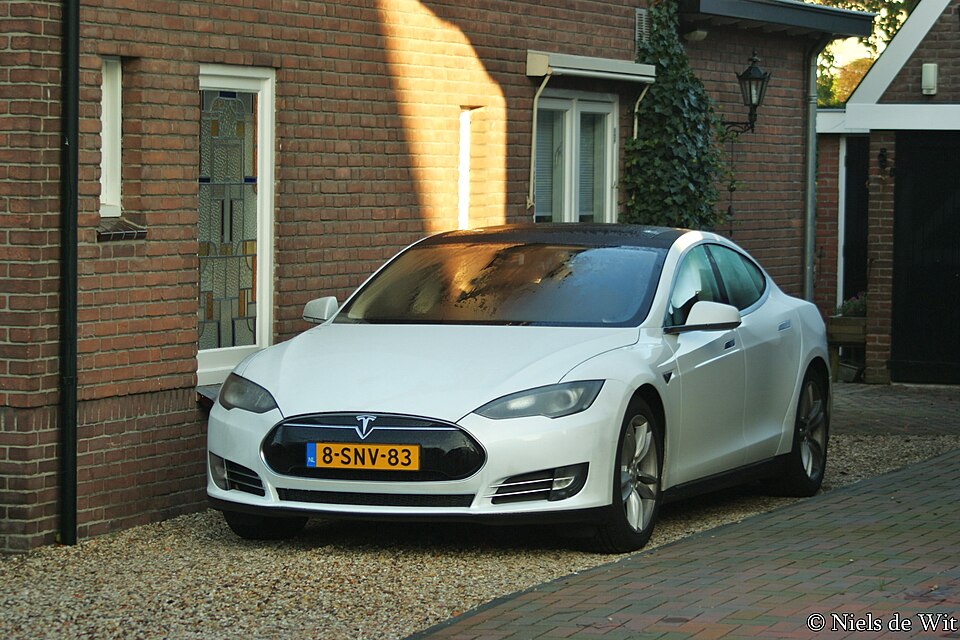
Pictured: a 2013 model; the 2012 may differ in details. Photo: 2013 Tesla Model S by Niels de Wit from Lunteren, The Netherlands, CC BY 2.0, via Wikimedia Commons
How the 2012 compares
Fewest complaintsMost complaints

Low complaint count among 15 Model S model years — 11th most.

8recalls
61complaints
4crashes
1fires
6injuries
68,481median miles

Owner complaints filed with NHTSA, not verified and not adjusted for sales. Ranking compares this model's own years only.

Does your car have an open recall?
Recalls apply to specific vehicles. Only a VIN lookup on NHTSA's official site shows whether yours is affected and still unrepaired.
Check your VIN →

8 recalls

Seat Belts

May 28, 2024 · NHTSA campaign 24V376000 · 125,233 vehicles

Problem: Tesla, Inc. (Tesla) is recalling certain 2012-2024 Model S, 2015-2024 Model X, 2017-2023 Model 3, and 2020-2023 Model Y vehicles. In the event of an unbelted driver, the seat belt warning light and audible chime may not activate as intended. As such, these vehicles fail to comply with the requirements of Federal Motor Vehicle Safety Standard number 208, "Occupant Crash Protection."

Risk: A seat belt warning system that fails to alert occupants of an unbelted seat belt can increase the risk of injury during a crash.

Remedy & notes

Tesla will release an over-the-air (OTA) software update. Owner notification letters were mailed July 26, 2024. Owners may contact Tesla customer service at 1-877-798-3752. Tesla's number for this recall is SB-24-00-008.

Owners may also contact the National Highway Traffic Safety Administration Vehicle Safety Hotline at 1-888-327-4236 (TTY 1-800-424-9153), or go to www.nhtsa.gov.

Electrical System

Jan 30, 2024 · NHTSA campaign 24V051000 · 2,193,869 vehicles

Problem: Tesla, Inc. (Tesla) is recalling certain 2012-2023 Model S, 2016-2024 Model X, 2017-2023 Model 3, 2019-2024 Model Y, and 2024 Cybertruck vehicles. An incorrect font size is displayed on the instrument panel for the Brake, Park, and Antilock Brake System (ABS) warning lights. As such, these vehicles fail to comply with the requirements of Federal Motor Vehicle Safety Standard number 105, "Hydraulic and Electric Brake Systems" and 135, "Light Vehicle Brake Systems."

Risk: Warning lights with a smaller font size can make critical safety information on the instrument panel difficult to read, increasing the risk of a crash.

Remedy & notes

Tesla began releasing an over-the-air (OTA) software update, free of charge. Owners may contact Tesla customer service at 1-877-798-3752. Tesla's number for this recall is SB-24-00-003.

Owners may also contact the National Highway Traffic Safety Administration Vehicle Safety Hotline at 1-888-327-4236 (TTY 1-800-424-9153), or go to www.nhtsa.gov.

Electrical System

Dec 12, 2023 · NHTSA campaign 23V838000 · 2,031,220 vehicles

Problem: Tesla, Inc. (Tesla) is recalling 2012-2023 Model S, 2016-2023 Model X, 2017-2023 Model 3, and 2020-2023 Model Y vehicles equipped with all versions of Autosteer leading up to the version(s) that contains the recall remedy. In certain circumstances when Autosteer is engaged, the prominence and scope of the feature's controls may not be sufficient to prevent driver misuse of the SAE Level 2 advanced driver-assistance feature.

Risk: In certain circumstances when Autosteer is engaged, and the driver does not maintain responsibility for vehicle operation and is unprepared to intervene as necessary or fails to recognize when Autosteer is canceled or not engaged, there may be an increased risk of a crash.

Remedy & notes

Tesla will release an over-the-air (OTA) software update, free of charge. Owner notification letters were mailed February 10, 2024. Owners may contact Tesla customer service at 1-877-798-3752. Tesla's number for this recall is SB-23-00-008.

Owners may also contact the National Highway Traffic Safety Administration Vehicle Safety Hotline at 1-888-327-4236 (TTY 1-800-424-9153), or go to www.nhtsa.gov.

Back Over Prevention

Jan 29, 2021 · NHTSA campaign 21V035000 · 134,951 vehicles

Problem: Tesla, Inc. (Tesla) is recalling certain 2012-2018 Tesla Model S and 2016-2018 Model X vehicles with a center display equipped with a NVIDIA Tegra 3 processor and an 8GB eMMC NAND flash memory device. When the 8GB eMMC NAND flash memory device for the center display reaches lifetime wear, the eMMC controller will no longer be able to maintain the integrity of the filesystem, causing a failure in some of the center display functions.

Risk: The eMMC controller wear-out condition can cause the loss of the rearview camera display, defrost/defog control settings, and exterior turn signal lighting, reducing visibility and increasing the risk of a crash.

Remedy & notes

Owners should ensure their vehicles are operating firmware release 2020.48.48.12 or newer, which will alert owners if the eMMC is approaching lifetime wear. Tesla will notify owners, and will replace the VCM daughterboard with one containing an enhanced eMMC controller, free of charge. The recall began March 29, 2021. Owners may contact Tesla customer service at 1-877-798-3752. Tesla's number for this recall is SB-21-21-001.

Owners may also contact the National Highway Traffic Safety Administration Vehicle Safety Hotline at 1-888-327-4236 (TTY 1-800-424-9153), or go to www.safercar.gov.

Steering

Mar 29, 2018 · NHTSA campaign 18V204000 · 70,421 vehicles

Problem: Tesla, Inc. (Tesla) is recalling certain 2012-2016 Tesla Model S vehicles equipped with Bosch steering racks. The aluminum bolts that attach the power steering gear assist motor to the gear housing may corrode and fracture causing a reduction or complete loss of power steering assist.

Risk: Loss of power steering assist would require a higher steering effort, especially at lower speeds, which may increase the risk of a crash.

Remedy & notes

Tesla will notify owners, and Tesla Service Centers will replace the steering gear mounting bolts and add a corrosion-preventative sealer, free of charge. The recall began May 7, 2019. Owners may contact Tesla customer service at 1-877-798-3752. Tesla's number for this recall is SB-18-32-002.

Owners may also contact the National Highway Traffic Safety Administration Vehicle Safety Hotline at 1-888-327-4236 (TTY 1-800-424-9153), or go to www.safercar.gov.

Parking Brake

Apr 19, 2017 · NHTSA campaign 17V260000 · 31,709 vehicles

Problem: Tesla, Inc. (Tesla) is recalling certain 2016 Model S and Model X vehicles. The electric parking brake calipers have an internal gear that may be improperly manufactured, possibly resulting in the gear fracturing during parking brake application or release.

Risk: If the gear breaks during parking brake release, the vehicle will not be able to be moved. If the gear breaks during parking brake application, the parking brake may not adequately hold the vehicle, potentially resulting in the vehicle rolling, increasing the risk of a crash.

Remedy & notes

Tesla will notify owners, and service centers will replace both the left and right electric parking brake calipers, free of charge. The recall began March 6, 2018. Owners may contact Tesla customer service at 1-877-798-3752. Tesla's number for this recall is SB-17-33-002.

Owners may also contact the National Highway Traffic Safety Administration Vehicle Safety Hotline at 1-888-327-4236 (TTY 1-800-424-9153), or go to www.safercar.gov.

Air Bags

Jan 10, 2017 · NHTSA campaign 17V023000 · 2,997 vehicles

Problem: Tesla Motors, Inc. (Tesla) is recalling all 2012 Model S vehicles. These vehicles are equipped with certain air bag inflators assembled as part of the passenger frontal air bag modules used as original equipment or replacement equipment. In the event of a crash necessitating deployment of the frontal air bags, these inflators may rupture due to propellant degradation occurring after long-term exposure to absolute humidity and temperature cycling.

Risk: An inflator rupture may result in metal fragments striking the vehicle occupants resulting in serious injury or death.

Remedy & notes

Tesla will notify owners, and dealers will replace the front passenger air bag, free of charge. The recall began September 12, 2017. Owners may contact Tesla customer service at 1-877-798-3752.

Owners may also contact the National Highway Traffic Safety Administration Vehicle Safety Hotline at 1-888-327-4236 (TTY 1-800-424-9153), or go to www.safercar.gov.

Seat Belts

Nov 23, 2015 · NHTSA campaign 15V780000 · 59,415 vehicles

Problem: Tesla Motors, Inc. (Tesla) is recalling certain model year 2012-2015 Model S vehicles manufactured May 31, 2012, to November 12, 2015. The affected vehicles are equipped with driver or front passenger seat belts that may be improperly connected to the outboard lap pretensioner.

Risk: If the seat belt is not correctly attached to the pretensioner, it may not properly restrain the seat occupant in the event of a crash, increasing their risk of injury.

Remedy & notes

Tesla will notify owners, and service centers will inspect the driver and front passenger seat belts, correcting their connection, as necessary, free of charge. The recall began on December 14, 2015. Owners may contact Tesla customer service at 1-877-798-3752. Tesla's number for this recall is SB-15-20-002.

Owners may also contact the National Highway Traffic Safety Administration Vehicle Safety Hotline at 1-888-327-4236 (TTY 1-800-424-9153), or go to www.safercar.gov.

Recall text as published by NHTSA and the manufacturer.

What owners complain about

Owner complaints filed with NHTSA; one complaint can name several areas. Not verified by NHTSA.

Complaints by year filed

2015: 2 complaints20152016: 3 complaints20162017: 2 complaints20172019: 2 complaints20192020: 26 complaints2020262021: 19 complaints20212022: 3 complaints20222023: 2 complaints20232025: 1 complaints20252026: 1 complaints20261

NHTSA investigations

Recall 23V838 Remedy Effectiveness

RQ24009 · opened Apr 25, 2024 · open
Summary

The Office of Defects Investigation (ODI) is opening a Recall Query to assess the remedy adequacy of Recall 23V838. On December 12, 2023, Tesla filed a Defect Information Report (Recall 23V838) applicable to all Tesla models produced and equipped with any version of its Autopilot system, which Tesla described as an SAE Level 2 (L2) Advanced Driver Assistance System (ADAS). Autopilot is the simultaneous engagement of Tesla’s Traffic-Aware Cruise Control (TACC) and Autosteer. In describing the safety defect, Tesla’s Defect Information Report (DIR) explained that “the prominence and scope of the system’s controls may be insufficient to prevent driver misuse,” and Tesla committed to the deployment of a multipart remedy aimed at improving system and engagement controls and reducing mode confusion. EA22002 (upgraded from PE21020) was opened to investigate whether Tesla’s Autopilot contained a defect that created an unreasonable risk to motor vehicle safety and involved extensive crash analysis, human factors analysis, vehicle evaluations, and assessment of vehicle control authority and driver engagement technologies. The work conducted in these investigations aligns with Tesla’s conclusion in its 23V838 recall filing. During EA22002, ODI identified at least 13 crashes involving one or more fatalities and many more involving serious injuries in which foreseeable driver misuse of the system played an apparent role. Tesla filed Recall 23V838 to address concerns regarding…

Sudden Unintended Acceleration

DP23002 · opened Jun 29, 2023 · open
Summary

The Office of Defects Investigation (ODI) received a petition requesting that ODI reevaluate its decision to deny DP20-001 on the basis that intermittent high electrical current demands on the vehicles' 12VDC systems may have caused some or all of the incidents examined by ODI in DP20-001. The petitioner bases this information on a review of open-source research and the DP20-001 denial. The petition and related materials can be reviewed at NHTSA.gov under the following ODI number: 11528471.

Pedestrian alert sounds

DP22005 · opened Jan 27, 2023 · closed Aug 7, 2023 · led to recall 22V063000
Summary

NHTSA received a petition on or about July 18, 2022, requesting that Federal Motor Vehicle Safety Standard (FMVSS) 141 be applied to all electric and hybrid vehicles operating in the United States. The petition can be reviewed at NHTSA.gov under ODI Number 11486072. FMVSS 141 establishes performance requirements for pedestrian alert sounds for motor vehicles. The standard applies to hybrid and electric vehicles that have a gross vehicle weight rating of 4,536 KG or less or are defined as low-speed vehicles. The standard became fully applicable to all such vehicles manufactured on or after March 1, 2021.On January 27, 2023, NHTSA opened Defect Petition (DP) 22-005 to evaluate the subject matter described in the petition. On June 24, 2023 and as supplemented on June 25, 2023, the petitioner notified NHTSA he was withdrawing his petition. The petitioner indicated that, based on his review of data, there is no justification for asserting potential benefits that could be derived from actions sought by my petition. Based on the petitioner's withdrawal, DP22-005 is closed. Closure of this DP does not represent a determination by NHTSA regarding the subject matter of the petition.

Autopilot System Driver Controls

EA22002 · opened Jun 8, 2022 · closed Apr 25, 2024 · led to recall 23V085
Summary

The Office of Defects Investigation (ODI) upgraded PE21020 to EA22002 on June 8, 2022, to extend work and deepen the PE21020 crash analysis, to supplement that analysis with additional data, and to perform vehicle evaluations to understand how Tesla’s Autopilot system may exacerbate human factors or behavioral safety risks by undermining the effectiveness of the driver’s supervision. To support this work, ODI collected additional crash information and assessed vehicle control authority, driver engagement technologies, and related human factors considerations associated with partial automation via analysis of peer vehicle data and hands-on vehicle evaluation, assessments from NHTSA human factors subject matter experts, and reviews of related publications dedicated to partial driving automation. Autopilot is the simultaneous use of the features that Tesla calls Traffic-Aware Cruise Control (TACC) and Autosteer. TACC is a type of adaptive cruise control that, like traditional cruise control, maintains a set speed but also slows or accelerates as necessary to maintain the vehicle’s following distance from a vehicle in front. As designed, Autosteer detects lane markings and the presence of other nearby vehicles and objects to keep the vehicle in its driving lane. Autopilot is characterized by Tesla as an SAE Level 2 (“L2 system”) partial driving automation system that provides driver assistance through steering, propulsion, and braking within a specified driving environm…

Desiccated Air Bag Inflator Rupture

EA21002 · opened Sep 17, 2021 · open
Summary

From 2000 through 2017, Takata produced millions of air bag inflators using two types of phase-stabilized ammonium nitrate ("PSAN") propellant -- propellant 2004 and propellant 2004L. After prolonged exposure to high temperature cycles and humidity, inflators using propellant 2004 can degrade, causing the propellant to burn too quickly when ignited. The rapid burning can cause the inflator to rupture during deployment, potentially causing serious or even fatal injury to vehicle occupants. See 2016 Blomquist Report at www.nhtsa.gov/sites/nhtsa.gov/files/documents/expert_report-hrblomquist.pdf.Consequently, all frontal inflators using propellant 2004 that do not contain a "desiccant" (a substance that traps and holds moisture) in US vehicles are under recall. These "non-desiccated" inflators either have been or are required to be replaced.In some cases, the remedy part for these recalled inflators was, or will be, an inflator using either propellant 2004 or 2004L that does contain a desiccant. None of these "desiccated" remedy parts (which were installed in older model year vehicles) are currently under recall for a degradation concern. Certain subsets of desiccated PSAN inflators using propellant 2004 for use as original equipment, however, have been recalled for a degradation concern. All Takata inflators produced with propellant 2004L contain desiccant, and none of these desiccated inflators using propellant 2004L are under recall for a degradation concern. There have been n…

Loss of rearview camera

EA20003 · opened Nov 12, 2020 · closed May 2, 2024 · led to recall 21V035
Summary

On November 20, 2020, the Office of Defects Investigation (ODI) opened Engineering Analysis (EA) 20-003 to investigate incidents of media control unit (MCU) failures resulting in loss of rearview camera in model year (MY) 2012-18 Tesla Model S and model year (MY) 2016-2018 Tesla Model X vehicles equipped with the NVIDIA Tegra 3 processor with an integrated 8GB eMMC NAND flash memory device. During its investigation, ODI learned that the expected usage life rating for the 8GB eMMC NAND flash memory device is approximately 3,000 “P/E” or Program-Erase cycles, after which the eMMC NAND flash memory device would become fully consumed and no longer be operational, leading to a failure of the media control unit (MCU). At a daily cycle usage rate of 1.4 per block, accumulation of 3,000 P/E cycles would take only 5-6 years. Historically, the expected life of a vehicle generally far exceeds 5-6 years of service. ODI believes that a 5- or 6-year life expectancy for a component integral to providing the driver with safety functions is insufficient. During our review of the data, Tesla provided confirmation that all units will inevitably fail given the memory device’s finite storage capacity. Tesla provided its own statistical model showing the number of projected weekly MCU repairs from 2020 to 2028, estimating that replacement rates for MCU failures will peak in early 2022 and gradually decline until (near) full part turnover has been accomplished in 2028. According to Tesla, for…

Loss of rearview camera

PE20010 · opened Jun 22, 2020 · closed Nov 22, 2020
Summary

On June 22, 2020, the Office of Defects Investigations (ODI) opened Preliminary Evaluation PE20-010 to investigate incidents of media control unit (MCU) failures resulting in loss of rearview camera in model year (MY) 2012-2015 Tesla Model S vehicles equipped with the NVIDIA Tegra 3 processor with an integrated 8GB eMMC NAND flash memory device. EMMC NAND flash devices have a finite lifespan based upon the number of program/erase (P/E) cycles. The subject MCU allegedly fails prematurely due to memory wear-out of the eMMC NAND flash. Tesla used the same MCU with the Tegra 3 processor in approximately 159 thousand 2012-2018 Model S and 2016-2018 Model X vehicles built by Tesla through early-2018. In response to ODI's Information Request (IR) for PE20-010, Tesla provided ODI with 2,399 complaints and field reports, 7,777 warranty claims, and 4,746 non-warranty claims related to MCU replacements. The data show failure rates over 30 percent in certain build months and accelerating failure trends after 3 to 4 years-in-service.According to Tesla, for subject vehicles equipped with the NVIDIA Tegra 3 processor with an integrated 8GB eMMC NAND flash memory device, the eMMC NAND cell hardware can fail when reaching lifetime wear, for which the eMMC controller has no available blocks to recover. With this failure mode, the only recovery available is a replacement of the eMMC device, achieved by physical part replacement of either the MCU assembly or visual control module subcomponent. T…

Battery Management Software Updates

DP19005 · opened Oct 1, 2019 · closed Sep 28, 2021
Summary

In a letter dated September 17, 2019, Mr. Edward Chen petitioned the NHTSA to initiate a defect investigation of certain Tesla Model S and Model X vehicles that received revised battery management software in one or more over-the-air (OTA) updates from Tesla, beginning in May 2019. The petitioner bases his request on vehicle fires that took place worldwide and OTA software updates Tesla made to the Battery Management System (BMS) of certain Tesla vehicles that resulted in loss of available vehicle mileage range and increased charging durations.On October 1, 2019, the Office of Defects Investigation (ODI) opened DP19-005 to evaluate the petitioner?s request. Information provided by Tesla in response to ODI's information request letter for DP19-005 indicated that a firmware update that may limit maximum voltage was installed in certain MY 2012 through 2016 Model S vehicles (subject vehicles). The voltage limiting firmware is a dynamic algorithm that is enabled in vehicles with high Supercharging use histories, which contributes to high usage stress to the high-voltage (HV) battery. Tesla sold approximately 61,781 subject vehicles in the United States and, through August 2021, the voltage limiting firmware had been enabled in approximately 2,062 vehicles. Through December 2020, ODI identified 59 complaints from consumers alleging reductions in battery capacity (52) or charging speed (7) in the subject vehicles. Log data from these vehicles showed that the voltage limiting firmwa…

2012 vs. other Tesla Model S years

Owner complaints by model year; the darker bar is the 2012. Click a bar to switch year.

Questions

Does the 2012 Tesla Model S have recalls?

Yes — NHTSA lists 8 recall campaigns covering the 2012 Tesla Model S, the latest from May 28, 2024 (seat belts). A recall applies to specific vehicles: enter your VIN at nhtsa.gov/recalls to see whether yours is affected and still open.

What are the most common problems with the 2012 Tesla Model S?

Owner complaints filed with NHTSA most often mention electrical system (37), unknown or other (12), suspension (9). Complaints are consumer reports and are not verified by NHTSA.