2000 Mitsubishi Eclipse recalls and problems

The 2000 Mitsubishi Eclipse has 7 recalls and 308 owner complaints on file with NHTSA; the most reported problem area is wheels.

1999 Mitsubishi Eclipse
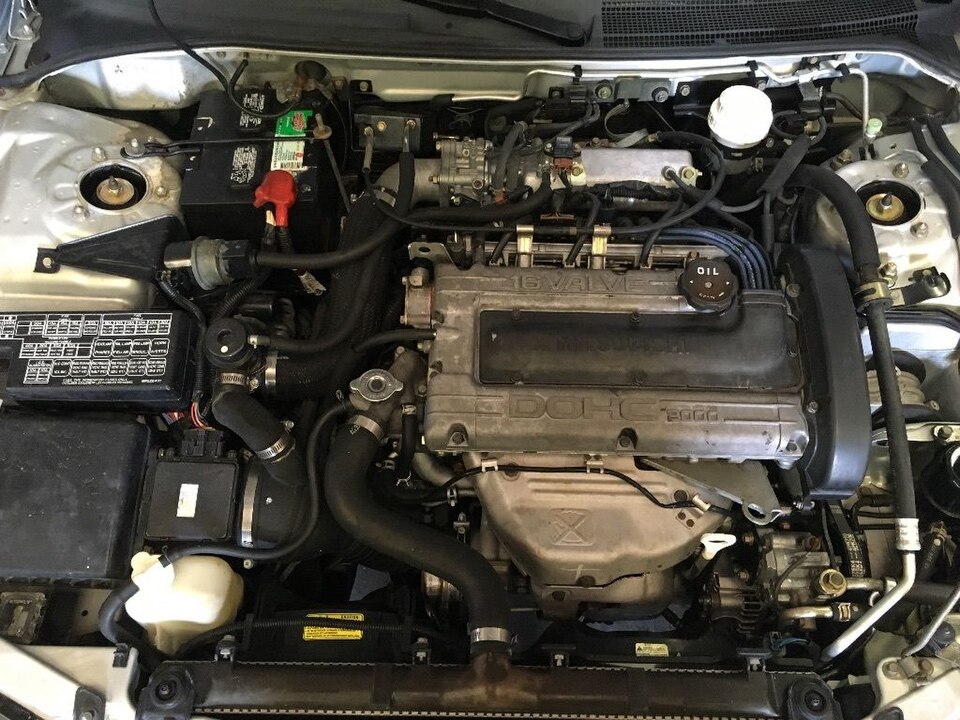
Pictured: a 1999 model; the 2000 may differ in details. Photo: 1999 Mitsubishi Eclipse by TallestHERETIC, CC BY-SA 4.0, via Wikimedia Commons
How the 2000 compares
Fewest complaintsMost complaints

Highest complaint count among 13 Eclipse model years — the most of any year.

7recalls
308complaints
14crashes
6fires
14injuries
70,000median miles

Owner complaints filed with NHTSA, not verified and not adjusted for sales. Ranking compares this model's own years only.

Does your car have an open recall?
Recalls apply to specific vehicles. Only a VIN lookup on NHTSA's official site shows whether yours is affected and still unrepaired.
Check your VIN →

7 recalls

Air Bags

Jun 2, 2015 · NHTSA campaign 15V338000 · 443,442 vehicles

Problem: Mitsubishi Motors North America, Inc. (MMNA) is recalling certain model year 2000-2005 Eclipse vehicles manufactured April 5, 1999, to December 17, 2004, 2001-2005 Eclipse Spyder vehicles manufactured January 19, 2000, to March 18, 2005, 2001-2005 Chrysler Sebring vehicles manufactured April 17, 2000, to February 21, 2005, and 2001-2005 Dodge Stratus vehicles manufactured April 17, 2000, to February 22, 2005. In the affected vehicles, the passenger side sun visor may be folded down in such a position that, if the passenger frontal air bag deploys, the passenger side sun visor may detach.

Risk: If the passenger side sun visor detaches and is propelled rearward, there is an increased risk of occupant injury.

Remedy & notes

MMNA will notify their owners, and Chrysler will notify the Chrysler and Dodge owners. Dealers will install a tether strap to retain the passenger sun visor, free of charge. The recall began on July 20, 2015. Owners may contact MMNA customer service at 1-888-648-7820. MMNA's number for this recall is SR-15-005. Chrysler and Dodge owners may contact Chrysler customer service at 1-800-853-1403. Chrysler's number for this recall is R30.

Owners may also contact the National Highway Traffic Safety Administration Vehicle Safety Hotline at 1-888-327-4236 (TTY 1-800-424-9153), or go to www.safercar.gov.

Equipment

Sep 1, 2004 · NHTSA campaign 04V428000 · 100,432 vehicles

Problem: Certain passenger vehicles fail to conform to the requirements of federal motor vehicle safety standard no. 208, 'occupant crash protection.' the bilingual english/spanish removable air bag warning labels affixed to the dash and to the sunvisor do not meet the size requirements of the standard.

Original NHTSA wording

CERTAIN PASSENGER VEHICLES FAIL TO CONFORM TO THE REQUIREMENTS OF FEDERAL MOTOR VEHICLE SAFETY STANDARD NO. 208, 'OCCUPANT CRASH PROTECTION.' THE BILINGUAL ENGLISH/SPANISH REMOVABLE AIR BAG WARNING LABELS AFFIXED TO THE DASH AND TO THE SUNVISOR DO NOT MEET THE SIZE REQUIREMENTS OF THE STANDARD.

Risk: This does not meet the requirements of the standard.

Original NHTSA wording

THIS DOES NOT MEET THE REQUIREMENTS OF THE STANDARD.

Remedy & notes

Mitsubishi Caribbean will mail a customer notification letter containing a written description and a graphic of the bi-lingual dashboard air bag warning label. In addition, all current 2000-2004 nativa owners will also receive replacement air bag alert labels for the sun visors. This recall is expected to begin during March or April 2005. The notification to the nativa owners is expected to begin during April or May 2005. Owners should contact Mitsubishi Caribbean at 1-787-251-8715.

The manufacturer's petition which requested that NHTSA determine this FMVSS noncompliance does not create an unreasonable risk to motor vehicle safety was partially denied on January 26, 2005. Therefore, this manufacturer is obligated to conduct an owner notification and remedy campaign.customers can also contact the national highway traffic safety administration's auto safety hotline at 1-888-327-4236.

Steering

Sep 25, 2001 · NHTSA campaign 01V295001 · 25,803 vehicles

Problem: Vehicle description: Passenger vehicles built with V6 engines to federal emission standards. The power steering fluid feed tube can come in contact with an exhaust manifold mounted heat shield causing a hole to be worn through the power steering pipe allowing fluid leakage.

Original NHTSA wording

VEHICLE DESCRIPTION: PASSENGER VEHICLES BUILT WITH V6 ENGINES TO FEDERAL EMISSION STANDARDS. THE POWER STEERING FLUID FEED TUBE CAN COME IN CONTACT WITH AN EXHAUST MANIFOLD MOUNTED HEAT SHIELD CAUSING A HOLE TO BE WORN THROUGH THE POWER STEERING PIPE ALLOWING FLUID LEAKAGE.

Risk: Leaking power steering fluid can result in a fire and continued loss of fluid will result in a loss of power assist, increasing the risk of a crash.

Original NHTSA wording

LEAKING POWER STEERING FLUID CAN RESULT IN A FIRE AND CONTINUED LOSS OF FLUID WILL RESULT IN A LOSS OF POWER ASSIST, INCREASING THE RISK OF A CRASH.

Remedy & notes

Dealers will replace the power steering tube with one having a new routing. Owner notification began November 26, 2001. Owners who take their vehicles to an authorized dealer on an agreed upon service date and do not receive the free remedy within a reasonable time should contact Mitsubishi america at 1-800-222-0037.

Also contact the national highway traffic safety administration's auto safety hotline at 1-888-DASH-2-DOT (1-888-327-4236).

Power Train

Jan 16, 2001 · NHTSA campaign 01V011001 · 277,227 vehicles

Problem: Vehicle description: Passenger vehicles equipped with automatic transmissions. A hose was mis-manufactured and could weaken over time, which could result in leakage of the automatic transmission fluid.

Original NHTSA wording

VEHICLE DESCRIPTION: PASSENGER VEHICLES EQUIPPED WITH AUTOMATIC TRANSMISSIONS. A HOSE WAS MIS-MANUFACTURED AND COULD WEAKEN OVER TIME, WHICH COULD RESULT IN LEAKAGE OF THE AUTOMATIC TRANSMISSION FLUID.

Risk: Fluid leakage from the cooler hoses can cause transaxle driveability problems and smoke if the oil contacts the front exhaust pipe.

Original NHTSA wording

FLUID LEAKAGE FROM THE COOLER HOSES CAN CAUSE TRANSAXLE DRIVEABILITY PROBLEMS AND SMOKE IF THE OIL CONTACTS THE FRONT EXHAUST PIPE.

Remedy & notes

Dealers will replace the hose assembly for the automatic transmission oil cooler. Owner notification mailing will be phased over a five-month period starting March 26, through July 23, 2001. Owners who take their vehicles to an authorized dealer on an agreed upon service date and do not receive the free remedy within a reasonable time should contact Mitsubishi at 1-800-222-0037.

Also contact the national highway traffic safety administration's auto safety hotline at 1-888-DASH-2-DOT (1-888-327-4236).

Steering

Aug 10, 2000 · NHTSA campaign 00V225001 · 228,294 vehicles

Problem: Vehicle description: Passenger vehicles. A nut in the steering gear assembly was not properly tightened, resulting in symptoms ranging from steering wheel vibration to stiff steering, and in the worst case, no ability to turn left.

Original NHTSA wording

VEHICLE DESCRIPTION: PASSENGER VEHICLES. A NUT IN THE STEERING GEAR ASSEMBLY WAS NOT PROPERLY TIGHTENED, RESULTING IN SYMPTOMS RANGING FROM STEERING WHEEL VIBRATION TO STIFF STEERING, AND IN THE WORST CASE, NO ABILITY TO TURN LEFT.

Risk: A loss of steering control could increase the risk of a crash.

Original NHTSA wording

A LOSS OF STEERING CONTROL COULD INCREASE THE RISK OF A CRASH.

Remedy & notes

Dealers will inspect these vehicles and replace the steering gear assembly if a loose nut connection is found.

Owner notification began September 20, 2000. Owners who take their vehicles to an authorized dealer on an agreed upon service date and do not receive the free remedy within a reasonable time should contact Mitsubishi at 1-800-222-0037.also contact the national highway traffic safety administration's auto safety hotline at 1-888-DASH-2-DOT (1-888-327-4236).

Electrical System

Nov 23, 1999 · NHTSA campaign 99V333001 · 19,179 vehicles

Problem: Vehicle description: Passenger vehicles equipped with V6 engines and federal emission equipment. The battery cable harness can become heat damaged by the front exhaust manifold which could cause grounded circuits.

Original NHTSA wording

VEHICLE DESCRIPTION: PASSENGER VEHICLES EQUIPPED WITH V6 ENGINES AND FEDERAL EMISSION EQUIPMENT. THE BATTERY CABLE HARNESS CAN BECOME HEAT DAMAGED BY THE FRONT EXHAUST MANIFOLD WHICH COULD CAUSE GROUNDED CIRCUITS.

Risk: This circuit failure could cause any of the following to occur: (1) the engine will not start because the main fuse will blow if the power lead is grounded; (2) the low oil pressure warning lamp will illuminate if the signal wire is grounded; (3) the airconditioning system will become inoperative if the lead to the magnetic clutch is grounded; and (4) the turn signal/hazard lamps will become inoperative if the voltage monitor lead is grounded.

Original NHTSA wording

THIS CIRCUIT FAILURE COULD CAUSE ANY OF THE FOLLOWING TO OCCUR: (1) THE ENGINE WILL NOT START BECAUSE THE MAIN FUSE WILL BLOW IF THE POWER LEAD IS GROUNDED; (2) THE LOW OIL PRESSURE WARNING LAMP WILL ILLUMINATE IF THE SIGNAL WIRE IS GROUNDED; (3) THE AIRCONDITIONING SYSTEM WILL BECOME INOPERATIVE IF THE LEAD TO THE MAGNETIC CLUTCH IS GROUNDED; AND (4) THE TURN SIGNAL/HAZARD LAMPS WILL BECOME INOPERATIVE IF THE VOLTAGE MONITOR LEAD IS GROUNDED.

Remedy & notes

Dealers will remove and discard a metal manifold bracket (from galant models only - eclipse has no such bracket). Dealers will also inspect the harness. If the harness wires show no damage, the dealer will install a heat insulator along with heat resistant harness clips. If the harness wires do show damage, the dealers will install a new harness with preinstalled integral heat protection.

Owner notification began February 7, 2000.owners who take their vehicles to an authorized dealer on an agreed upon service date and do not receive the free remedy within a reasonable time should contact Mitsubishi at 1-800-222-0037.also contact the national highway traffic safety administration's auto safety hotline at 1-888-DASH-2-DOT (1-888-327-4236).

Exterior Lighting

Nov 1, 1999 · NHTSA campaign 99V305001 · 98,817 vehicles

Problem: Vehicle description: Passenger vehicles. The column switch levers can become loose or break over time.

Original NHTSA wording

VEHICLE DESCRIPTION: PASSENGER VEHICLES. THE COLUMN SWITCH LEVERS CAN BECOME LOOSE OR BREAK OVER TIME.

Risk: Loosening or cracking of the levers can cause directional lamps that do not self-cancel or operate, head lamps that do not turn off, windshield washers that operate continuously and/or windshield wipers that do not operate.

Original NHTSA wording

LOOSENING OR CRACKING OF THE LEVERS CAN CAUSE DIRECTIONAL LAMPS THAT DO NOT SELF-CANCEL OR OPERATE, HEAD LAMPS THAT DO NOT TURN OFF, WINDSHIELD WASHERS THAT OPERATE CONTINUOUSLY AND/OR WINDSHIELD WIPERS THAT DO NOT OPERATE.

Remedy & notes

Dealers will install a redesigned switch.

Mitsubishi recall no. Sr-99-003.owner notification began December 13, 1999. Owners who take their vehicles to an authorized dealer on an agreed upon service date and do not receive the free remedy within a reasonable time should contact Mitsubishi at 1-800-222-0037.also contact the national highway traffic safety administration's auto safety hotline at 1-888-DASH-2-DOT (1-888-327-4236).

Recall text as published by NHTSA and the manufacturer.

What owners complain about

Owner complaints filed with NHTSA; one complaint can name several areas. Not verified by NHTSA.

Complaints by year filed

1999: 2 complaints19992000: 26 complaints2001: 52 complaints20012002: 66 complaints662003: 32 complaints20032004: 39 complaints2005: 21 complaints20052006: 21 complaints2007: 10 complaints20072008: 15 complaints2009: 4 complaints20092010: 2 complaints2011: 4 complaints20112012: 1 complaints2014: 1 complaints20142015: 3 complaints2016: 3 complaints20162018: 1 complaints2020: 3 complaints20202021: 1 complaints2022: 1 complaints20221

NHTSA investigations

HEADLIGHTS FAILURE

PE05007 · opened Feb 10, 2005 · closed Jun 8, 2005
Summary

IMPROPER INSTALLATION OF THE ORIGINAL EQUIPMENT HEADLIGHT CONNECTOR CAN CAUSE INCREASED TERMINAL RESISTANCE AND OVERHEAT THE HEADLIGHT CONNECTOR.THIS PROBLEM CAN AFFECT INDEPENDENTLY EITHER HEADLIGHT BUT DOES NOT CAUSE SIMULTANEOUS FAILURE OF BOTH HEADLIGHTS. THE PROBLEM ALSO DOES NOT AFFECT FRONT PARKING LAMPS.AS A RESULT, THE COMPLAINTS TYPICAL REPORT SINGLE FAILURE OF ONE HEADLIGHT.THERE ARE NO CRASHES OR LOSS OF VEHICLE CONTROL REPORTED.A SAFETY-RELATED DEFECT TREND HAS NOT BEEN IDENTIFIED AT THIS TIME AND FURTHER USE OF AGENCY RESOURCES DOES NOT APPEAR TO BE WARRANTED.THE CLOSING OF THIS INVESTIGATION DOES NOT CONSTITUTE A FINDING BY NHTSA THAT NO SAFETY-RELATED DEFECT EXISTS.THE AGENCY RESERVES THE RIGHT TO TAKE FURTHER ACTION IF WARRANTED BY THE CIRCUMSTANCES.

ALUMINUM ALLOY WHEEL DENTING

EA02007 · opened May 31, 2002 · closed May 1, 2003
Summary

SEE ATTACHED REPORT.

ALLOY WHEEL DENTING AND FRACTURING

PE01044 · opened Dec 18, 2001 · closed May 31, 2002

2000 vs. other Mitsubishi Eclipse years

Owner complaints by model year; the darker bar is the 2000. Click a bar to switch year.

Questions

Does the 2000 Mitsubishi Eclipse have recalls?

Yes — NHTSA lists 7 recall campaigns covering the 2000 Mitsubishi Eclipse, the latest from Jun 2, 2015 (air bags). A recall applies to specific vehicles: enter your VIN at nhtsa.gov/recalls to see whether yours is affected and still open.

What are the most common problems with the 2000 Mitsubishi Eclipse?

Owner complaints filed with NHTSA most often mention wheels (128), structure (41), exterior lighting (25). Complaints are consumer reports and are not verified by NHTSA.