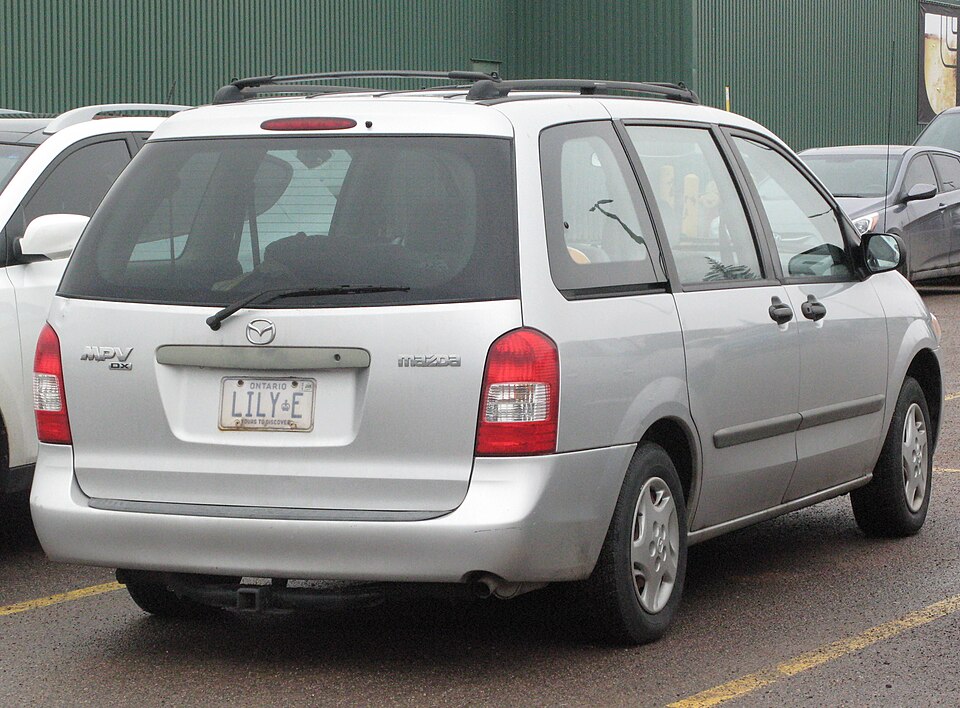
2001 Mazda Mpv recalls and problems

The 2001 Mazda Mpv has 3 recalls and 70 owner complaints on file with NHTSA; the most reported problem area is engine.

2001 Mazda Mpv
Photo: 2001 Mazda Mpv by Elise240SX, CC BY-SA 4.0, via Wikimedia Commons
How the 2001 compares
Fewest complaintsMost complaints

Low complaint count among 7 Mpv model years — 5th most.

3recalls
70complaints
10crashes
2fires
20injuries
73,500median miles

Owner complaints filed with NHTSA, not verified and not adjusted for sales. Ranking compares this model's own years only.

Does your car have an open recall?
Recalls apply to specific vehicles. Only a VIN lookup on NHTSA's official site shows whether yours is affected and still unrepaired.
Check your VIN →

3 recalls

Vehicle Speed Control

May 19, 2004 · NHTSA campaign 04V234000 · 10,200 vehicles

Problem: On certain minivans equipped with cruise control, the cruise control actuator cable May be broken due to insufficient strength (group 1). Also included are certain 2000-2001 minivans equipped with cruise control built between March 31, 1999 and March 31, 2001, that have had the cruise control repaired and possibly had a defective cable installed during that repair (group 2).

Original NHTSA wording

ON CERTAIN MINIVANS EQUIPPED WITH CRUISE CONTROL, THE CRUISE CONTROL ACTUATOR CABLE MAY BE BROKEN DUE TO INSUFFICIENT STRENGTH (GROUP 1). ALSO INCLUDED ARE CERTAIN 2000-2001 MINIVANS EQUIPPED WITH CRUISE CONTROL BUILT BETWEEN MARCH 31, 1999 AND MARCH 31, 2001, THAT HAVE HAD THE CRUISE CONTROL REPAIRED AND POSSIBLY HAD A DEFECTIVE CABLE INSTALLED DURING THAT REPAIR (GROUP 2).

Risk: It is possible that the broken actuator cable May be out of position and could interfere with the operation of the accelerator cable, preventing a decrease in engine speed while driving, increasing the risk of a crash.

Original NHTSA wording

IT IS POSSIBLE THAT THE BROKEN ACTUATOR CABLE MAY BE OUT OF POSITION AND COULD INTERFERE WITH THE OPERATION OF THE ACCELERATOR CABLE, PREVENTING A DECREASE IN ENGINE SPEED WHILE DRIVING, INCREASING THE RISK OF A CRASH.

Remedy & notes

Dealers will replace the actuator cable. Owner notification for vehicles involved in group 1 began on July 7, 2004. Owner notification for vehicles involved in group 2 began on September 10, 2004. Owners should contact Mazda at 1-800-222-5500.

Mazda recall no. 2004F.customers can also contact the national highway traffic safety administration's auto safety hotline at 1-888-DASH-2-DOT (1-888-327-4236).

Air Bags

Aug 5, 2002 · NHTSA campaign 02V196001 · 25 vehicles

Problem: On certain passenger vehicles, some of the passenger air bag modules were not properly welded and May not deploy in a collision.

Original NHTSA wording

ON CERTAIN PASSENGER VEHICLES, SOME OF THE PASSENGER AIR BAG MODULES WERE NOT PROPERLY WELDED AND MAY NOT DEPLOY IN A COLLISION.

Risk: The seat occupant May not be properly protected in the event of a collision, increasing the risk of personal injury.

Original NHTSA wording

THE SEAT OCCUPANT MAY NOT BE PROPERLY PROTECTED IN THE EVENT OF A COLLISION, INCREASING THE RISK OF PERSONAL INJURY.

Remedy & notes

Dealers will replace the passenger air bag module. Owner notification began October 4, 2002. Owners who take their vehicles to an authorized dealer on an agreed upon service date and do not receive the free remedy within a reasonable time should contact Mazda at 1-800-222-5500.

Also, customers can contact the national highway traffic safety administration's auto safety hotline at 1-888-DASH-2-DOT (1-888-327-4236).

Service Brakes

Dec 17, 2001 · NHTSA campaign 01V382000 · 19,000 vehicles

Problem: Vehicle description: Certain MINI vans without anti-lock braking systems (ABS) fail to comply with the requirements of federal motor vehicle safety standard no. 135, "passenger car brake systems." due to inappropriate brake pipe layout, these vehicles do not meet the brake stopping distance with partial failure requirements of the standard.

Original NHTSA wording

VEHICLE DESCRIPTION: CERTAIN MINI VANS WITHOUT ANTI-LOCK BRAKING SYSTEMS (ABS) FAIL TO COMPLY WITH THE REQUIREMENTS OF FEDERAL MOTOR VEHICLE SAFETY STANDARD NO. 135, "PASSENGER CAR BRAKE SYSTEMS." DUE TO INAPPROPRIATE BRAKE PIPE LAYOUT, THESE VEHICLES DO NOT MEET THE BRAKE STOPPING DISTANCE WITH PARTIAL FAILURE REQUIREMENTS OF THE STANDARD.

Risk: If partial failure occurred in the braking system, the stopping distance of the vehicle could increase, increasing the risk of a crash.

Original NHTSA wording

IF PARTIAL FAILURE OCCURRED IN THE BRAKING SYSTEM, THE STOPPING DISTANCE OF THE VEHICLE COULD INCREASE, INCREASING THE RISK OF A CRASH.

Remedy & notes

Dealers will modify the brake system. Owner notification began January 15, 2002. Owners who take their vehicles to an authorized dealer on an agreed upon service date and do not receive the free remedy within a reasonable time should contact Mazda at 1-800-222-5500, option #4.

Also contact the national highway traffic safety administration's auto safety hotline at 1-888-DASH-2-DOT (1-888-327-4236).

Recall text as published by NHTSA and the manufacturer.

What owners complain about

Owner complaints filed with NHTSA; one complaint can name several areas. Not verified by NHTSA.

Complaints by year filed

2000: 1 complaints20002001: 5 complaints2002: 12 complaints2002122003: 10 complaints2004: 7 complaints20042005: 7 complaints2006: 5 complaints20062008: 4 complaints2009: 4 complaints20092010: 6 complaints2011: 3 complaints20112014: 2 complaints2016: 2 complaints20162018: 2 complaints20182

2001 vs. other Mazda Mpv years

Owner complaints by model year; the darker bar is the 2001. Click a bar to switch year.

Questions

Does the 2001 Mazda Mpv have recalls?

Yes — NHTSA lists 3 recall campaigns covering the 2001 Mazda Mpv, the latest from May 19, 2004 (vehicle speed control). A recall applies to specific vehicles: enter your VIN at nhtsa.gov/recalls to see whether yours is affected and still open.

What are the most common problems with the 2001 Mazda Mpv?

Owner complaints filed with NHTSA most often mention engine (15), air bags (11), power train (10). Complaints are consumer reports and are not verified by NHTSA.