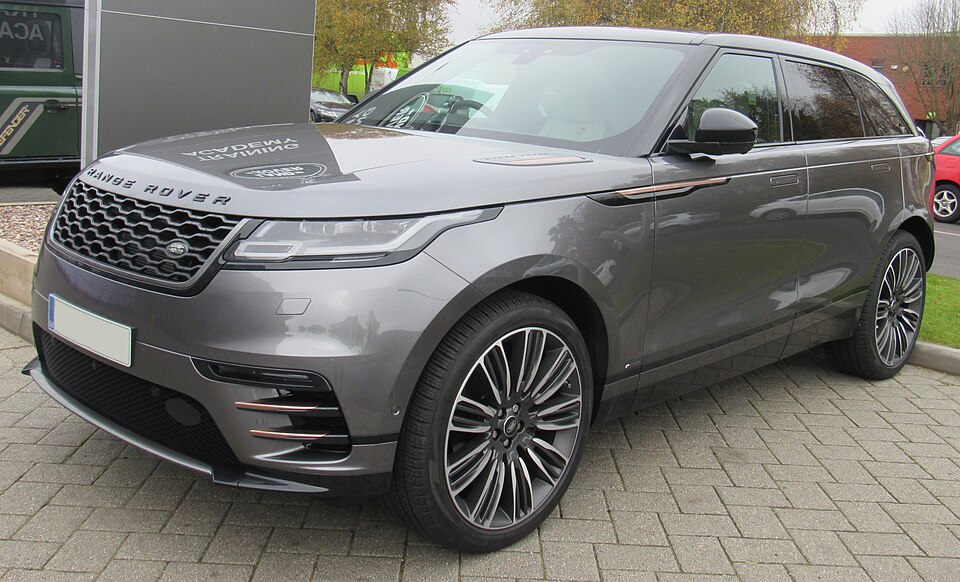
2017 Land Rover Range Rover recalls and problems

The 2017 Land Rover Range Rover has 8 recalls and 62 owner complaints on file with NHTSA; the most reported problem area is steering.

2017 Land Rover Range Rover
Photo: 2017 Land Rover Range Rover by Vauxford, CC BY-SA 4.0, via Wikimedia Commons
How the 2017 compares
Fewest complaintsMost complaints

Highest complaint count among 26 Range Rover model years — 4th most.

8recalls
62complaints
1crashes
1fires
2injuries
53,000median miles

Owner complaints filed with NHTSA, not verified and not adjusted for sales. Ranking compares this model's own years only.

Does your car have an open recall?
Recalls apply to specific vehicles. Only a VIN lookup on NHTSA's official site shows whether yours is affected and still unrepaired.
Check your VIN →

8 recalls

Steering

Aug 13, 2026 · NHTSA campaign 26V527000 · 14 vehicles

Problem: Jaguar Land Rover North America, LLC (Land Rover) is recalling certain 2016-2017 Range Rover vehicles. The front suspension knuckles may have been replaced with incorrect parts during a prior recall remedy repair.

Risk: An incorrect suspension knuckle may not perform as expected, possibly resulting in a loss of vehicle handling and control, increasing the risk of a crash.

Remedy

Dealers will replace the front suspension knuckles, free of charge. Owner letters were mailed September 30, 2026. Owners may contact Land Rover's customer service at 1-800-637-6837. Land Rover's number for this recall is D148.

Steering

Aug 8, 2025 · NHTSA campaign 25V514000 · 121,509 vehicles

Problem: Jaguar Land Rover North America, LLC (Land Rover) is recalling certain 2014-2017 Range Rover and Range Rover Sport vehicles. The front suspension upper knuckle joint may crack, which can result in suspension arm detachment.

Risk: Suspension arm detachment can cause a loss of vehicle handling and control, increasing the risk of a crash.

Remedy

Dealers will inspect the front suspension knuckles and install a retaining bracket or replace the knuckle, as necessary, free of charge. Owner notification letters were mailed May 11, 2026. Owners may contact Land Rover's customer service at 1-800-637-6837. Land Rover's numbers for this recall are D019, N759, D041, and D027. This recall expands and replaces previous NHTSA recall number 24V840.

Seat Belts

Apr 5, 2022 · NHTSA campaign 22V219000 · 14,812 vehicles

Problem: Jaguar Land Rover North America, LLC (Land Rover) is recalling certain 2016-2017 Range Rover and Range Rover Sport vehicles. The driver's seat belt emergency locking retractor may not lock as intended. As such, these vehicles fail to comply with the requirements of the Federal Motor Vehicle Safety Standard (FMVSS) numbers 209, "Seat Belt Assemblies" and 208, "Occupant Crash Protection."

Risk: During hard braking before a crash, the seat belt emergency locking retractor may not lock as intended, increasing the risk of injury.

Remedy & notes

Dealers will inspect and replace the seat belt assembly, as necessary, free of charge. Owner notification letters were mailed July 29, 2022. Owners may contact Land Rover customer service at 1-800-637-6837. Land Rover's number for this recall is N678. This recall replaces NHTSA recall number 19V-350. Vehicles previously inspected under recall 19V-350 that did not receive a replacement seat belt assembly will need to have this new recall remedy performed.

Owners may also contact the National Highway Traffic Safety Administration Vehicle Safety Hotline at 1-888-327-4236 (TTY 1-800-424-9153), or go to www.safercar.gov.

Seat Belts

May 9, 2019 · NHTSA campaign 19V350000 · 16,186 vehicles

Problem: Jaguar Land Rover North America, LLC (Land Rover) is recalling certain 2016-2017 Range Rover and Range Rover Sport vehicles. The driver's seat belt Emergency Locking Retractor (ELR) may not lock as designed. As such, these vehicles fail to comply with the requirements of the Federal Motor Vehicle Safety Standard (FMVSS) number 209, "Seat Belt Assemblies."

Risk: If the driver brakes prior to a crash, the ELR will not lock at the correct g-force level, increasing the risk of injury.

Remedy & notes

Land Rover will notify owners, and dealers will inspect the seat belt assembly, replacing it if necessary, free of charge. The recall began September 10, 2019. Owners may contact Land Rover customer service at 1-800-637-6837. Land Rover's number for this recall is N333.

Owners may also contact the National Highway Traffic Safety Administration Vehicle Safety Hotline at 1-888-327-4236 (TTY 1-800-424-9153), or go to www.safercar.gov.

Electrical System

May 23, 2018 · NHTSA campaign 18V337000 · 1,917 vehicles

Problem: Jaguar Land Rover North America, LLC (Land Rover) is recalling certain 2017 Land Rover Range Rover, Range Rover Sport, and Discovery vehicles. The fuel gauge on these vehicles may indicate that the fuel level is low and illuminate the warning lamp, when the fuel tank actually has more fuel. The engine management software may also cut off the engine when the vehicle has traveled approximately 17 more miles.

Risk: If the engine were to shut off, it can cause loss of power brake assistance. An engine stall would cause a loss of drive power. Both scenarios can increase the risk of a crash.

Remedy & notes

Land Rover will notify owners, and dealers will install a software update to correct the fuel level reading, free of charge. The recall began on June 22, 2018. Owners may Land Rover customer service at 1-800-637-6837. Land Rover's number for this recall is N206.

Owners may also contact the National Highway Traffic Safety Administration Vehicle Safety Hotline at 1-888-327-4236 (TTY 1-800-424-9153), or go to www.safercar.gov.

Electrical System

Oct 26, 2017 · NHTSA campaign 17V679000 · 21,998 vehicles

Problem: Jaguar Land Rover North America, LLC (Land Rover) is recalling certain 2017 Land Rover Range Rover and Range Rover Sport vehicles. The instrument cluster (IC) may intermittently go blank.

Risk: A blank instrument cluster will not show important information like vehicle speed, increasing the risk of a crash.

Remedy & notes

Land Rover will notify owners, and dealers will update the vehicle software, free of charge. The recall is expected to begin December 19, 2017. Owners may contact Land Rover customer service at 1-800-637-6837. Land Rover's number for this recall is N124.

Owners may also contact the National Highway Traffic Safety Administration Vehicle Safety Hotline at 1-888-327-4236 (TTY 1-800-424-9153), or go to www.safercar.gov.

Fuel System

Aug 4, 2017 · NHTSA campaign 17V490000 · 1 vehicles

Problem: Jaguar Land Rover North America, LLC (Land Rover) is recalling one 2017 Land Rover Range Rover vehicle. A bolt used to attach the high pressure fuel pump may be too long. As a result, the fuel pump may not be properly secured and the fuel line may crack and leak.

Risk: A fuel line crack may leak fuel into the engine compartment, increasing the risk of a fire.

Remedy & notes

Land Rover will notify the owner, and a dealer will replace both fuel pumps and the associated fuel lines, free of charge. The recall began September 16, 2017. Owners may contact Land Rover customer service at 1-800-637-6837. Land Rover's number for this recall is N074.

Owners may also contact the National Highway Traffic Safety Administration Vehicle Safety Hotline at 1-888-327-4236 (TTY 1-800-424-9153), or go to www.safercar.gov.

Seat Belts

Dec 29, 2016 · NHTSA campaign 16V942000 · 13,500 vehicles

Problem: Jaguar Land Rover North America, LLC (Land Rover) is recalling certain model year 2017 Land Rover Discovery Sport vehicles and 2016-2017 Land Rover Range Rover and Range Rover Sport vehicles. The affected vehicles have seatbelt pretensioners that may not function properly in the event of a crash.

Risk: If the front seat seatbelt pretensioners do not function properly, the seat occupants may not be adequately restrained in the event of a crash, increasing the risk of injury.

Remedy & notes

Land Rover will notify owners, and dealers will inspect the front seat belt assemblies, replacing them as necessary, free of charge. The recall began February 20, 2017. Owners may contact Land Rover customer service at 1-800-637-6837. Land Rover's number for this recall is P095.

Owners may also contact the National Highway Traffic Safety Administration Vehicle Safety Hotline at 1-888-327-4236 (TTY 1-800-424-9153), or go to www.safercar.gov.

Recall text as published by NHTSA and the manufacturer.

What owners complain about

Owner complaints filed with NHTSA; one complaint can name several areas. Not verified by NHTSA.

Complaints by year filed

2017: 4 complaints20172018: 4 complaints20182019: 2 complaints20192020: 1 complaints20202021: 3 complaints20212022: 1 complaints20222023: 4 complaints20232024: 3 complaints20242025: 22 complaints2025222026: 18 complaints202618

NHTSA investigations

Front Steering Knuckle Fractures

EA26003 · opened Apr 24, 2026 · open
Summary

The Office of Defects Investigation (ODI) is upgrading its Preliminary Evaluation (PE25006) of front steering knuckle fractures on model year (MY) 2014 through 2017 Range Rover Sport vehicles to an Engineering Analysis.  ODI opened PE25006 on June 27, 2025, after receiving 12 Vehicle Owner's Questionnaire (VOQ) reports of the front aluminum steering knuckles fracturing in these vehicles. The reports describe the fractures occurring at the joint where the steering knuckle attaches to the upper control arm ball joint in one or both steering knuckles.  Fracture of the front suspension knuckle can lead to detachment of the upper suspension arm. Detachment of the upper suspension arm results in the driver’s inability to control the vehicle, increasing the risk of a crash. ODI reviewed information supplied by Jaguar Land Rover (JLR) in response to Information Request letters as well as reviewed the data with JLR on numerous occasions. ODI further reviewed relevant data on a peer vehicle with a significantly similar steering knuckle design, the MY 2014 through 2017 Range Rover.  Much of the information is contradictory and requires a deeper analysis that is available in an Engineering Analysis. On August 5, 2025, Jaguar Land Rover (JLR) filed safety recall 25V514.  This recall covers certain MY 2014 and all MY 2015-2017 Range Rover and Range Rover Sport vehicles.  The remedy for recall 25V514 addresses knuckles with and without a visible fracture.  Knuckles that have develop…

Front Steering Knuckle Fractures

PE25006 · opened Jun 27, 2025 · closed Apr 24, 2026 · led to recall 25V514
Summary

The Office of Defects Investigation (ODI) is upgrading its Preliminary Evaluation (PE25006) of front steering knuckle fractures on model year (MY) 2014 through 2017 Range Rover Sport vehicles to an Engineering Analysis.  ODI opened PE25006 on June 27, 2025, after receiving 12 Vehicle Owner's Questionnaire (VOQ) reports of the front aluminum steering knuckles fracturing in these vehicles. The reports describe the fractures occurring at the joint where the steering knuckle attaches to the upper control arm ball joint in one or both steering knuckles.  Fracture of the front suspension knuckle can lead to detachment of the upper suspension arm. Detachment of the upper suspension arm results in the driver’s inability to control the vehicle, increasing the risk of a crash. ODI reviewed information supplied by Jaguar Land Rover (JLR) in response to Information Request letters as well as reviewed the data with JLR on numerous occasions. ODI further reviewed relevant data on a peer vehicle with a significantly similar steering knuckle design, the MY 2014 through 2017 Range Rover.  Much of the information is contradictory and requires a deeper analysis that is available in an Engineering Analysis. On August 5, 2025, Jaguar Land Rover (JLR) filed safety recall 25V514.  This recall covers certain MY 2014 and all MY 2015-2017 Range Rover and Range Rover Sport vehicles.  The remedy for recall 25V514 addresses knuckles with and without a visible fracture.  Knuckles that have develop…

Desiccated Air Bag Inflator Rupture

EA21002 · opened Sep 17, 2021 · open
Summary

From 2000 through 2017, Takata produced millions of air bag inflators using two types of phase-stabilized ammonium nitrate ("PSAN") propellant -- propellant 2004 and propellant 2004L. After prolonged exposure to high temperature cycles and humidity, inflators using propellant 2004 can degrade, causing the propellant to burn too quickly when ignited. The rapid burning can cause the inflator to rupture during deployment, potentially causing serious or even fatal injury to vehicle occupants. See 2016 Blomquist Report at www.nhtsa.gov/sites/nhtsa.gov/files/documents/expert_report-hrblomquist.pdf.Consequently, all frontal inflators using propellant 2004 that do not contain a "desiccant" (a substance that traps and holds moisture) in US vehicles are under recall. These "non-desiccated" inflators either have been or are required to be replaced.In some cases, the remedy part for these recalled inflators was, or will be, an inflator using either propellant 2004 or 2004L that does contain a desiccant. None of these "desiccated" remedy parts (which were installed in older model year vehicles) are currently under recall for a degradation concern. Certain subsets of desiccated PSAN inflators using propellant 2004 for use as original equipment, however, have been recalled for a degradation concern. All Takata inflators produced with propellant 2004L contain desiccant, and none of these desiccated inflators using propellant 2004L are under recall for a degradation concern. There have been n…

2017 vs. other Land Rover Range Rover years

Owner complaints by model year; the darker bar is the 2017. Click a bar to switch year.

Questions

Does the 2017 Land Rover Range Rover have recalls?

Yes — NHTSA lists 8 recall campaigns covering the 2017 Land Rover Range Rover, the latest from Aug 13, 2026 (steering). A recall applies to specific vehicles: enter your VIN at nhtsa.gov/recalls to see whether yours is affected and still open.

What are the most common problems with the 2017 Land Rover Range Rover?

Owner complaints filed with NHTSA most often mention steering (16), suspension (11), engine (9). Complaints are consumer reports and are not verified by NHTSA.