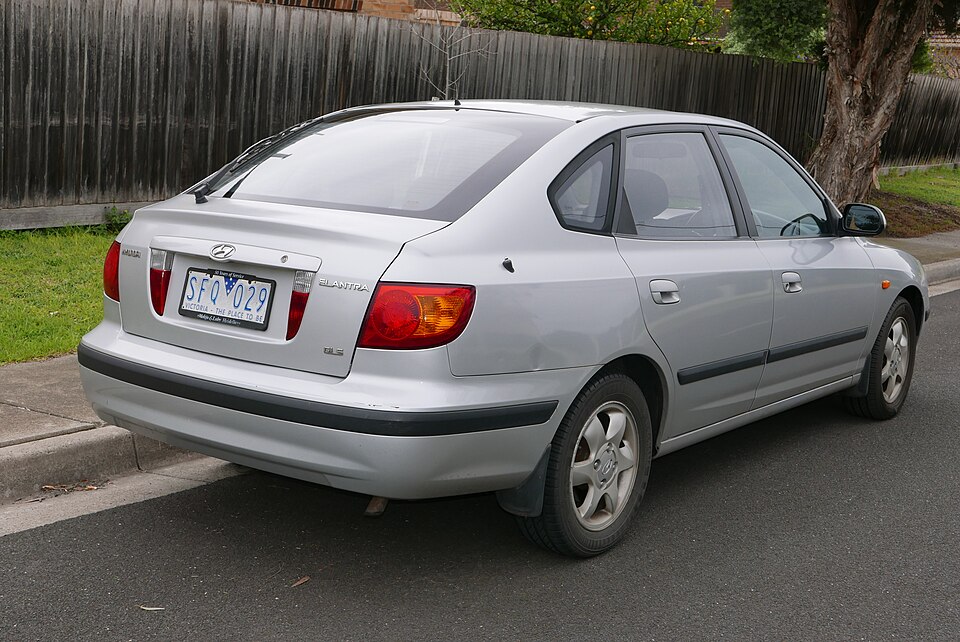
2004 Hyundai Elantra recalls and problems

The 2004 Hyundai Elantra has 5 recalls and 182 owner complaints on file with NHTSA; the most reported problem area is air bags.

2003 Hyundai Elantra
Pictured: a 2003 model; the 2004 may differ in details. Photo: 2003 Hyundai Elantra by OSX, Public domain, via Wikimedia Commons
How the 2004 compares
Fewest complaintsMost complaints

Low complaint count among 27 Elantra model years — 19th most.

5recalls
182complaints
24crashes
2fires
26injuries
31,000median miles

Owner complaints filed with NHTSA, not verified and not adjusted for sales. Ranking compares this model's own years only.

Does your car have an open recall?
Recalls apply to specific vehicles. Only a VIN lookup on NHTSA's official site shows whether yours is affected and still unrepaired.
Check your VIN →

5 recalls

Air Bags

Oct 17, 2005 · NHTSA campaign 05V479000 · 2,105 vehicles

Problem: Certain vehicles equipped with an advanced air bag system. The occupant classification system (ocs) installed in the right front seat of the vehicle May misclassify a child restraint seat (crs) as an adult. This May occur if the crs is installed after an adult has been seated in the right front seat. If there has not been a 'key on' ' key off' cycle with the right front passenger seat empty prior to installation of the crs.

Original NHTSA wording

CERTAIN VEHICLES EQUIPPED WITH AN ADVANCED AIR BAG SYSTEM. THE OCCUPANT CLASSIFICATION SYSTEM (OCS) INSTALLED IN THE RIGHT FRONT SEAT OF THE VEHICLE MAY MISCLASSIFY A CHILD RESTRAINT SEAT (CRS) AS AN ADULT. THIS MAY OCCUR IF THE CRS IS INSTALLED AFTER AN ADULT HAS BEEN SEATED IN THE RIGHT FRONT SEAT. IF THERE HAS NOT BEEN A 'KEY ON' ' KEY OFF' CYCLE WITH THE RIGHT FRONT PASSENGER SEAT EMPTY PRIOR TO INSTALLATION OF THE CRS.

Risk: The possibility of misclassification of a crs as an adult May allow the right front airbag or side impact airbag to deploy in a crash and could result in injury to the right front occupant.

Original NHTSA wording

THE POSSIBILITY OF MISCLASSIFICATION OF A CRS AS AN ADULT MAY ALLOW THE RIGHT FRONT AIRBAG OR SIDE IMPACT AIRBAG TO DEPLOY IN A CRASH AND COULD RESULT IN INJURY TO THE RIGHT FRONT OCCUPANT.

Remedy & notes

Dealers will reprogram the vehicle's ocs electronic control unit (ECU) to remove the feature that May cause the crs to be recognized as an adult. The recall began on November 15, 2005. Owners May contact Hyundai of Puerto Rico at 1-800-981-0188.

Hyundai pr recall no. 073.customers May also contact the national highway traffic safety administration's vehicle safety hotline at 1-888-327-4236 (tty 1-800-424-9153), or go to http://www.safercar.gov.

Air Bags

Sep 12, 2005 · NHTSA campaign 05V395000 · 231,160 vehicles

Problem: Certain vehicles equipped with an advanced air bag system. The occupant classification system (ocs) installed in the right front seat of the vehicle May misclassify a child restraint seat (crs) as an adult. This May occur if the crs is installed after an adult has been seated in the right front seat. If there has not been a 'key on' ' key off' cycle with the right front passenger seat empty prior to installation of the crs.

Original NHTSA wording

CERTAIN VEHICLES EQUIPPED WITH AN ADVANCED AIR BAG SYSTEM. THE OCCUPANT CLASSIFICATION SYSTEM (OCS) INSTALLED IN THE RIGHT FRONT SEAT OF THE VEHICLE MAY MISCLASSIFY A CHILD RESTRAINT SEAT (CRS) AS AN ADULT. THIS MAY OCCUR IF THE CRS IS INSTALLED AFTER AN ADULT HAS BEEN SEATED IN THE RIGHT FRONT SEAT. IF THERE HAS NOT BEEN A 'KEY ON' ' KEY OFF' CYCLE WITH THE RIGHT FRONT PASSENGER SEAT EMPTY PRIOR TO INSTALLATION OF THE CRS.

Risk: The possibility of misclassification of a crs as an adult May allow the right front airbag or side impact airbag to deploy in a crash and could result in injury to the right front occupant.

Original NHTSA wording

THE POSSIBILITY OF MISCLASSIFICATION OF A CRS AS AN ADULT MAY ALLOW THE RIGHT FRONT AIRBAG OR SIDE IMPACT AIRBAG TO DEPLOY IN A CRASH AND COULD RESULT IN INJURY TO THE RIGHT FRONT OCCUPANT.

Remedy & notes

Dealers will reprogram the vehicle's ocs electronic control unit (ECU) to remove the feature that May cause the crs to be recognized as an adult. The recall began on October 31, 2005. Owners May contact Hyundai at 1-800-633-5151.

Hyundai recall no. 073.customers May also contact the national highway traffic safety administration's vehicle safety hotline at 1-888-327-4236 (tty 1-800-424-9153), or go to http://www.safercar.gov.

Fuel System

Jul 30, 2004 · NHTSA campaign 04V370000 · 582 vehicles

Problem: During an insurance institute for highway safety (iihs) offset frontal barrier impact test, it was determined that fuel tan damage could occur. On certain passenger vehicles, a vapor tube hose clamp that is located near the fuel tank May not be positioned properly and could cause fuel leakage.

Original NHTSA wording

DURING AN INSURANCE INSTITUTE FOR HIGHWAY SAFETY (IIHS) OFFSET FRONTAL BARRIER IMPACT TEST, IT WAS DETERMINED THAT FUEL TAN DAMAGE COULD OCCUR. ON CERTAIN PASSENGER VEHICLES, A VAPOR TUBE HOSE CLAMP THAT IS LOCATED NEAR THE FUEL TANK MAY NOT BE POSITIONED PROPERLY AND COULD CAUSE FUEL LEAKAGE.

Risk: Fuel leakage in the presence of an ignition source May result in a fire.

Original NHTSA wording

FUEL LEAKAGE IN THE PRESENCE OF AN IGNITION SOURCE MAY RESULT IN A FIRE.

Remedy & notes

Dealers will inspect the position of the vapor tube hose clamp ears and correctly position the clamp, if necessary. The recall began on October 5, 2004. Owners should contact Hyundai de Puerto Rico at 1-800-981-0188.

Hyundai recall no. 067. Customers can also contact the national highway traffic safety administration's auto safety hotline at 1-888-DASH-2-DOT (1-888-327-4236).

Fuel System

May 3, 2004 · NHTSA campaign 04V208000 · 44,530 vehicles

Problem: During an insurance institute for highway safety (iihs) offset frontal barrier impact test on certain passenger vehicles, fuel spillage occurred as a result of fuel tank damage caused by contact between a vapor tube hose clamp ear and the fuel tank. The vapor tube hose clamp ear was found to be mispositioned and facing toward the fuel tank.

Original NHTSA wording

DURING AN INSURANCE INSTITUTE FOR HIGHWAY SAFETY (IIHS) OFFSET FRONTAL BARRIER IMPACT TEST ON CERTAIN PASSENGER VEHICLES, FUEL SPILLAGE OCCURRED AS A RESULT OF FUEL TANK DAMAGE CAUSED BY CONTACT BETWEEN A VAPOR TUBE HOSE CLAMP EAR AND THE FUEL TANK. THE VAPOR TUBE HOSE CLAMP EAR WAS FOUND TO BE MISPOSITIONED AND FACING TOWARD THE FUEL TANK.

Risk: In the event of a crash, damage to the vehicle could cause the mispositioned clamp to puncture the fuel tank causing fuel leakage. Fuel leakage, in the presence of an ignition source, could result in a fire.

Original NHTSA wording

IN THE EVENT OF A CRASH, DAMAGE TO THE VEHICLE COULD CAUSE THE MISPOSITIONED CLAMP TO PUNCTURE THE FUEL TANK CAUSING FUEL LEAKAGE. FUEL LEAKAGE, IN THE PRESENCE OF AN IGNITION SOURCE, COULD RESULT IN A FIRE.

Remedy & notes

Dealers will inspect the position of the vapor tube hose clamp and correctly position the clamp, if necessary. Owner notification began on May 24, 2004. Owners should contact Hyundai at 1-800-633-5151.

Hyundai recall no. 067.customers can also contact the national highway traffic safety administration's auto safety hotline at 1-888-DASH-2-DOT (1-888-327-4236).

Air Bags

Aug 26, 2003 · NHTSA campaign 03V322000 · 75 vehicles

Problem: On certain vehicles, if the front passenger seat is unoccupied or is occupied by someone lighter than 56.4 pounds, the passenger air bag is deactivated and will not deploy if a crash occurs. However, the occupant classification sensor May incorrectly interpret that a seated adult is an infant seat and deactivate the passenger air bag if someone heavier than 56.4 pounds who is seated with one leg resting on the outboard or inboard edge of the seat; with legs spread; or positioned off-center toward the center console and with his or her arm leaning on the console.

Original NHTSA wording

ON CERTAIN VEHICLES, IF THE FRONT PASSENGER SEAT IS UNOCCUPIED OR IS OCCUPIED BY SOMEONE LIGHTER THAN 56.4 POUNDS, THE PASSENGER AIR BAG IS DEACTIVATED AND WILL NOT DEPLOY IF A CRASH OCCURS. HOWEVER, THE OCCUPANT CLASSIFICATION SENSOR MAY INCORRECTLY INTERPRET THAT A SEATED ADULT IS AN INFANT SEAT AND DEACTIVATE THE PASSENGER AIR BAG IF SOMEONE HEAVIER THAN 56.4 POUNDS WHO IS SEATED WITH ONE LEG RESTING ON THE OUTBOARD OR INBOARD EDGE OF THE SEAT; WITH LEGS SPREAD; OR POSITIONED OFF-CENTER TOWARD THE CENTER CONSOLE AND WITH HIS OR HER ARM LEANING ON THE CONSOLE.

Risk: In the event of a vehicle crash, the air bag May not deploy, possibly resulting in serious injury to the right front passenger.

Original NHTSA wording

IN THE EVENT OF A VEHICLE CRASH, THE AIR BAG MAY NOT DEPLOY, POSSIBLY RESULTING IN SERIOUS INJURY TO THE RIGHT FRONT PASSENGER.

Remedy & notes

The occupant classification sensor will be reprogrammed.

Hyundai recallno. 062.all affected vehicles were delivered to enterprise rent-a-car and will not be placed in service until the recall repair work is complete.customer notification for this campaign is not necessary.also, customers can contact the national highway traffic safety administration's auto safety hotline at 1-888-DASH-2-DOT (1-888-327-4236).

Recall text as published by NHTSA and the manufacturer.

What owners complain about

Owner complaints filed with NHTSA; one complaint can name several areas. Not verified by NHTSA.

Complaints by year filed

2004: 67 complaints2004672005: 31 complaints2006: 13 complaints20062007: 8 complaints2008: 7 complaints20082010: 11 complaints2011: 10 complaints20112012: 5 complaints2013: 3 complaints20132014: 3 complaints2015: 9 complaints20152016: 2 complaints2017: 5 complaints20172018: 5 complaints2019: 2 complaints20192024: 1 complaints20241

NHTSA investigations

POST-CRASH FUEL TANK LEAK

PE04041 · opened Apr 16, 2004 · closed Jul 13, 2004 · led to recall 04V208000
Summary

PE04-041 WAS OPENED TO INVESTIGATE A FUEL LEAK INCIDENT THAT OCCURRED DURING AN INSURANCE INSTITUTE FOR HIGHWAY SAFETY (IIHS) FRONTAL CRASH OFFSET TEST ON THE SUBJECT VEHICLE.THIS INVESTIGATION REVEALED THAT THE VAPOR TUBE HOSE CLAMP EAR WAS MISPOSITIONED AND FACING TOWARD THE FUEL TANK, WHICH ENABLED THE VAPOR TUBE HOSE CLAMP EAR TO PUNCTURE THE FUEL TANK AND THE FUEL TANK TO LEAK STODDARD FLUID DURING THE IIHS CRASH TEST.ON APRIL 30, 2004, HYUNDAI MOTOR COMPANY (HYUNDAI) NOTIFIED NHTSA OF A SAFETY DEFECT IN CERTAIN MY 2004 ELANTRA VEHICLES PRODUCED FROM SEPTEMBER 1, 2003 THROUGH APRIL 14, 2004.THE NOTIFICATION IDENTIFIED THE MISPOSITIONING OF THE VAPOR TUBE HOSE CLAMP, WHICH RESULTED FROM AN EARLY SEPTEMBER MANUFACTURING CHANGE AT THE SUPPLIER THAT INSTALLED THE HOSE CLAMP ON THE VAPOR TUBE HOSE, AS THE FACTOR CONTRIBUTING TO THIS DEFECT.IF THE VAPOR TUBE HOSE CLAMP IS MISPOSITIONED SO THAT ONE OF ITS EARS IS FACING THE FUEL TANK AND THAT VEHICLE IS INVOLVED IN HIGH SPEED CRASH, THE CLAMP MAY PUNCTURE THE FUEL TANK RESULTING IN FUEL LEAKAGE.FUEL LEAKAGE, IN THE PRESENCE OF AN IGNITION SOURCE, COULD RESULT IN A FIRE.HYUNDAI WILL INSTRUCT OWNERS TO BRING THEIR VEHICLES TO A DEALER TO HAVE THE POSITION OF THE VAPOR TUBE HOSE CLAMP INSPECTED AND CORRECTLY REPOSITIONED, IF NECESSARY.

2004 vs. other Hyundai Elantra years

Owner complaints by model year; the darker bar is the 2004. Click a bar to switch year.

Questions

Does the 2004 Hyundai Elantra have recalls?

Yes — NHTSA lists 5 recall campaigns covering the 2004 Hyundai Elantra, the latest from Oct 17, 2005 (air bags). A recall applies to specific vehicles: enter your VIN at nhtsa.gov/recalls to see whether yours is affected and still open.

What are the most common problems with the 2004 Hyundai Elantra?

Owner complaints filed with NHTSA most often mention air bags (114), engine (16), seat belts (12). Complaints are consumer reports and are not verified by NHTSA.