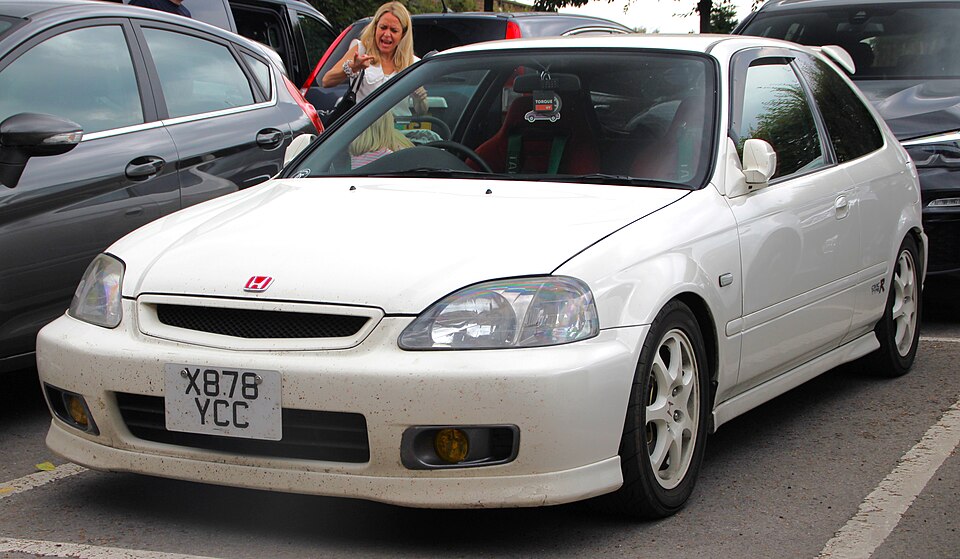
Low complaint count among 27 Civic model years — 20th most.
6recalls
287complaints
73crashes
5fires
46injuries
74,000median miles
Owner complaints filed with NHTSA, not verified and not adjusted for sales. Ranking compares this model's own years only.
Does your car have an open recall? Recalls apply to specific vehicles. Only a VIN lookup on NHTSA's official site shows whether yours is affected and still unrepaired.
Jan 17, 2020 · NHTSA campaign 20V027000 · 875,966 vehicles
Problem: Honda (American Honda Motor Co.) is recalling certain 2001-2002 Acura 3.2CL, 2000-2003 Acura 3.5RL, 2000-2001 Acura 3.2TL, Honda CR-V and Honda Odyssey, 2001-2002 Acura MDX and 2000 Accord Coupe, Accord Sedan, Civic Coupe, and Civic Sedan vehicles. These vehicles may have received a replacement driver frontal air bag module as part of a vehicle repair. Due to a manufacturing issue, the replacement NADI inflator may absorb moisture, causing the inflator to rupture or the air bag cushion to underinflate.
Risk: In the event of a crash necessitating air bag deployment, an inflator rupture may result in metal fragments striking the driver or other occupants. An underinflated air bag cushion may not properly protect the occupant. These scenarios increase the risk of serious injury or death.
Remedy & notes
Honda will notify owners, and dealers will inspect the air bags in the vehicles, replacing the driver frontal air bag inflator with an inflator of a different design, as necessary, free of charge. The recall began October 1, 2020. Owners may contact American Honda's Customer Support & Campaign Center at 1-888-234-2138.
Owners may also contact the National Highway Traffic Safety Administration Vehicle Safety Hotline at 1-888-327-4236 (TTY 1-800-424-9153), or go to www.safercar.gov.
Air Bags
Jan 17, 2020 · NHTSA campaign 20V026000 · 1,439,841 vehicles
Problem: Honda (American Honda Motor Co.) is recalling certain 1998 Acura 2.2CL, 1998-1999 Acura 2.3CL, 1998-1999 Acura 3.0CL, 2001 Acura 3.2CL and Acura MDX, 1998-2000 Honda Accord Coupe, Accord Sedan, Civic Sedan, Odyssey and Acura 3.5RL, 1999-2000 Acura 3.2TL, 1996-2000 Civic Coupe, 1997-2000 CR-V, 1997-1998 EV Plus, and 1998-1999 Isuzu Oasis vehicles. These vehicles were equipped with Non-Azide Driver air bag Inflators (NADI) and do not contain phase stabilized ammonium nitrate (PSAN) propellant. Due to a manufacturing issue, the NADI inflators may absorb moisture, causing the inflators to rupture or the air bag cushion to underinflate.
Risk: In the event of a crash necessitating air bag deployment, an inflator rupture may result in metal fragments striking the driver or other occupants. An underinflated air bag cushion may not properly protect the occupant. These scenarios increase the risk of serious injury or death.
Remedy & notes
Honda will notify owners, and dealers will inspect the driver frontal air bag inflator, and replace it if necessary, with an inflator of a different design, free of charge. The recall began October 1, 2020. Owners may contact American Honda's Customer Support & Campaign Center at 1-888-234-2138 or Isuzu customer service at 1-800-255-6727.
Owners may also contact the National Highway Traffic Safety Administration Vehicle Safety Hotline at 1-888-327-4236 (TTY 1-800-424-9153), or go to www.safercar.gov.
Fuel System
Nov 1, 2007 · NHTSA campaign 07V512000 · 6,545 vehicles
Problem: On certain compressed natural gas (CNG) vehicles, in the event of a severe interior fire in the area of the rear seat, the CNG tank May be heated unevenly, preventing the pressure relief device from venting the contents of the tank as designed.
Original NHTSA wording
ON CERTAIN COMPRESSED NATURAL GAS (CNG) VEHICLES, IN THE EVENT OF A SEVERE INTERIOR FIRE IN THE AREA OF THE REAR SEAT, THE CNG TANK MAY BE HEATED UNEVENLY, PREVENTING THE PRESSURE RELIEF DEVICE FROM VENTING THE CONTENTS OF THE TANK AS DESIGNED.
Risk: This could result in a tank rupture, explosion, and ejection of the tank from the vehicle.
Original NHTSA wording
THIS COULD RESULT IN A TANK RUPTURE, EXPLOSION, AND EJECTION OF THE TANK FROM THE VEHICLE.
Remedy & notes
Dealers will install a heat insulator material to the rear seat back. An interim owner letter was mailed to owners beginning November 26, 2007. When parts are available, owners will be renotified asking them to bring in their vehicle for repair. Owners May contact Honda at 1-800-999-1009.
Honda recall no. Q63.customers May also contact the national highway traffic safety administration's vehicle safety hotline at 1-888-327-4236 (tty 1-800-424-9153), or go to http://www.safercar.gov.
Electrical System
May 16, 2002 · NHTSA campaign 02V120000 · 1,000,000 vehicles
Problem: On certain sedans, coupes, hatchbacks, and sport utility vehicles, electrical contacts in the ignition switch can degrade due to the high electrical current passing through the switch when the vehicle is started.
Original NHTSA wording
ON CERTAIN SEDANS, COUPES, HATCHBACKS, AND SPORT UTILITY VEHICLES, ELECTRICAL CONTACTS IN THE IGNITION SWITCH CAN DEGRADE DUE TO THE HIGH ELECTRICAL CURRENT PASSING THROUGH THE SWITCH WHEN THE VEHICLE IS STARTED.
Risk: Worn contacts could cause the engine to stall without warning, increasing the risk of a crash.
Original NHTSA wording
WORN CONTACTS COULD CAUSE THE ENGINE TO STALL WITHOUT WARNING, INCREASING THE RISK OF A CRASH.
Remedy & notes
Dealers will replace the ignition switch. Owner notification began June 14, 2002. Owners who take their vehicles to an authorized dealer on an agreed upon service date and do not receive the free remedy within a reasonable time should contact Honda at 1-800-999-1009 or Acura at 1-800-382-2238.
Customers can also contact the national highway traffic safety administration's auto safety hotline at 1-888-DASH-2-DOT (1-888-327-4236).
Seat Belts
Feb 8, 2002 · NHTSA campaign 02V051000 · 16,459 vehicles
Problem: Certain sedans and coupes fail to comply with the requirements of federal motor vehicle safety standard no. 209, "seat belt assemblies." certain rear seat belt buckles were improperly manufactured.
Original NHTSA wording
CERTAIN SEDANS AND COUPES FAIL TO COMPLY WITH THE REQUIREMENTS OF FEDERAL MOTOR VEHICLE SAFETY STANDARD NO. 209, "SEAT BELT ASSEMBLIES." CERTAIN REAR SEAT BELT BUCKLES WERE IMPROPERLY MANUFACTURED.
Risk: The rear seat belts will work properly and provide protection in a crash, but the owner May experience difficulty unfastening the belt after the crash.
Original NHTSA wording
THE REAR SEAT BELTS WILL WORK PROPERLY AND PROVIDE PROTECTION IN A CRASH, BUT THE OWNER MAY EXPERIENCE DIFFICULTY UNFASTENING THE BELT AFTER THE CRASH.
Remedy & notes
In a previous recall (01V-380), only right and left buckles were inspected. The rear center buckle should also be inspected and corrected if necessary. This recall is being conducted only for the center buckle. Dealers will inspect the vehicles and replace the seat belt assemblies that were imrpoperly manufactured. Only buckles that are marked (on the back side of the buckle) with an assembly number beginning with 00185, 00186, or 00187, will be replaced. Owners should contact their dealer for this replacement. Owner notification began March 5, 2002. Owners who take their vehicles to an authorized dealer on an agreed upon service date and do not receive the free remedy within a reasonable time should contact Honda at 1-800-999-1009.
Also contact the national highway traffic safety administration's auto safety hotline at 1-888-DASH-2-DOT (1-888-327-4236).
Seat Belts
Dec 13, 2001 · NHTSA campaign 01V380000 · 16,459 vehicles
Problem: Vehicle description: Certain sedans and coupes fail to comply with the requirements of federal motor vehicle safety standard no. 209, "seat belt assemblies." certain rear seat belt buckles were improperly manufactured.
Original NHTSA wording
VEHICLE DESCRIPTION: CERTAIN SEDANS AND COUPES FAIL TO COMPLY WITH THE REQUIREMENTS OF FEDERAL MOTOR VEHICLE SAFETY STANDARD NO. 209, "SEAT BELT ASSEMBLIES." CERTAIN REAR SEAT BELT BUCKLES WERE IMPROPERLY MANUFACTURED.
Risk: The rear seat belts will work properly and provide protection in a crash, but the owner May experience difficulty unfastening the belt after the crash.
Original NHTSA wording
THE REAR SEAT BELTS WILL WORK PROPERLY AND PROVIDE PROTECTION IN A CRASH, BUT THE OWNER MAY EXPERIENCE DIFFICULTY UNFASTENING THE BELT AFTER THE CRASH.
Remedy & notes
Dealers will inspect the vehicles and replace the seat belt assemblies that were improperly manufactured. Only buckles that are marked (on the back side of the buckle) with an assembly number beginning with 00185, 00186, or 00187, will be replaced. Owners should contact their dealer for this replacement. Owner notification began January 22, 2002. Owners who take their vehicles to an authorized dealer on an agreed upon service date and do not receive the free remedy within a reasonable time should contact Honda at 1-800-999-1009.
Also contact the national highway traffic safety administration's auto safety hotline at 1-888-DASH-2-DOT (1-888-327-4236).
Recall text as published by NHTSA and the manufacturer.
Owner complaints filed with NHTSA; one complaint can name several areas. Not verified by NHTSA.
Complaints by year filed
2000 vs. other Honda Civic years
Owner complaints by model year; the darker bar is the 2000. Click a bar to switch year.
Questions
Does the 2000 Honda Civic have recalls?
Yes — NHTSA lists 6 recall campaigns covering the 2000 Honda Civic, the latest from Jan 17, 2020 (air bags). A recall applies to specific vehicles: enter your VIN at nhtsa.gov/recalls to see whether yours is affected and still open.
What are the most common problems with the 2000 Honda Civic?
Owner complaints filed with NHTSA most often mention air bags (82), engine (51), electrical system (38). Complaints are consumer reports and are not verified by NHTSA.
 Recalls by Model