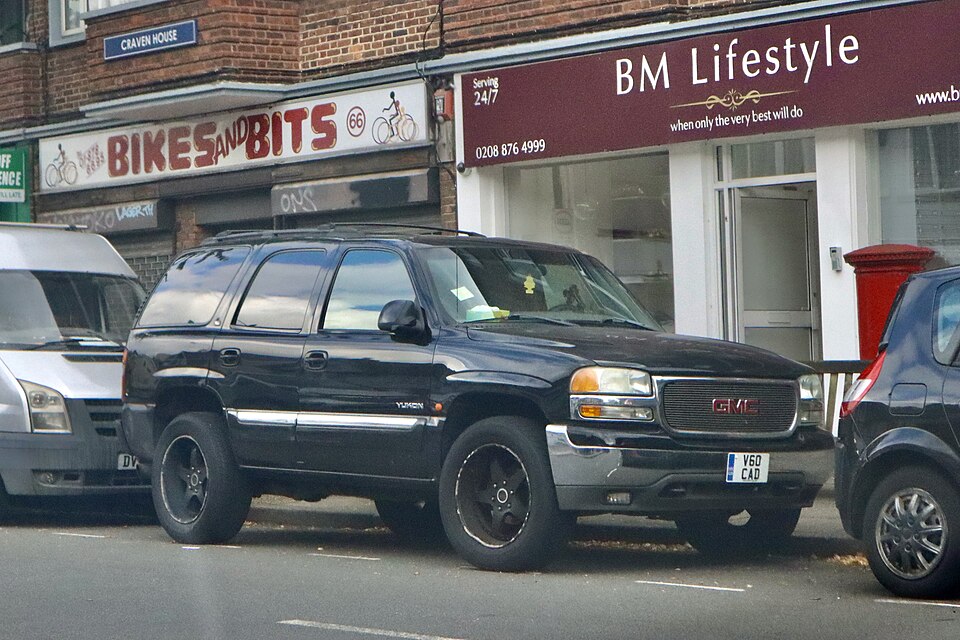
2002 GMC Yukon recalls and problems

The 2002 GMC Yukon has 3 recalls and 158 owner complaints on file with NHTSA; the most reported problem area is service brakes.

2002 Gmc Yukon
Photo: 2002 Gmc Yukon by Jones028 from Hong Kong, CC BY 2.0, via Wikimedia Commons
How the 2002 compares
Fewest complaintsMost complaints

Average complaint count among 28 Yukon model years — 13th most.

3recalls
158complaints
15crashes
3fires
12injuries
79,000median miles

Owner complaints filed with NHTSA, not verified and not adjusted for sales. Ranking compares this model's own years only.

Does your car have an open recall?
Recalls apply to specific vehicles. Only a VIN lookup on NHTSA's official site shows whether yours is affected and still unrepaired.
Check your VIN →

3 recalls

Service Brakes

Aug 29, 2005 · NHTSA campaign 05V379000 · 1,353,718 vehicles

Problem: Certain pickup trucks and sport utility vehicles May experience unwanted antilock brake system (ABS) activation. This condition is more likely to occur in environmentally corrosive areas. This recall will be launched in the "salt belt" states of Connecticut, Delaware, Illinois, Indiana, Iowa, Maryland, Massachusetts, Maine, Michigan, Minnesota, Missouri, New Hampshire, New Jersey, New York, Ohio, Pennsylvania, Rhode Island, Vermont, West Virginia, Wisconsin and the District of Columbia only.

Original NHTSA wording

CERTAIN PICKUP TRUCKS AND SPORT UTILITY VEHICLES MAY EXPERIENCE UNWANTED ANTILOCK BRAKE SYSTEM (ABS) ACTIVATION. THIS CONDITION IS MORE LIKELY TO OCCUR IN ENVIRONMENTALLY CORROSIVE AREAS. THIS RECALL WILL BE LAUNCHED IN THE "SALT BELT" STATES OF CONNECTICUT, DELAWARE, ILLINOIS, INDIANA, IOWA, MARYLAND, MASSACHUSETTS, MAINE, MICHIGAN, MINNESOTA, MISSOURI, NEW HAMPSHIRE, NEW JERSEY, NEW YORK, OHIO, PENNSYLVANIA, RHODE ISLAND, VERMONT, WEST VIRGINIA, WISCONSIN AND THE DISTRICT OF COLUMBIA ONLY.

Risk: This can cause increased stopping distances during low-speed brake applications, which could result in a crash.

Original NHTSA wording

THIS CAN CAUSE INCREASED STOPPING DISTANCES DURING LOW-SPEED BRAKE APPLICATIONS, WHICH COULD RESULT IN A CRASH.

Remedy & notes

Dealers are to remove the wheel speed sensor and thoroughly clean the wheel speed sensor mounting surface on the bearing, apply rust inhibitor to the cleaned surface, grease the mounting surface, reinstall the wheel speed sensor, and check the peak-to-peak output voltage to ensure the wheel speed signal is within specifications. The recall began September 22, 2005. Owners May contact Chevrolet at 1-800-630-2438 or GMC at 1-866-996-9463.

Gm recall no. 05068. Gm revised the involved vehicles by amending the original 573 report on October 4, 2005. Gm revised the original 573 report on December 16, 2005, to include additional states and vehicle population.customers May also contact the national highway traffic safety administration's vehicle safety hotline at 1-888-327-4236 (tty 1-800-424-9153), or go to http://www.safercar.gov.

Structure

Mar 7, 2003 · NHTSA campaign 03V094000 · 3,674 vehicles

Problem: Certain pickup truck, van, and MINI van conversions equipped with southern comfort built running boards that contain certain courtesy lights manufactured by american technology components, INC. These units contain a courtesy light or lights that might overheat when the wire harness is exposed to excessive moisture and road salt.

Original NHTSA wording

CERTAIN PICKUP TRUCK, VAN, AND MINI VAN CONVERSIONS EQUIPPED WITH SOUTHERN COMFORT BUILT RUNNING BOARDS THAT CONTAIN CERTAIN COURTESY LIGHTS MANUFACTURED BY AMERICAN TECHNOLOGY COMPONENTS, INC. THESE UNITS CONTAIN A COURTESY LIGHT OR LIGHTS THAT MIGHT OVERHEAT WHEN THE WIRE HARNESS IS EXPOSED TO EXCESSIVE MOISTURE AND ROAD SALT.

Risk: This overheating condition can cause the running board to melt or cause a fire.

Original NHTSA wording

THIS OVERHEATING CONDITION CAN CAUSE THE RUNNING BOARD TO MELT OR CAUSE A FIRE.

Remedy & notes

Dealers will replace the wiring harness on these running boards. Owner notification began March 7, 2003. Owners who take their vehicles to an authorized dealer on an agreed upon service date and do not receive the free remedy within a reasonable time should contact southern comfort at 1-800-745-6096.

Customers can also contact the national highway traffic safety administration's auto safety hotline at 1-888-DASH-2-DOT (1-888-327-4236).

Seats

Sep 17, 2002 · NHTSA campaign 02V253000 · 558,904 vehicles

Problem: On certain sport utility vehicles equipped with rearward folding head restraints on the second row seats, two potential pinch points exist on each of the folding head restraints when the restraints are folded rearward as the seatback is folded down.

Original NHTSA wording

ON CERTAIN SPORT UTILITY VEHICLES EQUIPPED WITH REARWARD FOLDING HEAD RESTRAINTS ON THE SECOND ROW SEATS, TWO POTENTIAL PINCH POINTS EXIST ON EACH OF THE FOLDING HEAD RESTRAINTS WHEN THE RESTRAINTS ARE FOLDED REARWARD AS THE SEATBACK IS FOLDED DOWN.

Risk: If a person were to insert their finger(s) into the pinch point when the head restraint folds, it could trap and pinch the finger(s) causing injury.

Original NHTSA wording

IF A PERSON WERE TO INSERT THEIR FINGER(S) INTO THE PINCH POINT WHEN THE HEAD RESTRAINT FOLDS, IT COULD TRAP AND PINCH THE FINGER(S) CAUSING INJURY.

Remedy & notes

Dealers will install protective covers over the pinch points. Owner notification began November 8, 2002. Owners who take their vehicles to an authorized dealer on an agreed upon service date and do not receive the free remedy within a reasonable time should contact Chevrolet at 1-800-222-1020, GMC at 1-800-462-8782, or Cadillac at 1-800-458-8006.

Also, customers can contact the national highway traffic safety administration's auto safety hotline at 1-888-DASH-2-DOT (1-888-327-4236).

Recall text as published by NHTSA and the manufacturer.

What owners complain about

Owner complaints filed with NHTSA; one complaint can name several areas. Not verified by NHTSA.

Complaints by year filed

2001: 1 complaints20012002: 17 complaints2003: 21 complaints20032004: 7 complaints2005: 30 complaints2005302006: 7 complaints2007: 4 complaints20072008: 1 complaints2009: 7 complaints20092010: 5 complaints2011: 3 complaints20112012: 6 complaints2013: 10 complaints20132014: 13 complaints2015: 10 complaints20152016: 4 complaints2017: 5 complaints20172019: 2 complaints2020: 3 complaints20202022: 1 complaints2025: 1 complaints20251

NHTSA investigations

Brake line corrosion failure

PE10010 · opened Mar 30, 2010 · closed Jan 5, 2011
Summary

The Office of Defects Investigation (ODI) received Defect Petition DP10-003 on March 2, 2010, requesting the investigation of model year (MY) 2003 Chevrolet Silverado 2500HD 4WD pickup trucks for corrosion failures of the vehicle brake lines.DP10-003 was granted and on March 30, 2010, Preliminary Evaluation PE10-010 was opened on more than six million model year 1999 through 2003 light trucks and sport utility vehicles manufactured and sold by General Motors Corporation (GM).On July 2, 2010, ODI received GM's response to an information request, which included GM's assessment of the frequency and safety consequences of the alleged defect. GM stated that:(1) the brake system of the subject vehicles is split front/rear and should a brake pipe suddenly fail for any reason, the affected vehicle would be capable of stopping with the pressure supplied by the remaining circuit; (2) the subject vehicles were designed to meet the hydraulic circuit partial failure requirements of Federal Motor Vehicle Safety Standards 105 and 135, Light Vehicle Brake Systems; and (3) should a brake fluid leak occur for any reason, the brake system malfunction indicator lamp (MIL) would illuminate and warn the driver before the brake fluid level was low enough to cause a loss of line pressure.ODI's and GM's analysis indicates that 85 percent of the complaints occurred on vehicles used primarily in States that use salt on the roads during Winter months (Connecticut, Delaware, District of Columbia, Illinoi…

PARKING BRAKE FAILURE

DP05009 · opened Dec 20, 2005 · closed May 31, 2006
Summary

ODI'S REVIEW OF COMPLAINT DATA RECEIVED SINCE THE CLOSE OF EA04-011 REVEALED NO INDICATION THAT THE INVESTIGATION SHOULD BE RE-OPENED.MORE DETAILS CAN BE FOUND IN THE FEDERAL REGISTER NOTICE ENCLOSED IN THE DP05-009 PUBLIC FILE.ODI RESERVES THE RIGHT TO REOPEN THE INVESTIGATION IN THE FUTURE SHOULD CONDITIONS WARRANT.

UNWANTED LOW-SPEED ABS ACTIVATION

PE05020 · opened Apr 28, 2005 · closed Sep 13, 2005 · led to recall 05V379000
Summary

IN A LETTER DATED AUGUST 29, 2005, GM NOTIFIED ODI THAT IT WAS RECALLING CERTAIN MODEL YEAR 1999 THROUGH 2002 C/K PICKUP TRUCKS AND SPORT UTILITY VEHICLES TO CORRECT A PROBLEM WITH ANTI-LOCK BRAKE SYSTEM (ABS) WHEEL SPEED SENSOR CORROSION THAT MAY RESULT IN UNWANTED ABS ACTIVATION AND EXTENDED STOPPING DISTANCES DURING LOW-SPEED BRAKING (RECALL 05V-379).GM'S RECALL COVERS APPROXIMATELY 804,000 VEHICLES CURRENTLY REGISTERED IN THE FOLLOWING 14 SALT-BELT STATES:CONNECTICUT, ILLINOIS, INDIANA, MASSACHUSETTS, MAINE, MICHIGAN, NEW HAMPSHIRE, NEW JERSEY, NEW YORK, OHIO, PENNSYLVANIA, RHODE ISLAND, VERMONT, AND WEST VIRGINIA.THE RECALL PROCEDURE WILL INVOLVE REMOVING THE SENSOR, CLEANING THE MOUNTING SURFACE, APPLYING A RUST INHIBITOR (ZINC-X) TO THE SURFACE, AND REINSTALLING THE SENSOR.IF NECESSARY, THE SENSOR WILL BE REPLACED. THE POPULATION AND FAILURE REPORT DATA GIVEN IN THIS RESUME ARE FOR THE FULL REGION THAT HAS BEEN CONSIDERED BY ODI AS THE SALT-BELT.THAT INCLUDES DELAWARE, IOWA, MARYLAND, MINNESOTA, MISSOURI, WISCONSIN AND THE DISTRICT OF COLUMBIA IN ADDITION TO THE 14 STATES INCLUDED IN 05V-379.THE STATES COVERED BY GM'S RECALL HAVE THE HIGHEST INCIDENT RATES FOR THE SUBJECT CONDITION, ACCOUNTING FOR 91% OF THE INCIDENTS, BUT ONLY 24% OF SUBJECT VEHICLE SALES IN THE UNITED STATES.ODI'S ANALYSIS DETERMINED THAT 840 OF THE COMPLAINTS, 244 OF THE CRASHES, AND 16 OF THE INJURIES IDENTIFIED IN THIS INVESTIGATION OCCURRED IN THOSE STATES.THE RESULTING INCIDENT AND CRASH RATES A…

THROTTLE STICKING CLOSED

EA02015 · opened Aug 1, 2002 · closed Jan 12, 2004
Summary

THIS INVESTIGATION INVOLVES THE GENERAL MOTORS CORPORATION (GM)THROTTLE BODY (TB) UTILIZED IN MODEL YEAR (MY) 1999-2002 SILVERADO, SIERRA, TAHOE, SUBURBAN, AVALANCHE AND YUKON (SUBJECT VEHICLE(S)) WITH 4.8L, 5.3L, AND 6.0L ENGINES. THE TB VALVE MAY INTERMITTENTLY STICK IN A CLOSED POSITION.IN SUCH A SITUATION, AN OPERATOR MAY APPLY ADDITIONAL ACCELERATOR PEDAL FORCE TO INCREASE ENGINE SPEED.THE APPLICATION OF ADDITIONAL ACCELERATOR PEDAL FORCE, TO OPEN A STUCK THROTTLE VALVE, MAY OPEN THE THROTTLE VALVE MORE THAN INTENDED AND, IN TURN, ACCELERATE THE ENGINE AND VEHICLE MORE THAN INTENDED AND REASONABLY EXPECTED BY THE DRIVER.ON AUGUST 1, 2002, THE OFFICE OF DEFECTS INVESTIGATION (ODI), OF THE NATIONAL HIGHWAY TRAFFIC SAFETY ADMINISTRATION (NHTSA), OPENED THIS ENGINEERING ANALYSIS.THE INVESTIGATION REVEALED THAT TWO FACTORS MAY CAUSE THE DEFECT: 1) TB MANUFACTURING PROCESS PROBLEMS; AND 2) ACCUMULATION OF DEPOSITS (A PCV SYSTEM BY-PRODUCT) ON OR AROUND THE TB THROTTLE VALVE AND BORE.ODI CONCLUDES THAT THE TB PERFORMS IN A DEFECTIVE MANNER AFTER ANALYZING GM?S DATA SUBMISSIONS, AND TEST DATA COLLECTED BY THE VEHICLE RESEARCH AND TEST CENTER (VRTC).FIFTY-NINE CRASHES ARE ALLEGED TO HAVE OCCURRED AS A RESULT OF GM?S TB DEFECT.THE MAJORITY OF THE CRASHES INVOLVE A SINGLE VEHICLE, ENGAGING IN A CLOSE QUARTER VEHICLE MANEUVER (OR LOW SPEED), AND CAUSING ONLY MINOR PROPERTY DAMAGE.FOUR OUT OF THE FIFTY-NINE CRASHES INVOLVE INJURY, AND THOSE INJURIES WERE MINOR.ALTHOUGH GM?S TB IS DEF…

2002 vs. other GMC Yukon years

Owner complaints by model year; the darker bar is the 2002. Click a bar to switch year.

Questions

Does the 2002 GMC Yukon have recalls?

Yes — NHTSA lists 3 recall campaigns covering the 2002 GMC Yukon, the latest from Aug 29, 2005 (service brakes). A recall applies to specific vehicles: enter your VIN at nhtsa.gov/recalls to see whether yours is affected and still open.

What are the most common problems with the 2002 GMC Yukon?

Owner complaints filed with NHTSA most often mention service brakes (72), air bags (11), electrical system (10). Complaints are consumer reports and are not verified by NHTSA.