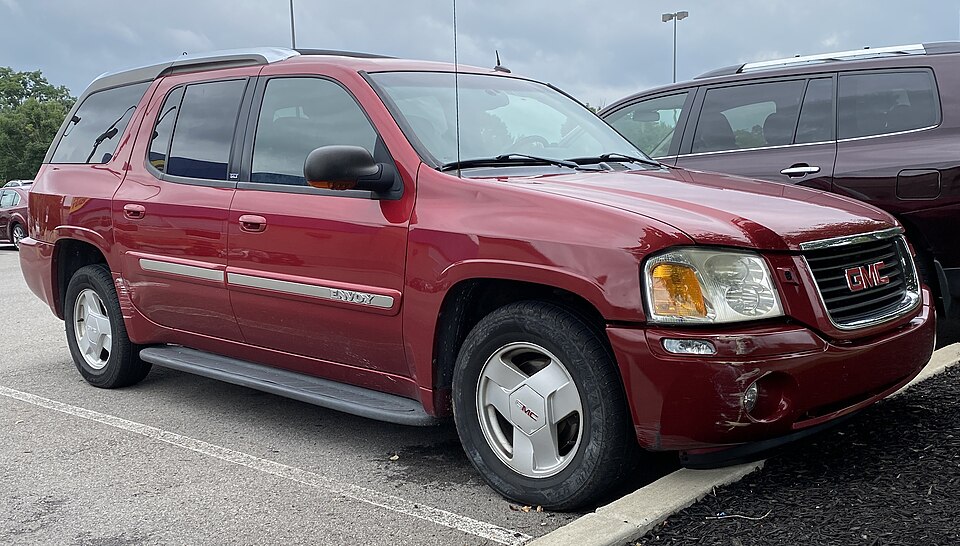
2004 GMC Envoy Xuv recalls and problems

The 2004 GMC Envoy Xuv has 0 recalls and 150 owner complaints on file with NHTSA; the most reported problem area is electrical system.

2004 Gmc Envoy Xuv
Photo: 2004 Gmc Envoy Xuv by Cutlass, CC0, via Wikimedia Commons
How the 2004 compares

Too few model years with complaints to compare.

0recalls
150complaints
4crashes
1fires
5injuries
62,000median miles

Owner complaints filed with NHTSA, not verified and not adjusted for sales. Ranking compares this model's own years only.

Does your car have an open recall?
Recalls apply to specific vehicles. Only a VIN lookup on NHTSA's official site shows whether yours is affected and still unrepaired.
Check your VIN →

0 recalls

No recall campaigns on file.

Recall text as published by NHTSA and the manufacturer.

What owners complain about

Owner complaints filed with NHTSA; one complaint can name several areas. Not verified by NHTSA.

Complaints by year filed

2004: 5 complaints20042005: 8 complaints2006: 8 complaints20062007: 11 complaints2008: 28 complaints2008282009: 13 complaints2010: 25 complaints20102011: 13 complaints2012: 6 complaints20122013: 6 complaints2014: 11 complaints20142015: 10 complaints2016: 3 complaints20162017: 3 complaints20173

NHTSA investigations

Loss of Headlights

RQ17002 · opened Apr 24, 2017 · closed Mar 29, 2021
Summary

The subject vehicles are model year (MY) 2002-2009 Chevrolet Trailblazer, GMC Envoy, 2004-2007 Buick Rainier, 2003-2008 Isuzu Ascender, 2005-2009 Saab 9-7X, 2002-2004 Oldsmobile Bravada, 2003-2006 Chevrolet SSR, 2005-2009 Buick Lacrosse, and 2006-2008 Pontiac Grand Prix. This scope includes the Trailblazer/Envoy variants: 2002-2006 Envoy XL/Trailblazer EXT and 2004-2005 Envoy XUV. The original scope of this investigation was expanded to include all vehicles equipped with the subject Headlight Driver Module (HDM). The focus of the investigation was to determine whether actions performed by General Motors adequately addressed any unreasonable risk to motor vehicle safety in the subject vehicles concerning the headlights and the HDM that controls them.Under normal electrical load and environmental conditions, the HDM can overheat inside the Underhood Electrical Center (UEC). This can cause the module to fail and result in a simultaneous loss of both low beam headlights and both daytime running lights (DRLs), often with no warning or prior detectability to the driver. This failure can be intermittent or permanent. No other exterior lights are affected. High beams, turn signals, brake lights, and reverse lights are still operational.General Motors addressed this issue with 2 recalls (14V755 & 15V519) and a special coverage program (N172091910). In view of the recalls and special coverage program implemented by GM and the vehicle high beams continuing to operate, ODI has tentativel…

TURN SIGNAL FAILURES

PE05006 · opened Feb 4, 2005 · closed May 6, 2005 · led to recall 05V198000
Summary

BY LETTER DATED APRIL 29, 2005, GM NOTIFIED THE AGENCY THAT IT IS CONDUCTING ASAFETY RECALL ( NHTSA RECALL NO. 05V198 ) INVOLVING CERTAIN MODEL YEARS (MY) 2003-2004 ISUZU ASCENDER, CHEVROLET TRAILBLAZER, GMC ENVOY, OLDSMOBILE BRAVADA AND MY 2004 BUICK RAINER VEHICLES.THE RECALL APPLIES TO VEHICLES BUILT FROM APRIL 2003 THROUGH NOVEMBER 2003 FOR A TOTAL VEHICLE POPULATION OF 286,478.GM REPORTS THE DIRECTIONAL/HAZARD SIGNALS FAILURE IS DUE TO STICKING CONTACTS ON ROUTING RELAYS IN THE FLASHER MODULE.GM WILL REPLACE THE FLASHER MODULE ON ALL INVOLVED VEHICLES.BASED ON GM'S SAFETY RECALL ACTION, THIS INVESTIGATION IS CLOSED.

2004 vs. other GMC Envoy Xuv years

Owner complaints by model year; the darker bar is the 2004. Click a bar to switch year.

Questions

Does the 2004 GMC Envoy Xuv have recalls?

NHTSA lists no recall campaigns for the 2004 GMC Envoy Xuv. Check your VIN at nhtsa.gov/recalls to be sure.

What are the most common problems with the 2004 GMC Envoy Xuv?

Owner complaints filed with NHTSA most often mention electrical system (79), fuel system (29), visibility (13). Complaints are consumer reports and are not verified by NHTSA.