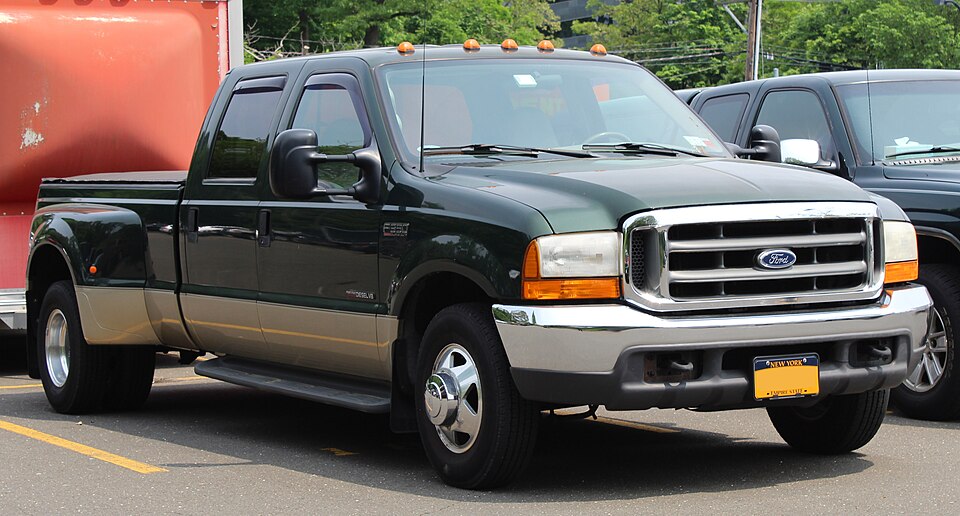
Highest complaint count among 14 F-350 model years — the most of any year.
4recalls
304complaints
36crashes
9fires
41injuries
82,000median miles
Owner complaints filed with NHTSA, not verified and not adjusted for sales. Ranking compares this model's own years only.
Does your car have an open recall? Recalls apply to specific vehicles. Only a VIN lookup on NHTSA's official site shows whether yours is affected and still unrepaired.
Aug 1, 2006 · NHTSA campaign 06V286000 · 1,200,000 vehicles
Problem: On certain trucks equipped with speed control, gasoline or natural gas engines, the speed control deactivation switch May overheat.
Original NHTSA wording
ON CERTAIN TRUCKS EQUIPPED WITH SPEED CONTROL, GASOLINE OR NATURAL GAS ENGINES, THE SPEED CONTROL DEACTIVATION SWITCH MAY OVERHEAT.
Risk: Overheating could result in smoke or burn and an underhood fire.
Original NHTSA wording
OVERHEATING COULD RESULT IN SMOKE OR BURN AND AN UNDERHOOD FIRE.
Remedy & notes
Dealers will install a fused wiring harness into the speed control system free of charge. The recall began on August 7, 2006. Owners May contact Ford at 1-866-436-7332. (note: Also see recalls 05V017 and 05V388)
Ford recall no. 05S28.customers May also contact the national highway traffic safety administration's vehicle safety hotline at 1-888-327-4236 (tty 1-800-424-9153), or go to http://www.safercar.gov.
Visibility
Aug 8, 2001 · NHTSA campaign 01V258000 · 1,083,000 vehicles
Problem: Vehicle description: Passenger cars, sport utility vehicles, and light and medium duty pickup trucks. A switch located in the plastic cover of the wiper motor gear case could malfunction and overheat, potentially resulting in loss of intermittent wiper function, loss of wiper park function, complete loss of wiper function, or ignition of the plastic cover material. Switch malfunction is most likely to occur when the intermittent setting of the wipers is being used, or when snow or ice obstructs the blades from returning to the "parked" position at the bottom of the windshield. These vehicles were built at the following assembly plants: Atlanta plant from 2/11/00 through 7/31/00; chicago plant from 2/14/00 through 8/4/00; Kansas city plant from 2/26/00 to 9/4/00; Kentucky truck plant from 2/18/00 to 8/31/00; Michigan truck plant from 2/23/00 through 8/3/00; norfolk plant from 2/21/00 through 7/27/00; wayne stamping and assembly plant from 2/25/00 through 8/15/00; and wixom plant from 2/15/00 through 8/8/00.
Original NHTSA wording
VEHICLE DESCRIPTION: PASSENGER CARS, SPORT UTILITY VEHICLES, AND LIGHT AND MEDIUM DUTY PICKUP TRUCKS. A SWITCH LOCATED IN THE PLASTIC COVER OF THE WIPER MOTOR GEAR CASE COULD MALFUNCTION AND OVERHEAT, POTENTIALLY RESULTING IN LOSS OF INTERMITTENT WIPER FUNCTION, LOSS OF WIPER PARK FUNCTION, COMPLETE LOSS OF WIPER FUNCTION, OR IGNITION OF THE PLASTIC COVER MATERIAL. SWITCH MALFUNCTION IS MOST LIKELY TO OCCUR WHEN THE INTERMITTENT SETTING OF THE WIPERS IS BEING USED, OR WHEN SNOW OR ICE OBSTRUCTS THE BLADES FROM RETURNING TO THE "PARKED" POSITION AT THE BOTTOM OF THE WINDSHIELD. THESE VEHICLES WERE BUILT AT THE FOLLOWING ASSEMBLY PLANTS: ATLANTA PLANT FROM 2/11/00 THROUGH 7/31/00; CHICAGO PLANT FROM 2/14/00 THROUGH 8/4/00; KANSAS CITY PLANT FROM 2/26/00 TO 9/4/00; KENTUCKY TRUCK PLANT FROM 2/18/00 TO 8/31/00; MICHIGAN TRUCK PLANT FROM 2/23/00 THROUGH 8/3/00; NORFOLK PLANT FROM 2/21/00 THROUGH 7/27/00; WAYNE STAMPING AND ASSEMBLY PLANT FROM 2/25/00 THROUGH 8/15/00; AND WIXOM PLANT FROM 2/15/00 THROUGH 8/8/00.
Risk: Loss of visibility while driving increases the risk of a crash.
Original NHTSA wording
LOSS OF VISIBILITY WHILE DRIVING INCREASES THE RISK OF A CRASH.
Remedy & notes
Dealers will inspect the date code on the wiper motor. Motors built with the suspect time frame will have the wiper motor gear case cover replaced. Owner notification began August 20, 2001. Owners who take their vehicles to an authorized dealer on an agreed upon service date and do not receive the free remedy within a reasonable time should contact Ford at 1-866-436-7332.
Also contact the national highway traffic safety administration's auto safety hotline at 1-888-DASH-2-DOT (1-888-327-4236).
Fuel System
Nov 4, 1999 · NHTSA campaign 99V311000 · 107,540 vehicles
Problem: Vehicle description: Pickup trucks equipped with gasoline engines and 8 foot boxes, May not fully satisfy the requirements of FMVSS no. 301, "fuel system integrity." in a 30 MPH frontal barrier crash test, a fuel tank vapor recovery valve separated internally. During the subsequent static rollover test, fuel spillage exceeded the specified rate.
Original NHTSA wording
VEHICLE DESCRIPTION: PICKUP TRUCKS EQUIPPED WITH GASOLINE ENGINES AND 8 FOOT BOXES, MAY NOT FULLY SATISFY THE REQUIREMENTS OF FMVSS NO. 301, "FUEL SYSTEM INTEGRITY." IN A 30 MPH FRONTAL BARRIER CRASH TEST, A FUEL TANK VAPOR RECOVERY VALVE SEPARATED INTERNALLY. DURING THE SUBSEQUENT STATIC ROLLOVER TEST, FUEL SPILLAGE EXCEEDED THE SPECIFIED RATE.
Risk: Fuel leakage, in the presence of an ignition source, could result in a fire.
Original NHTSA wording
FUEL LEAKAGE, IN THE PRESENCE OF AN IGNITION SOURCE, COULD RESULT IN A FIRE.
Remedy & notes
Dealers will install a stop plate assembly on the vehicle frame to prevent recovery valve contact with a frame crossmember during the impact sequence.
Ford recall no. 99S32.owner notification is expected to begin during November/December 1999.owners who take their vehicles to an authorized dealer on an agreed upon service date and do not receive the free remedy within a reasonable time should contact Ford at 1-800-392-3673. Also contact the national highway traffic safety administration's auto safety hotline at 1-888-DASH-2-DOT (1-888-327-4236).
Fuel System
Aug 12, 1999 · NHTSA campaign 99V219000 · 245,300 vehicles
Problem: Vehicle description: Gasoline and diesel engine pickup trucks equipped with 8 foot beds, do not fully satisfy the requirements of FMVSS no. 301, "fuel system integrity." the fuel tank front strap isolator May not be properly positioned which could result in the strap cutting the tank during a 30 MPH front barrier test, resulting in fuel spillage.
Original NHTSA wording
VEHICLE DESCRIPTION: GASOLINE AND DIESEL ENGINE PICKUP TRUCKS EQUIPPED WITH 8 FOOT BEDS, DO NOT FULLY SATISFY THE REQUIREMENTS OF FMVSS NO. 301, "FUEL SYSTEM INTEGRITY." THE FUEL TANK FRONT STRAP ISOLATOR MAY NOT BE PROPERLY POSITIONED WHICH COULD RESULT IN THE STRAP CUTTING THE TANK DURING A 30 MPH FRONT BARRIER TEST, RESULTING IN FUEL SPILLAGE.
Risk: During the subsequent static rollover test, fuel spillage exceeded the specified rate, increasing the risk of a fire.
Original NHTSA wording
DURING THE SUBSEQUENT STATIC ROLLOVER TEST, FUEL SPILLAGE EXCEEDED THE SPECIFIED RATE, INCREASING THE RISK OF A FIRE.
Remedy & notes
Dealers will reposition the front strap isolator.
Owner notification began December 1, 1999. Owners who take their vehicles to an authorized dealer on an agreed upon service date and do not receive the free remedy within a reasonable time should contact Ford at 1-800-392-3673.also contact the national highway traffic safety administration's auto safety hotline at 1-888-DASH-2-DOT (1-888-327-4236).
Recall text as published by NHTSA and the manufacturer.
Owner complaints filed with NHTSA; one complaint can name several areas. Not verified by NHTSA.
Complaints by year filed
NHTSA investigations
SPARK PLUG EJECTION FROM CYLINDER HEAD
DP05005 · opened Sep 22, 2005 · closed Jan 4, 2006
Summary
ON SEPTEMBER 6, 2005, ODI RECEIVED A PETITION REQUESTING THAT THE AGENCY INVESTIGATE ALLEGATIONS OF ENGINE SPARK PLUG EJECTION IN CERTAIN MODEL YEAR 1997 THROUGH 2004 FORD VEHICLES WITH TRITON V-8 AND V-10 ENGINES.ODI RECEIVED A TOTAL OF 474 NON-DUPLICATIVE COMPLAINTS ON THE SUBJECT VEHICLES WHERE THE COMPLAINANT, OR THE DEALER REPAIRING THE VEHICLE, REPORTED THAT A SPARK PLUG DETACHED FROM THE CYLINDER AND/OR EJECTED FROM THE ENGINE.AS OF DECEMBER 8, 2005, ODI IS NOT AWARE OF ANY ALLEGATIONS WHERE THE ALLEGED DEFECT RESULTED IN A LOSS OF VEHICLE CONTROL, A CRASH, AN INJURY, OR A FATALITY IN ANY OF THE 10,319,810 SUBJECT VEHICLES.IN ADDITION, ODI IS AWARE OF ONLY TWO INCIDENTS WHERE THE VEHICLE STALLED WITHOUT RESTART.INFORMATION CONTAINED IN THE ODI CONSUMER COMPLAINTS AND OBTAINED FROM 72 TELEPHONE INTERVIEWS WITH COMPLAINANTS SHOWED THE FOLLOWING:(1) 99% OF THE COMPLAINTS WERE ON MY 1997 TO 2002 SUBJECT VEHICLES.(2) MOST THE COMPLAINANTS REPORTED HEARING A LOUD POP WHILE DRIVING OR UPON STARTING UP THE VEHICLE FOLLOWED BY A LOUD, REPETITIVE CLICKING OR POPPING SOUND.(3) MANY OF THE COMPLAINANTS REPORTED THAT THE POPPING SOUND WAS ACCOMPANIED BY SOME LOSS OF VEHICLE POWER; HOWEVER, IN 99% OF THE INCIDENTS REPORTED, THE VEHICLE DID NOT STALL.IN THE VERY FEW INCIDENTS WHERE THE VEHICLE DID STALL, MOST VEHICLES COULD BE RESTARTED.(4) ONLY A SMALL PERCENTAGE OF THE COMPLAINANTS CITED THAT THEY SMELLED GAS OR A SLIGHT BURNING SMELL WHEN THE INCIDENT OCCURRED.(5) IN ALL BUT A VER…
ENGINE COMPARTMENT FIRES
EA05005 · opened Mar 22, 2005 · closed Aug 2, 2006 · led to recall 05V388000
Summary
EA05-005 IS CLOSED WITH FORD?S ACTIONS IN RECALLS 05V-017, 05V-388, AND 06V-286, RECALLING APPROXIMATELY 6.7 MILLION VEHICLES EQUIPPED WITH TEXAS INSTRUMENTS SPEED CONTROL DEACTIVATION SWITCHES (SCDS).THE BRAKE SYSTEMS IN THESE RECALLED VEHICLES GENERATE A VACUUM THAT CAN POTENTIALLY CAUSE THE SCDS TO FAIL AND, IN CERTAIN SWITCH INSTALLATION ORIENTATIONS, CATCH FIRE.FORD IS ALSO INCLUDING THE ENTIRE POPULATION OF 1998 EXPLORERS.FORD HAS INFORMED ODI THAT TESTING TO DETERMINE THE CAUSE OF FAILURES IN THE 1998 EXPLORERS WILL CONTINUE AFTER THIS INVESTIGATION IS CLOSED.ODI BELIEVES THAT THE VEHICLES EXHIBITING THE FACTORS CAUSING SCDS FAILURE DESCRIBED IN THIS REPORT CORRELATE WELL WITH THE OBSERVED FAILURE RATES ON THESE VEHICLES BY MODEL AND MODEL YEAR.THE CLOSING OF THIS INVESTIGATION DOES NOT CONSTITUTE A FINDING BY NHTSA THAT A SAFETY-RELATED DEFECT DOES NOT EXIST IN THE NON-RECALLED VEHICLES MANUFACTURED WITH SCDS THAT ARE NOT INCLUDED IN FORD?S RECALLS.ODI WILL CONTINUE TO MONITOR THE NON-RECALLED POPULATION FOR INCIDENCE OF ENGINE COMPARTMENT FIRES.THE AGENCY RESERVES THE RIGHT TO TAKE FURTHER ACTION IF WARRANTED BY THE CIRCUMSTANCES.SEE ATTACHED CLOSING REPORT FOR DETAILS.
RAPID TIRE DEFLATION
EA02018 · opened Aug 19, 2002 · closed Aug 22, 2003
Summary
THIS INVESTIGATION WAS OPENED ON CERTAIN FORD PICKUP TRUCKS AND VANS TO EVALUATE THE EFFECTS OF A VALVE STEM EJECTION (WITH RAPID AIR LOSS) AND A SLOW LEAKING VALVE STEM ON VEHICLE HANDING.DURING THE INVESTIGATION, ODI EVALUATED OVER 1,100 COMPLAINTS AND WARRANTY CLAIMS, CONDUCTED VEHICLE DYNAMIC TESTING ON A SUBJECT VEHICLE WITH THE FAILURE MODE REPLICATED, INTERVIEWED OWNERS, AND EXAMINED COMPLAINT VEHICLES IN THE FIELD.THE RESULTS OF THE TEST PROGRAM INDICATES THE EFFECT OF A VALVE STEM EJECTION ON THESE VEHICLES IS EASILY CONTROLLED. FURTHER, WITH A POPULATION OF ALMOST 900,000 VEHICLES, HAVING TWO TO FOUR YEARS OF EXPOSURE, ODI IS AWARE OF ONLY 3 MINOR CRASHES AND IS UNAWARE OF ANY INJURIES.THE SMALL NUMBER OF CRASHES RELATIVE TO THE LARGE POPULATION OF VEHICLES IS CONSISTENT WITH THE TESTING WHICH WAS PERFORMED. THEREFORE, THIS INVESTIGATION IS CLOSED.SEE THE ATTACHED REPORT FOR FULL TECHNICAL DETAILS.
PARKING BRAKE FAILURE
RQ00010 · opened Mar 13, 2000 · closed Jan 12, 2001 · led to recall 98V101000
Summary
ON MAY 11, 1998, FORD MOTOR COMPANY FILED A DEFECT INFORMATION REPORT CONCERNING PARKING BRAKE FAILURE ON CERTAIN 1999 F-350 SUPER DUTY VEHICLES BUILT AT THE KENTUCKY TRUCK PLANT FROM JANUARY 26, 1998 THROUGH APRIL 24, 1998; RECALL 98V-101.THE REDUCTION IN PARKING BRAKE EFFECTIVENESS MAY OCCUR ON SOME OF THESE VEHICLES, AND IS CAUSED BY THE RUST PREVENTATIVE COATING THE SURFACE OF THE PARKING BRAKE LINING MATERIAL WHICH REDUCES THE FRICTIONAL CHARACTERISTICS AT THE LINING AND ROTOR INTERFACE.ON MARCH 13, 2000, ODI OPENED RQ00-010 ON PARKING BRAKE FAILURES ON 1999-2000 MODEL YEAR SUPER DUTY F-SERIES VEHICLES, ON THE BASIS OF SIX FAILURE REPORTS ON THOSE VEHICLES.ODI NOW HAS 10 REPORTS OF PARKING BRAKE FAILURE ON THE 1999 SUBJECT VEHICLES, BUILT OUTSIDE OF THE RECALL POPULATION, INCLUDING THREE CRASHES.THE DATA IN THE ABOVE TABLE DOES NOT INCLUDE PARKING BRAKE FAILURES ON THE RECALLED 1999 F-350 VEHICLES.THE DATA RECEIVED FROM FORD IN ITS RESPONSE TO THE RQ00-010 INFORMATION REQUEST, REVEALED A HIGH FAILURE RATE FOR THE 1999 F-450/550 VEHICLES (1200R/100K), AND A HIGH FAILURE RATE OF THE 1999 F-250/350 VEHICLES, MANUFACTURED OUTSIDE SEVERAL OF THE RECALL BUILD MONTHS.IT IS RECOMMENDED THAT AN ENGINEERING ANALYSIS BE OPENED TO ADDRESS THE PARKING BRAKE PROBLEM IN THE 1999 MODEL YEAR SUPER DUTY F-SERIES VEHICLES.
2000 vs. other Ford F-350 years
Owner complaints by model year; the darker bar is the 2000. Click a bar to switch year.
Questions
Does the 2000 Ford F-350 have recalls?
Yes — NHTSA lists 4 recall campaigns covering the 2000 Ford F-350, the latest from Aug 1, 2006 (vehicle speed control). A recall applies to specific vehicles: enter your VIN at nhtsa.gov/recalls to see whether yours is affected and still open.
What are the most common problems with the 2000 Ford F-350?
Owner complaints filed with NHTSA most often mention tires (114), steering (44), service brakes (39). Complaints are consumer reports and are not verified by NHTSA.
 Recalls by Model