2014 Ford Explorer recalls and problems

The 2014 Ford Explorer has 6 recalls and 1,684 owner complaints on file with NHTSA; the most reported problem area is steering.

2013 Ford Explorer
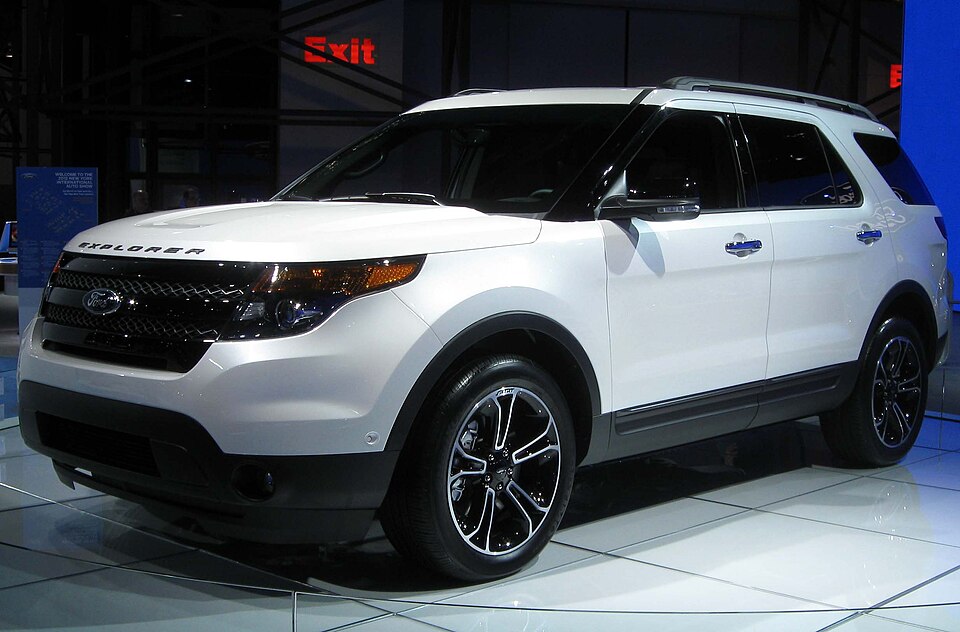
Pictured: a 2013 model; the 2014 may differ in details. Photo: 2013 Ford Explorer by IFCAR, Public domain, via Wikimedia Commons
How the 2014 compares
Fewest complaintsMost complaints

High complaint count among 27 Explorer model years — 6th most.

6recalls
1,684complaints
32crashes
6fires
38injuries
66,000median miles

Owner complaints filed with NHTSA, not verified and not adjusted for sales. Ranking compares this model's own years only.

Does your car have an open recall?
Recalls apply to specific vehicles. Only a VIN lookup on NHTSA's official site shows whether yours is affected and still unrepaired.
Check your VIN →

6 recalls

Structure

Jan 19, 2024 · NHTSA campaign 24V031000 · 1,889,110 vehicles

Problem: Ford Motor Company (Ford) is recalling certain 2011-2019 Explorer vehicles. The A-pillar trim retention clips may not be properly engaged, allowing the trim to detach.

Risk: A detached trim piece can fall off the vehicle, becoming a road hazard and increasing the risk of a crash.

Remedy & notes

Dealers will inspect and replace the A-pillar trim as necessary, free of charge. This will be a phased campaign, with the remedy becoming available in different phases based on model years. Owner notification letters were mailed between July 18, 2024 and December 16, 2025. Owners may contact Ford customer service at 1-866-436-7332. Ford's number for this recall is 24S02.

Owners may also contact the National Highway Traffic Safety Administration Vehicle Safety Hotline at 1-888-327-4236 (TTY 1-800-424-9153), or go to www.nhtsa.gov.

Suspension

Jul 15, 2021 · NHTSA campaign 21V537000 · 631,176 vehicles

Problem: Ford Motor Company (Ford) is recalling certain 2013-2017 Explorer vehicles originally sold, or ever registered, in Connecticut, Delaware, Illinois, Indiana, Iowa, Kentucky, Maine, Maryland, Massachusetts, Michigan, Minnesota, Missouri, New Hampshire, New Jersey, New York, Ohio, Pennsylvania, Rhode Island, Vermont, Virginia, West Virginia, Wisconsin, and the District of Columbia. Exposure to road salt can cause the cross-axis ball joint to corrode and seize, resulting in a fracture of the outboard section of the rear suspension toe link.

Risk: A rear toe-link fracture can result in a loss of steering control, increasing the risk of a crash.

Remedy & notes

Dealers will inspect and replace as necessary, the cross-axis ball joint (CABJ) knuckle, and replace the rear suspension toe links, free of charge. This recall is an expansion of previous NHTSA recall numbers 16V-245, 19V-435, and 20V-675. Certain vehicles previously repaired will need to return for the new remedy. An interim notification letter notifying owners of the safety risk were mailed on September 10, 2021. Owner notification letters were mailed on March 16, 2022. Owners may contact Ford's customer service at 1-866-436-7332. Ford's number for this recall is 21S32.

Owners may also contact the National Highway Traffic Safety Administration Vehicle Safety Hotline at 1-888-327-4236 (TTY 1-800-424-9153), or go to www.nhtsa.gov.

Suspension

Mar 12, 2021 · NHTSA campaign 20V675000 · 454,941 vehicles

Problem: Ford Motor Company (Ford) is recalling certain 2013-2017 Explorer vehicles originally sold, or currently registered in Connecticut, Delaware, the District of Columbia, Illinois, Indiana, Iowa, Kentucky, Maine, Maryland, Massachusetts, Michigan, Minnesota, Missouri, New Hampshire, New Jersey, New York, Ohio, Pennsylvania, Rhode Island, Vermont, Virginia, West Virginia, and Wisconsin that were previously repaired under a prior recall numbers 16V-245 or 19V-435. The outboard section of a rear suspension toe link may fracture.

Risk: A rear toe link fracture can result in a loss of steering control, increasing the risk of a crash.

Remedy & notes

Ford will notify owners, and dealers will inspect the cross-axis ball joint (CABJ) knuckle attached to the rear suspension toe link and replace it as necessary, free of charge. The recall began November 27, 2020. Owners may contact Ford customer service at 1-866-436-7332. Ford's number for this recall is 20S62.

Owners may also contact the National Highway Traffic Safety Administration Vehicle Safety Hotline at 1-888-327-4236 (TTY 1-800-424-9153), or go to www.safercar.gov.

Power Train

Nov 10, 2020 · NHTSA campaign 20V692000 · 15,587 vehicles

Problem: Ford Motor Company (Ford) is recalling certain 2014-2016 Explorer, 2014-2015 Taurus and 2014 Edge vehicles equipped with 2.0L or 2.3L engines and front wheel drive. The support bracket for the front drive axle halfshaft may fail.

Risk: The failed bracket could result in a loss of park function which can cause unintended vehicle movement, and loss of motive power while driving which increases the risk of a crash.

Remedy & notes

Ford will notify owners, and dealers will replace the link shaft bracket, free of charge. Parts are not currently available. Owners received an interim notification detailing safety risk December 8, 2020. A second letter will be mailed when parts become available in January 2021. The recall began February 2, 2021. Owners may contact Ford customer service at 1-866-436-7332. Ford's number for this recall is 20S63.

Owners may also contact the National Highway Traffic Safety Administration Vehicle Safety Hotline at 1-888-327-4236 (TTY 1-800-424-9153), or go to www.safercar.gov.

Suspension

Jun 10, 2019 · NHTSA campaign 19V435000 · 1,194,173 vehicles

Problem: Ford Motor Company (Ford) is recalling certain 2011-2017 Explorer vehicles. The rear suspension toe links may fracture due to stress on the rear suspension.

Risk: A fractured rear toe link will cause a sudden change in vehicle handling and increase the risk of a crash.

Remedy & notes

Ford will notify owners, and dealers will replace the rear suspension toe links, and inspect both rear toe link ball joints, replacing the rear wheel knuckle(s), if necessary, free of charge. The recall began June 26, 2019. Owners may contact Ford customer service at 1-866-436-7332. Ford's number for this recall is 19S17.

Owners may also contact the National Highway Traffic Safety Administration Vehicle Safety Hotline at 1-888-327-4236 (TTY 1-800-424-9153), or go to www.safercar.gov.

Suspension

Apr 26, 2016 · NHTSA campaign 16V245000 · 75,364 vehicles

Problem: Ford Motor Company (Ford) is recalling certain model year 2014-2015 Ford Explorer vehicles manufactured January 17, 2014 to May 31, 2014. The affected vehicles may have improperly welded rear suspension toe links that may fracture.

Risk: A fracture of the rear suspension toe link may result in a loss of steering control, increasing the risk of a crash.

Remedy & notes

Ford will notify owners, and dealers will replace the rear suspension toe links, free of charge. The recall began on November 18, 2016. Owners may contact Ford customer service at 1-866-436-7332. Ford's number for this recall is 16S18.

Owners may also contact the National Highway Traffic Safety Administration Vehicle Safety Hotline at 1-888-327-4236 (TTY 1-800-424-9153), or go to www.safercar.gov.

Recall text as published by NHTSA and the manufacturer.

What owners complain about

Owner complaints filed with NHTSA; one complaint can name several areas. Not verified by NHTSA.

Complaints by year filed

2013: 6 complaints20132014: 65 complaints2015: 42 complaints20152016: 116 complaints2017: 259 complaints20172592018: 118 complaints2019: 148 complaints20192020: 103 complaints2021: 102 complaints20212022: 138 complaints2023: 155 complaints20232024: 170 complaints2025: 200 complaints20252026: 62 complaints202662

NHTSA investigations

Windshield trim molding Item detachment

PE23001 · opened Jan 27, 2023 · closed Feb 8, 2024 · led to recall 24V031
Summary

On January 27, 2023, the Office of Defects Investigation (ODI) opened PE23-001 to investigate allegations of A-pillar trim panel detachment on model year (MY) 2011-2019 Ford Explorer vehicles. At the time of opening, the office had received 164 Vehicle Owner Questionnaires (VOQs) reporting this failure. ODI has received 671 VOQs regarding this failure, including 1 alleged crash and 2 alleged injuries. Some consumers have reported that the failure occurred while they were driving at highway speeds, with the detached trim panel entering the path of travel of the vehicle behind them, requiring the driver of the following vehicle to take evasive action. It is noteworthy that motorists who experience this type of road hazard are less likely to accurately identify the subject vehicle the item detached from and report the event to the NHTSA. In its April 17, 2023 response to ODI’s information request, Ford provided 175 consumer complaints (including field reports) and 14,162 warranty claims related to A-pillar trim panel detachment. Ford relayed that the subject vehicles utilize a plastic A-pillar bracket, which is bolted to the vehicle structure during assembly. The A-pillar trim panel is attached to the bracket utilizing 7 plastic clips. Contributory factors which have been identified by Ford as leading to the subject defect include incomplete installation at the assembly plant, inadequate part stack up, damage to fasteners during installation, and failure to follow proper repai…

Exhaust Odor in Passenger Cab

EA17002 · opened Jul 27, 2017 · closed Jan 17, 2023
Summary

During the EA17-002 investigation, the agency reviewed and analyzed reports of exhaust odors in the passenger cabins of Model Year 2011 to 2017 Ford Explorers. This investigation required an approach that incorporated knowledge and expertise from the automotive, medical, environmental health, and occupational safety fields. The agency conducted an in-depth investigation that encompassed the review of over 6,500 consumer complaints, conducting field inspections, and testing the relevant vehicles, both independently and in coordination with Ford and other entities. During the investigation, the evolution of Ford service bulletins intended to reduce the level of exhaust odors and carbon monoxide (CO) entering the occupant compartment was examined and independent tests to evaluate the effectiveness of the final Field Service Actions (FSA) for both consumer and police vehicles were conducted. As part of the investigation, the agency also examined the effects of cracked exhaust mani-cats on the measured CO levels in the vehicles and tested the FSA repairs to ensure they did not adversely impact occupant compartment CO levels due to cracked mani-cats.The investigation identified upfitting issues for Police Interceptor vehicles. Upfitting (sirens, lights, cages, auxiliary power, etc.) is typically performed by governmental fleet operations, independent repair facilities, or local Ford dealers after the sale of the new vehicle. Sealing issues caused by upfitting were responsible for t…

Ford Explorer Exhaust Odor

PE16008 · opened Jul 1, 2016 · closed Sep 12, 2017
Summary

During the National Highway Traffic Safety Administration?s (NHTSA?s) investigation into the Ford carbon monoxide allegations, the Office of Defects Investigation (ODI) identified additional Vehicle Owner Questionnaire (VOQ) reports with similar exhaust odor claims.Presently, ODI has identified 791 VOQs for Model Year 2011-2017 Ford Explorers pertaining to exhaust odor claims.ODI has identified three crashes and 41 injuries potentially linked this issue.The reported injuries range from unspecified to loss of consciousness, with the majority being nausea, headaches, or dizziness ? all of which can be symptomatic of carbon monoxide exposure.Additionally, Ford provided 2,400 reports including owner complaints, warranty claims, dealer field reports, and legal claims, that involve 2,051 vehicles that may be connected to the exhaust odor issue.NHTSA's Vehicle Test and Research Center tested multiple vehicles, including complaint vehicles, during the investigation.ODI also conducted field inspections of complaint vehicles and crashes involving police units that occurred while the officers were on duty.When possible, data was collected to quantify carbon monoxide levels in the examined vehicles.Based on the information gathered to date, NHTSA upgraded this investigation to an Engineering Analysis (EA17-002).

Front Brake Hose Failure

EA15005 · opened Sep 28, 2015 · closed Nov 2, 2018
Summary

On April 29, 2015, the Office of Defects Investigation (ODI) opened PE15-017 to investigate a report alleging incidents of front brake hose failure in model year (MY) 2015 Ford Explorer Police Interceptor vehicles used by the Sacramento Police Department in its pursuit driving training program (VOQ 10705832).On September 28, 2015, ODI upgraded the investigation to an Engineering Analysis (EA15-005) to assess maximum front caliper crimp temperatures under various test conditions, test hose assemblies removed from police interceptor service for any signs of thermal degradation, and further assess field data for evidence of a defect trend related to the alleged defect.The alleged defect results from exposure to extremely high heat at the caliper-side hose crimp. NHTSA?s vehicle testing suggests that the conditions necessary to produce the critical temperatures in the subject components result from drive-soak intervals that can occur during the Sacramento training program.NHTSA's testing of hose assemblies returned from police interceptor service did not identify any evidence of thermal degradation.NHTSA has not confirmed any incidents of caliper crimp failures due to overheating in vehicles not subjected to the Sacramento training course driving.The low number of hose assembly failure reports and the absence of any verified incidents of heat related front brake hose crimp failures since 2015 suggests that the Sacramento PD incidents resulted from conditions unique to the trainin…

2014 vs. other Ford Explorer years

Owner complaints by model year; the darker bar is the 2014. Click a bar to switch year.

Questions

Does the 2014 Ford Explorer have recalls?

Yes — NHTSA lists 6 recall campaigns covering the 2014 Ford Explorer, the latest from Jan 19, 2024 (structure). A recall applies to specific vehicles: enter your VIN at nhtsa.gov/recalls to see whether yours is affected and still open.

What are the most common problems with the 2014 Ford Explorer?

Owner complaints filed with NHTSA most often mention steering (500), unknown or other (337), structure (276). Complaints are consumer reports and are not verified by NHTSA.