2008 Chevrolet Impala recalls and problems

The 2008 Chevrolet Impala has 2 recalls and 810 owner complaints on file with NHTSA; the most reported problem area is electrical system.

2007 Chevrolet Impala
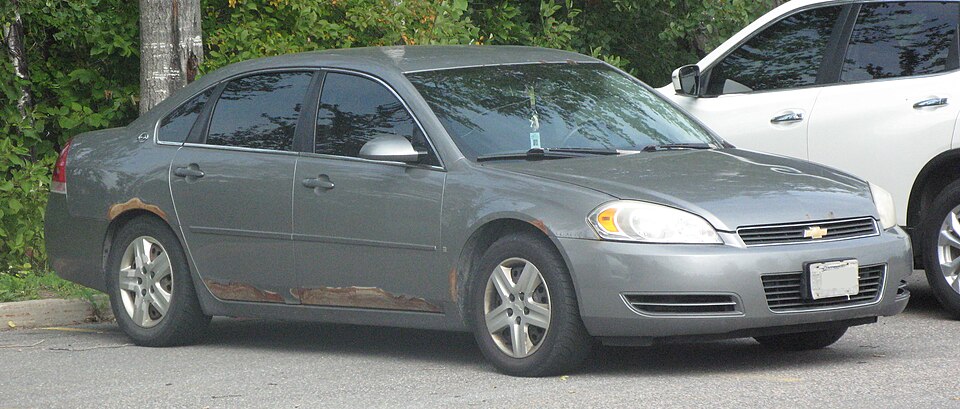
Pictured: a 2007 model; the 2008 may differ in details. Photo: 2007 Chevrolet Impala by SsmIntrigue, CC BY-SA 4.0, via Wikimedia Commons
How the 2008 compares
Fewest complaintsMost complaints

Highest complaint count among 21 Impala model years — 4th most.

2recalls
810complaints
51crashes
10fires
44injuries
70,000median miles

Owner complaints filed with NHTSA, not verified and not adjusted for sales. Ranking compares this model's own years only.

Does your car have an open recall?
Recalls apply to specific vehicles. Only a VIN lookup on NHTSA's official site shows whether yours is affected and still unrepaired.
Check your VIN →

2 recalls

Electrical System

Jun 23, 2014 · NHTSA campaign 14V355000 · 3,141,731 vehicles

Problem: This defect can affect the safe operation of the airbag system. Until this recall is performed, customers should remove all items from their key rings, leaving only the ignition key. The key fob (if applicable), should also be removed from the key ring. General Motors LLC (GM) is recalling certain model year 2005-2009 Buick LaCrosse, 2006-2011 Buick Lucerne, 2000-2005 Cadillac DeVille, 2006-2011 Cadillac DTS, 2006-2014 Chevrolet Impala, and 2006-2007 Chevrolet Monte Carlo vehicles. In the affected vehicles, the weight on the key ring and road conditions or some other jarring event may cause the ignition switch to move out of the run position, turning off the engine.

Risk: If the key is not in the run position, the air bags may not deploy if the vehicle is involved in a crash, increasing the risk of injury. Additionally, a key knocked out of the run position will cause loss of engine power, power steering, and power braking, increasing the risk of a vehicle crash.

Remedy & notes

GM will notify owners, and dealers will install two key rings and an insert in the key slot or a cover over the key head on all ignition keys, free of charge. The recall began on September 23, 2014. Owners may contact General Motors customer service at 1-800-521-7300 (Buick), 1-800-458-8006 (Cadillac), and 1-800-222-1020 (Chevrolet). GM's number for this recall is 14299.

Owners may also contact the National Highway Traffic Safety Administration Vehicle Safety Hotline at 1-888-327-4236 (TTY 1-800-424-9153), or go to www.safercar.gov.

Suspension

Aug 3, 2012 · NHTSA campaign 12V377000 · 36,413 vehicles

Problem: General Motors (GM) is recalling certain model year 2008-2012 Chevrolet Impala police vehicles because the front lower control arms may fracture. This safety recall does not include non-police Chevrolet Impala vehicles.

Risk: A broken control arm can result in the loss of control of the vehicle, increasing the risk of a crash.

Remedy & notes

GM will notify owners, and dealers will replace both front lower control arms, free of charge. The safety recall began on August 21, 2012. Owners may contact the Chevrolet owner center at 1-866-694-6546.

GM's campaign number is 12104.Owners may also contact the National Highway Traffic Safety Administration's Vehicle Safety Hotline at 1-888-327-4236 (TTY: 1-800-424-9153), or go to www.safercar.gov.

Recall text as published by NHTSA and the manufacturer.

What owners complain about

Owner complaints filed with NHTSA; one complaint can name several areas. Not verified by NHTSA.

Complaints by year filed

2007: 2 complaints20072008: 23 complaints2009: 18 complaints20092010: 56 complaints2011: 85 complaints20112012: 55 complaints2013: 100 complaints20132014: 193 complaints1932015: 115 complaints20152016: 47 complaints2017: 34 complaints20172018: 20 complaints2019: 27 complaints20192020: 13 complaints2021: 7 complaints20212022: 4 complaints2023: 5 complaints20232024: 6 complaints20246

NHTSA investigations

Passenger Air Bag OCS Algorithm

DP14001 · opened Jul 22, 2014 · closed Mar 7, 2017
Summary

The Agency received a petition on November 14, 2013 requesting an investigation into the operation of the passenger air bag Occupant Classification System (OCS) software logic and algorithm.The petitioner states that due to this alleged defect, the passenger air bag may be suppressed at point of impact and not provided the occupant protection as needed in a crash.On July 22, 2014, NHTSA opened DP14-001 to further review the crash event and perform a more comprehensive search and analysis of the Fatality Analysis Reporting System (FARS).The Agency also collected manufacturers reports on the alleged OCS issue on the subject Impala vehicles and other GM and non-GM peer vehicles.After examination of the petition and available data relating to the subject vehicle's OCS and the specific crash incident where the OCS allegedly failed to operate properly, NHTSA did not identify an issue with the MY2008 Impala involved in the subject crash, nor has it identified a safety-related defect trend existing in the OCS used in the MY 2006-2008 Impala vehicles, in GM peer vehicles or in other non-GM peer vehicles.NHTSA has concluded that further expenditure of the agency's investigative resources is not warranted. The agency accordingly has denied the petition.However, the agency will take further action if warranted by changing future circumstances. The official petition denial, as published in the Federal Register, is available in the document file for this defect petition.The single complain…

2008 vs. other Chevrolet Impala years

Owner complaints by model year; the darker bar is the 2008. Click a bar to switch year.

Questions

Does the 2008 Chevrolet Impala have recalls?

Yes — NHTSA lists 2 recall campaigns covering the 2008 Chevrolet Impala, the latest from Jun 23, 2014 (electrical system). A recall applies to specific vehicles: enter your VIN at nhtsa.gov/recalls to see whether yours is affected and still open.

What are the most common problems with the 2008 Chevrolet Impala?

Owner complaints filed with NHTSA most often mention electrical system (221), engine (160), suspension (117). Complaints are consumer reports and are not verified by NHTSA.