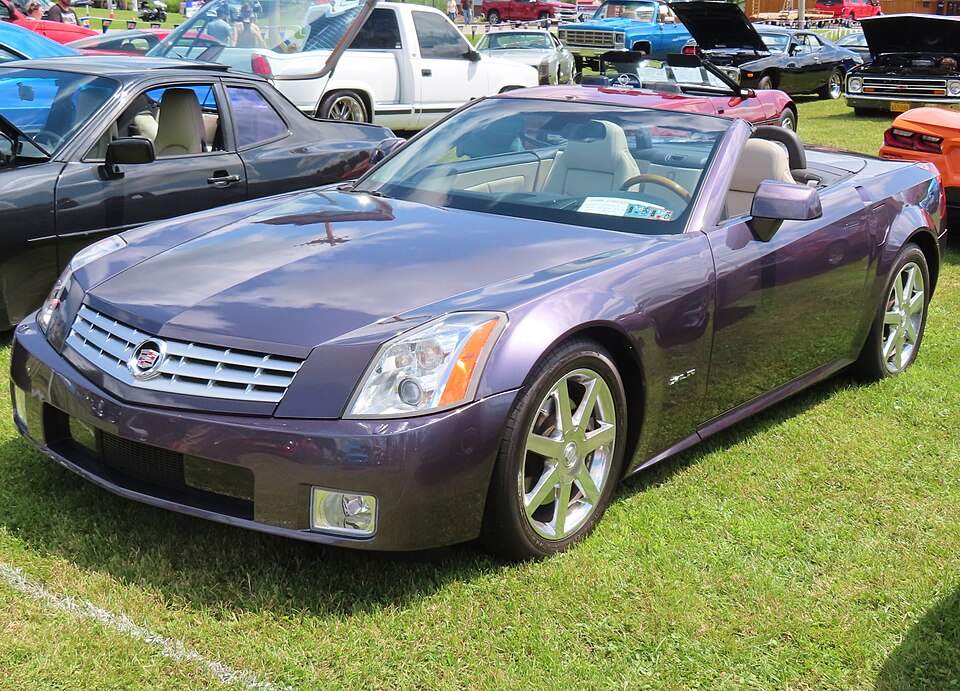
Highest complaint count among 6 Xlr model years — the most of any year.
4recalls
34complaints
2crashes
0fires
0injuries
42,000median miles
Owner complaints filed with NHTSA, not verified and not adjusted for sales. Ranking compares this model's own years only.
Does your car have an open recall? Recalls apply to specific vehicles. Only a VIN lookup on NHTSA's official site shows whether yours is affected and still unrepaired.
Problem: On certain passenger vehicles, the daylight running lights (drl), turn signal, and parking lamps use the same bulb. The bulb May become damaged from vibration within a loose fitting socket or air entering the bulb due to an inadequate seal. Both of these conditions will cause the bulb to burn out prematurely.
Original NHTSA wording
ON CERTAIN PASSENGER VEHICLES, THE DAYLIGHT RUNNING LIGHTS (DRL), TURN SIGNAL, AND PARKING LAMPS USE THE SAME BULB. THE BULB MAY BECOME DAMAGED FROM VIBRATION WITHIN A LOOSE FITTING SOCKET OR AIR ENTERING THE BULB DUE TO AN INADEQUATE SEAL. BOTH OF THESE CONDITIONS WILL CAUSE THE BULB TO BURN OUT PREMATURELY.
Risk: If this were to occur, the driver would notice that the arrow in the instrument panel would flash faster than normal when the turn signal is activated. The loss of the drl and turn signals could fail to warn others of the driver's presence or intentions and could lead to a vehicle crash.
Original NHTSA wording
IF THIS WERE TO OCCUR, THE DRIVER WOULD NOTICE THAT THE ARROW IN THE INSTRUMENT PANEL WOULD FLASH FASTER THAN NORMAL WHEN THE TURN SIGNAL IS ACTIVATED. THE LOSS OF THE DRL AND TURN SIGNALS COULD FAIL TO WARN OTHERS OF THE DRIVER'S PRESENCE OR INTENTIONS AND COULD LEAD TO A VEHICLE CRASH.
Remedy & notes
Dealers will replace the socket and bulb in both lamps free of charge. The recall began on July 31, 2006. Owners May contact Cadillac at 1-866-982-2339.
General motors recall no. 06013.customers May also contact the national highway traffic safety administration's vehicle safety hotline at 1-888-327-4236 (tty 1-800-424-9153), or go to http://www.safercar.gov.
Vehicle Speed Control
Feb 9, 2005 · NHTSA campaign 05V046000 · 19,924 vehicles
Problem: Certain passenger vehicles fail to comply with the requirements of federal motor vehicle safety standard no. 124, 'accelerator control systems.' if one of the two accelerator pedal return springs fails and the temperature is -22 degrees f to -40 degrees f, the engine May not return to idle within three seconds, as required.
Original NHTSA wording
CERTAIN PASSENGER VEHICLES FAIL TO COMPLY WITH THE REQUIREMENTS OF FEDERAL MOTOR VEHICLE SAFETY STANDARD NO. 124, 'ACCELERATOR CONTROL SYSTEMS.' IF ONE OF THE TWO ACCELERATOR PEDAL RETURN SPRINGS FAILS AND THE TEMPERATURE IS -22 DEGREES F TO -40 DEGREES F, THE ENGINE MAY NOT RETURN TO IDLE WITHIN THREE SECONDS, AS REQUIRED.
Risk: If this were to occur, greater brake pedal force and a longer distance May be required to stop the vehicle.
Original NHTSA wording
IF THIS WERE TO OCCUR, GREATER BRAKE PEDAL FORCE AND A LONGER DISTANCE MAY BE REQUIRED TO STOP THE VEHICLE.
Remedy & notes
Dealers will replace the accelerator pedal assembly. This recall began on March 8, 2005. Owners May contact Cadillac at 1-866-982-2339 or Pontiac at 1-800-620-7668.
Gm recall no. 05018.customers May also contact the national highway traffic safety administration's vehicle safety hotline at 1-888-327-4236 (tty 1-800-424-9153), or go to http://www.safercar.gov.
Service Brakes
Nov 3, 2004 · NHTSA campaign 04V525000 · 5,225 vehicles
Problem: Certain passenger vehicles were produced with one or both rear brake hydraulic lines that can come in contact with or be affected by heat from the left engine exhaust manifold and the left exhaust pipe. The brake fluid could reach elevated temperatures and boil.
Original NHTSA wording
CERTAIN PASSENGER VEHICLES WERE PRODUCED WITH ONE OR BOTH REAR BRAKE HYDRAULIC LINES THAT CAN COME IN CONTACT WITH OR BE AFFECTED BY HEAT FROM THE LEFT ENGINE EXHAUST MANIFOLD AND THE LEFT EXHAUST PIPE. THE BRAKE FLUID COULD REACH ELEVATED TEMPERATURES AND BOIL.
Risk: If the brake fluid boils in a rear brake line, the effectiveness of the rear brake system would be reduced which could result in a brake line leak and loss of brake fluid. If enough fluid leaks from the rear brake system so that brake pedal application can no longer build pressure to the rear brakes. The operator of the vehicle will experience limited braking which could result in a crash.
Original NHTSA wording
IF THE BRAKE FLUID BOILS IN A REAR BRAKE LINE, THE EFFECTIVENESS OF THE REAR BRAKE SYSTEM WOULD BE REDUCED WHICH COULD RESULT IN A BRAKE LINE LEAK AND LOSS OF BRAKE FLUID. IF ENOUGH FLUID LEAKS FROM THE REAR BRAKE SYSTEM SO THAT BRAKE PEDAL APPLICATION CAN NO LONGER BUILD PRESSURE TO THE REAR BRAKES. THE OPERATOR OF THE VEHICLE WILL EXPERIENCE LIMITED BRAKING WHICH COULD RESULT IN A CRASH.
Remedy & notes
Dealers will (1) inspect the left engine exhaust manifold clip for proper alignment and placement on the body-mounted stud. If incorrect, they will reposition the clip on the brake lines and reinstall the clip on the stud; (2) the dealer will verify that both rear brake lines have the proper clearance to the left exhaust pipe. They will reposition the lines by bending as necessary; (3) dealers will remove the machining tab from the rear differential housing. Also, dealers are to inspect the brake lines for wear in these related areas and repair or replace if there is any sign of wear-through on the nylon overcoating. The recall began on January 18, 2005. Owners should contact Cadillac at 1-866-982-2239 or Chevrolet at 1-800-630-2438.
General motors recall no. 04086.customers can also contact the national highway traffic safety administration's auto safety hotline at 1-888-DASH-2-DOT (1-888-327-4236).
Steering
Jun 9, 2004 · NHTSA campaign 04V273000 · 41,928 vehicles
Problem: On certain passenger vehicles involved in this campaign, the lower control arm ball stud nut/washer assemblies with washers were made of the wrong material. The washers May fracture and become loose or fall away from the vehicle, reducing clamp load. Separation of the control arm ball stud and steering knuckle, due to disengagement of the tapered attachment and retaining nut, is possible.
Original NHTSA wording
ON CERTAIN PASSENGER VEHICLES INVOLVED IN THIS CAMPAIGN, THE LOWER CONTROL ARM BALL STUD NUT/WASHER ASSEMBLIES WITH WASHERS WERE MADE OF THE WRONG MATERIAL. THE WASHERS MAY FRACTURE AND BECOME LOOSE OR FALL AWAY FROM THE VEHICLE, REDUCING CLAMP LOAD. SEPARATION OF THE CONTROL ARM BALL STUD AND STEERING KNUCKLE, DUE TO DISENGAGEMENT OF THE TAPERED ATTACHMENT AND RETAINING NUT, IS POSSIBLE.
Risk: If the control arm separates from the knuckle, the affected corner of the vehicle will drop and the control arm would be forced downward, contacting the wheel. The affected wheel could tilt outward and create a dragging action that would tend to slow the vehicle and create a tendency for the vehicle to turn in the direction of the affected wheel. In extreme situations, the affected wheel assembly could separate from the vehicle. Separation of the wheel assembly would also sever that wheel;s hydraulic brake hose and result in diminished braking performance of the vehicle, which could result in a crash.
Original NHTSA wording
IF THE CONTROL ARM SEPARATES FROM THE KNUCKLE, THE AFFECTED CORNER OF THE VEHICLE WILL DROP AND THE CONTROL ARM WOULD BE FORCED DOWNWARD, CONTACTING THE WHEEL. THE AFFECTED WHEEL COULD TILT OUTWARD AND CREATE A DRAGGING ACTION THAT WOULD TEND TO SLOW THE VEHICLE AND CREATE A TENDENCY FOR THE VEHICLE TO TURN IN THE DIRECTION OF THE AFFECTED WHEEL. IN EXTREME SITUATIONS, THE AFFECTED WHEEL ASSEMBLY COULD SEPARATE FROM THE VEHICLE. SEPARATION OF THE WHEEL ASSEMBLY WOULD ALSO SEVER THAT WHEEL;S HYDRAULIC BRAKE HOSE AND RESULT IN DIMINISHED BRAKING PERFORMANCE OF THE VEHICLE, WHICH COULD RESULT IN A CRASH.
Remedy & notes
Dealers will inspect the ball stud joints and measure the torque of the nut for all front lower control arms in all models affected as well as the rear lower control arms on the xlr and corvette. If the torque is not at specification, the dealers will replace the ball stud, the knuckle, and the nut. If the torque is at specification, the dealers will replace the nut/washer assembly only. The recall will begin on August 25, 2004. Owners should contact Cadillac at 1-866-982-2339 or Chevrolet at 1-800-630-2438.
Gm recall no. 04043. Customers can also contact the national highway traffic safety administration's auto safety hotline at 1-888-DASH-2-DOT (1-888-327-4236).
Recall text as published by NHTSA and the manufacturer.
Owner complaints filed with NHTSA; one complaint can name several areas. Not verified by NHTSA.
Complaints by year filed
NHTSA investigations
Roof Skin Separation While Driving
PE19001 · opened Feb 1, 2019 · closed Dec 12, 2019
Summary
On August 23rd, 2018 - the Office of Defects Investigation (ODI) received a media inquiry pertaining to a motorist experiencing separation of the roof skin from their Cadillac XLR while driving.Based on the data in-hand at that time and a subsequent (December) consumer complaint, ODI opened PE19-001 on February 1, 2019 to evaluate the scope of this condition in the 2004 - 2005 XLR population.The subject vehicle model is a two-seat roadster equipped with an electrically powered retractable roof system. The outer roof skin is a Sheet Molded Composite (SMC) which is adhered to the magnesium alloy roof frame.ODI's February 7, 2019 Information Request (IR) letter to General Motors (GM) covered the entirety of XLR production: MY 2004 - 2009. GM's March 21, 2019 IR response attributed the separations to an unexpected oxide layer on the magnesium framework. A total of eight separations were identified, six of which coincided with consumer complaints to NHTSA. Separations occurred at two per calendar year with the most recent taking place in late 2018.An additional twenty-one noise, fit/finish/ functionality claims were identified that did not lead to separations.ODI compared the separation rate in the subject vehicles to those in to two roof skin separation safety recalls involving the Corvette (06V181: 2005 - 2006 Corvette; 09V491: 2005 - 2007 Corvette) to find that the subject vehicles took over ten years of exposure to reach the failure rate that triggered the 06V181.Since PE19-00…
2004 vs. other Cadillac Xlr years
Owner complaints by model year; the darker bar is the 2004. Click a bar to switch year.
Questions
Does the 2004 Cadillac Xlr have recalls?
Yes — NHTSA lists 4 recall campaigns covering the 2004 Cadillac Xlr, the latest from Jul 19, 2006 (exterior lighting). A recall applies to specific vehicles: enter your VIN at nhtsa.gov/recalls to see whether yours is affected and still open.
What are the most common problems with the 2004 Cadillac Xlr?
Owner complaints filed with NHTSA most often mention structure (11), fuel system (8), exterior lighting (4). Complaints are consumer reports and are not verified by NHTSA.
 Recalls by Model