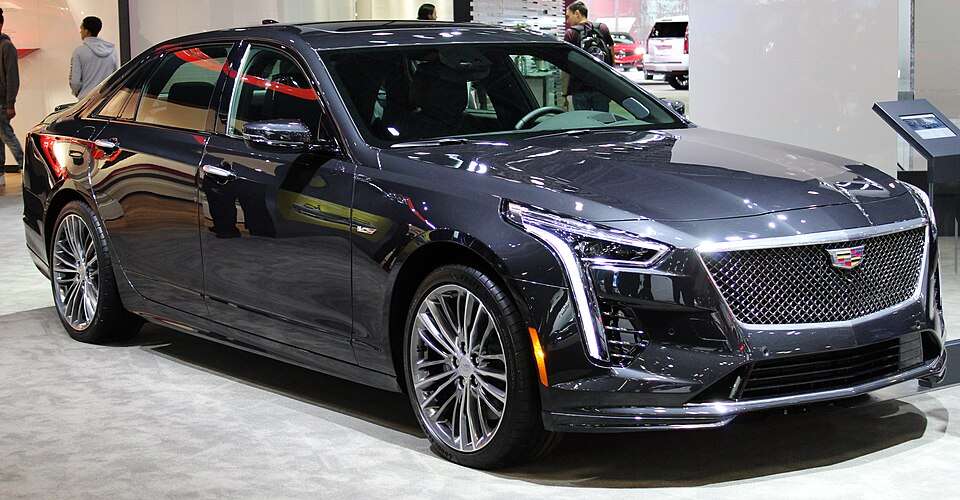
Highest complaint count among 5 CT6 model years — the most of any year.
4recalls
18complaints
0crashes
0fires
0injuries
58,000median miles
Owner complaints filed with NHTSA, not verified and not adjusted for sales. Ranking compares this model's own years only.
Does your car have an open recall? Recalls apply to specific vehicles. Only a VIN lookup on NHTSA's official site shows whether yours is affected and still unrepaired.
Mar 6, 2025 · NHTSA campaign 25V148000 · 90,081 vehicles
Problem: General Motors LLC (GM) is recalling certain 2019-2020 Cadillac CT6, 2020-2021 CT4, CT5, and 2020-2022 Chevrolet Camaro vehicles equipped with a 10-speed transmission. The transmission may become damaged internally and cause the wheels to lock-up.
Risk: Wheel lock-up while driving increases the risk of a crash.
Remedy & notes
Dealers will install transmission control module monitoring software, free of charge. Owner notification letters were mailed April 7, 2025. Owners may contact Cadillac customer service at 1-800-333-4223 or Chevrolet customer service at 1-800-222-1020. GM's number for this recall is N242480630.
Owners may also contact the National Highway Traffic Safety Administration Vehicle Safety Hotline at 888-327-4236 (TTY 888-275-9171) or go to nhtsa.gov.
Electronic Stability Control
Dec 12, 2019 · NHTSA campaign 19V889000 · 463,995 vehicles
Problem: General Motors LLC (GM) is recalling certain 2019 Chevrolet Silverado 1500, Cadillac CT6, and GMC Sierra 1500 vehicles. Due to an Electronic Brake Control Module (EBCM) software error, the vehicle's Electronic Stability Control (ESC) and Antilock Brake System (ABS) may become disabled. Furthermore, if this specific error occurs, the vehicle's diagnostics will not illuminate the instrument cluster ESC and ABS malfunction warning lights. As such, these vehicles fail to comply with the requirements of Federal Motor Vehicle Safety Standard (FMVSS) number 126, "Electronic Stability Control" and 135, "Light Vehicle Brake Systems."
Risk: If the driver operates the vehicle unaware that ESC and ABS are not functioning, there is an increased risk of a crash.
Remedy & notes
GM will notify owners, and dealers will reprogram the EBCM, free of charge. The recall began February 4, 2020. Owners may contact Chevrolet customer service at 1-800-222-1020, Cadillac customer service at 1-800-333-4223, or GMC customer service at 1-888-988-7267. GM's number for this recall is N192268090.
Owners may also contact the National Highway Traffic Safety Administration Vehicle Safety Hotline at 1-888-327-4236 (TTY 1-800-424-9153), or go to www.safercar.gov.
Exterior Lighting
Feb 21, 2019 · NHTSA campaign 19V117000 · 5 vehicles
Problem: General Motors LLC (GM) is recalling certain 2019 Cadillac CT6 vehicles. Rotation of the steering wheel will not automatically cancel the turn-signals from flashing. As such, these vehicles fail to comply with Federal Motor Vehicle Safety Standard (FMVSS) number 108, "Lamps, Reflective Devices and Associated Equipment."
Risk: If the turn-signals do not automatically deactivate, the driver may fail to turn them off manually. An erroneous active turn-signal may mislead pedestrians and other drivers, increasing the risk of a crash.
Remedy & notes
GM has notified owners, and dealers will replace the turn-signal switch. The recall began March 11, 2019. Owners may contact Cadillac customer service at 1-800-458-8006. The Cadillac number for this recall is N182207090.
Owners may also contact the National Highway Traffic Safety Administration Vehicle Safety Hotline at 1-888-327-4236 (TTY 1-800-424-9153), or go to www.safercar.gov.
Problem: General Motors LLC (GM) is recalling certain 2018-2019 Cadillac CT6, Escalade ESV, Chevrolet Suburban, Volt, and GMC Yukon XL vehicles. Certain second-row or third-row rear seatbelts retractor assemblies may not automatically lock when the seatbelt is fully pulled out of the retractor, possibly preventing a child seat from being properly secured. As such, these vehicles fail to comply with the requirements of Federal Motor Vehicle Safety Standard (FMVSS) number 208, "Occupant Crash Protection."
Risk: If the child seat is not properly secured in the event of a crash, it can increase the risk of injury.
Remedy & notes
GM will notify owners, and dealers will inspect the rear seatbelt retractors and replace them if necessary, free of charge. The recall began November 7, 2018. Owners may contact Cadillac customer service at 1-800-458-8006, Chevrolet customer service at 1-800-222-1020 or GMC customer service at 1-800-462-8782. GM's number for this recall is 18315.
Owners may also contact the National Highway Traffic Safety Administration Vehicle Safety Hotline at 1-888-327-4236 (TTY 1-800-424-9153), or go to www.safercar.gov.
Recall text as published by NHTSA and the manufacturer.
Owner complaints filed with NHTSA; one complaint can name several areas. Not verified by NHTSA.
Complaints by year filed
2019 vs. other Cadillac CT6 years
Owner complaints by model year; the darker bar is the 2019. Click a bar to switch year.
Questions
Does the 2019 Cadillac CT6 have recalls?
Yes — NHTSA lists 4 recall campaigns covering the 2019 Cadillac CT6, the latest from Mar 6, 2025 (power train). A recall applies to specific vehicles: enter your VIN at nhtsa.gov/recalls to see whether yours is affected and still open.
What are the most common problems with the 2019 Cadillac CT6?
Owner complaints filed with NHTSA most often mention power train (14), service brakes (2), electrical system (1). Complaints are consumer reports and are not verified by NHTSA.
 Recalls by Model