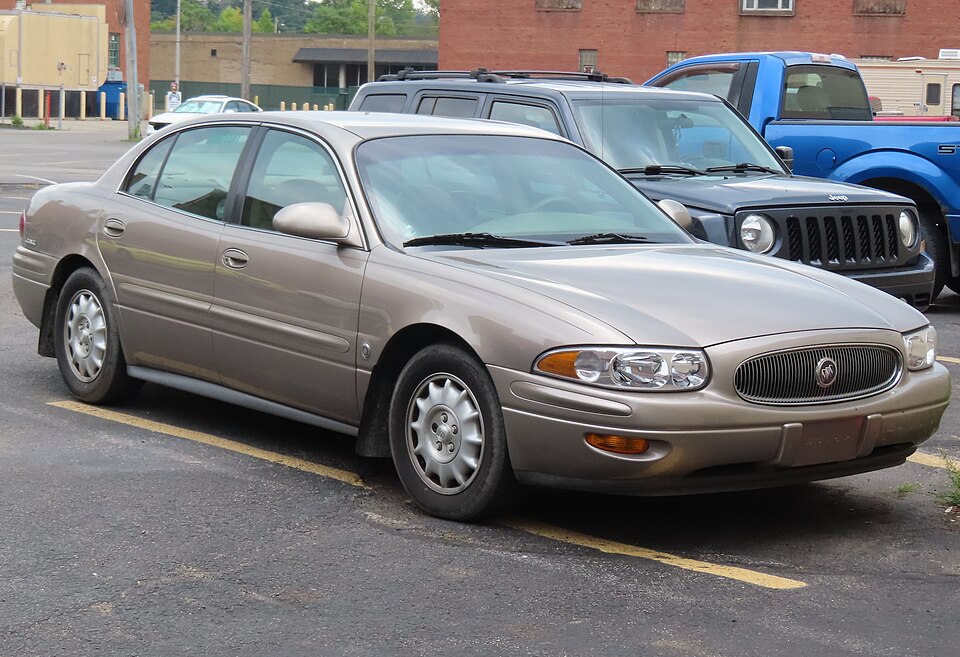
2000 Buick Lesabre recalls and problems

The 2000 Buick Lesabre has 5 recalls and 669 owner complaints on file with NHTSA; the most reported problem area is visibility.

2000 Buick Lesabre
Photo: 2000 Buick Lesabre by MercurySable99, CC BY-SA 4.0, via Wikimedia Commons
How the 2000 compares
Fewest complaintsMost complaints

Highest complaint count among 7 Lesabre model years — the most of any year.

5recalls
669complaints
26crashes
30fires
24injuries
59,515median miles

Owner complaints filed with NHTSA, not verified and not adjusted for sales. Ranking compares this model's own years only.

Does your car have an open recall?
Recalls apply to specific vehicles. Only a VIN lookup on NHTSA's official site shows whether yours is affected and still unrepaired.
Check your VIN →

5 recalls

Fuel System

Feb 24, 2004 · NHTSA campaign 04V090000 · 910,873 vehicles

Problem: On certain passenger vehicles equipped with 3800 V6 (L36) engines and certain Delphi fuel pressure regulators, the regulators have a much higher than usual rate of fuel leaks. A leak can allow fuel to enter the intake manifold through a vacuum line. If the engine does not start when cranked, the fuel from the leaking regulator and a mistimed spark can cause a backfire.

Original NHTSA wording

ON CERTAIN PASSENGER VEHICLES EQUIPPED WITH 3800 V6 (L36) ENGINES AND CERTAIN DELPHI FUEL PRESSURE REGULATORS, THE REGULATORS HAVE A MUCH HIGHER THAN USUAL RATE OF FUEL LEAKS. A LEAK CAN ALLOW FUEL TO ENTER THE INTAKE MANIFOLD THROUGH A VACUUM LINE. IF THE ENGINE DOES NOT START WHEN CRANKED, THE FUEL FROM THE LEAKING REGULATOR AND A MISTIMED SPARK CAN CAUSE A BACKFIRE.

Risk: The backfire can rupture the intake manifold. The rupture of the intake manifold can displace a fuel line, pulling an injector out of place, and causing a fuel leak and possible fire.

Original NHTSA wording

THE BACKFIRE CAN RUPTURE THE INTAKE MANIFOLD. THE RUPTURE OF THE INTAKE MANIFOLD CAN DISPLACE A FUEL LINE, PULLING AN INJECTOR OUT OF PLACE, AND CAUSING A FUEL LEAK AND POSSIBLE FIRE.

Remedy & notes

Dealers will install new fuel pressure regulators with improved diaphragms. The recall will be conducted in phased mailings. Phase 1 began on June 30, 2004, and phase 2 began on September 30, 2004. Owners should contact Buick at 1-866-608-8080, Oldsmobile at 1-800-630-6537, or Pontiac at 1-800-620-7668.

Gm recall no. 03054B.see campaign 03V-473 for additional units.customers can also contact the national highway traffic safety administration's auto safety hotline at 1-888-DASH-2-DOT (1-888-327-4236).

Service Brakes

Apr 17, 2000 · NHTSA campaign 00V114000 · 8,132 vehicles

Problem: Vehicle description: Passenger vehicles. Some of these vehicles have internal fluid leaks in the brake hydraulic control unit.

Original NHTSA wording

VEHICLE DESCRIPTION: PASSENGER VEHICLES. SOME OF THESE VEHICLES HAVE INTERNAL FLUID LEAKS IN THE BRAKE HYDRAULIC CONTROL UNIT.

Risk: When the rear brake proportioning, antilock brake, traction control, or stability control feature is activated in some driving situations, the feature May not perform as designed.

Original NHTSA wording

WHEN THE REAR BRAKE PROPORTIONING, ANTILOCK BRAKE, TRACTION CONTROL, OR STABILITY CONTROL FEATURE IS ACTIVATED IN SOME DRIVING SITUATIONS, THE FEATURE MAY NOT PERFORM AS DESIGNED.

Remedy & notes

Dealers will inspect the ABS hydraulic modulator unit and if necessary, replace the hydraulic modulator.

Owner notification began June 21, 2000. Owners who take their vehicles to an authorized dealer on an agreed upon service date and do not receive the free remedy within a reasonable time should contact Buick at 1-800-521-7300, Pontiac at 1-800-762-2737, Oldsmobile at 1-800-442-6537, and Cadillac at 1-800-458-8006.also contact the national highway traffic safety administration's auto safety hotline at 1-888-DASH-2-DOT (1-888-327-4236).

Exterior Lighting

Dec 17, 1999 · NHTSA campaign 99V355000 · 35,725 vehicles

Problem: Vehicle description: Passenger vehicles. These vehicles do not conform to the requirements of FMVSS no. 108, "lamps, reflective devices, and associated equipment." the head lamp adjustment device horizontal adjuster May not move the head lamp reflector when the shaft is rotated in a normal manner during aiming.

Original NHTSA wording

VEHICLE DESCRIPTION: PASSENGER VEHICLES. THESE VEHICLES DO NOT CONFORM TO THE REQUIREMENTS OF FMVSS NO. 108, "LAMPS, REFLECTIVE DEVICES, AND ASSOCIATED EQUIPMENT." THE HEAD LAMP ADJUSTMENT DEVICE HORIZONTAL ADJUSTER MAY NOT MOVE THE HEAD LAMP REFLECTOR WHEN THE SHAFT IS ROTATED IN A NORMAL MANNER DURING AIMING.

Risk: Driver visibility May be impaired increasing the risk of a crash.

Original NHTSA wording

DRIVER VISIBILITY MAY BE IMPAIRED INCREASING THE RISK OF A CRASH.

Remedy & notes

An insert containing instructions for optically aiming the headlamps will be provided to owners for the owner's manual. Owners should follow the procedure in the insert for headlamp aim adjustment, rather than using the horizontal vhad indicator.

Gm recall no. 99062.owner notification began September 14, 2000. Owners who do not receive the free insert and instructions within a reasonable time should contact Buick at 1-800-521-7300. Also contact the national highway traffic safety administration's auto safety hotline at 1-888-DASH-2-DOT (1-888-327-4236).

Steering

Oct 29, 1999 · NHTSA campaign 99V301000 · 1,284 vehicles

Problem: Vehicle description: Passenger vehicles. The inner tie rod nuts are loose and can result in separation of a tie rod.

Original NHTSA wording

VEHICLE DESCRIPTION: PASSENGER VEHICLES. THE INNER TIE ROD NUTS ARE LOOSE AND CAN RESULT IN SEPARATION OF A TIE ROD.

Risk: Separation of a tie rod can cause unexpected steering input increasing the risk of a crash.

Original NHTSA wording

SEPARATION OF A TIE ROD CAN CAUSE UNEXPECTED STEERING INPUT INCREASING THE RISK OF A CRASH.

Remedy & notes

Dealers will check and adjust the vehicle toe-in and tighten the inner tie rod nuts to the specified torque.

Owner notification began November 16, 1999. Owners who take their vehicles to an authorized dealer on an agreed upon service date and do not receive the free remedy within a reasonable time should contact Buick at 1-800-521-7300 or Cadillac at 1-800-458-8006.also contact the national highway traffic safety administration's auto safety hotline at 1-888-DASH-2-DOT (1-888-327-4236).

Service Brakes

Aug 27, 1999 · NHTSA campaign 99V238000 · 988 vehicles

Problem: Vehicle description: Passenger vehicles. The brake booster to pedal assembly attachment nuts May be loose.

Original NHTSA wording

VEHICLE DESCRIPTION: PASSENGER VEHICLES. THE BRAKE BOOSTER TO PEDAL ASSEMBLY ATTACHMENT NUTS MAY BE LOOSE.

Risk: If these nuts are loose, the brake pedal May be low, the assembly May be loose, the brakes May not release, and if the nuts back completely off, braking May be lost. Also fume and water intrusion to the passenger compartment can occur.

Original NHTSA wording

IF THESE NUTS ARE LOOSE, THE BRAKE PEDAL MAY BE LOW, THE ASSEMBLY MAY BE LOOSE, THE BRAKES MAY NOT RELEASE, AND IF THE NUTS BACK COMPLETELY OFF, BRAKING MAY BE LOST. ALSO FUME AND WATER INTRUSION TO THE PASSENGER COMPARTMENT CAN OCCUR.

Remedy & notes

Dealers will replace any missing brake booster to brake pedal assembly nuts and tighten all four (4) nuts to specified torque.

Gm recall no. 99038.owner notification began October 8, 1999.owners who take their vehicles to an authorized dealer on an agreed upon service date and do not receive the free remedy within a reasonable time should contact Buick at 1-800-521-7300, or Oldsmobile at 1-800-442-6537. Also contact the national highway traffic safety administration's auto safety hotline at 1-888-DASH-2-DOT (1-888-327-4236).

Recall text as published by NHTSA and the manufacturer.

What owners complain about

Owner complaints filed with NHTSA; one complaint can name several areas. Not verified by NHTSA.

Complaints by year filed

1999: 28 complaints19992000: 69 complaints2001: 46 complaints2002: 44 complaints20022003: 74 complaints2004: 75 complaints752005: 66 complaints20052006: 44 complaints2007: 45 complaints2008: 48 complaints20082009: 15 complaints2010: 19 complaints2011: 17 complaints20112012: 11 complaints2013: 10 complaints2014: 15 complaints20142015: 5 complaints2016: 12 complaints2017: 5 complaints20172018: 5 complaints2019: 3 complaints2020: 8 complaints20202021: 1 complaints2022: 1 complaints2025: 2 complaints20252026: 1 complaints20261

NHTSA investigations

ENGINE COMPARTMENT FIRES

EA02030 · opened Oct 22, 2002 · closed Mar 9, 2004 · led to recall 04V090000
Summary

EA02-030 IS CLOSED WITH GMEA02-030 IS CLOSED WITH GM?S ACTIONS IN 03V-473 AND 04V-090 RECALLING APPROXIMATELY 529,000 MY 1998-99 C- AND H-BODY VEHICLES EQUIPPED WITH DEFECTIVE FUEL PRESSURE REGULATORS.THESE VEHICLES WERE EQUIPPED WITH PLASTIC INTAKE MANIFOLDS THAT ARE UNABLE TO CONTAIN PRESSURES THAT OCCUR IN SOME BACKFIRE EVENTS AND DEFECTIVE FUEL PRESSURE REGULATORS WITH LEAKING DIAPHRAGMS THAT CAN PROVIDE A SOURCE OF FUEL TO PRODUCE A COMBUSTIBLE AIR-FUEL MIXTURE IN THE MANIFOLD.THE CLOSING OF THIS INVESTIGATION DOES NOT CONSTITUTE A FINDING BY ODI THAT NO SAFETY DEFECT EXISTS IN THE VEHICLES THAT ARE NOT INCLUDED IN GM?S RECALLS.ODI WILL CONTINUE TO MONITOR THE INCIDENCE OF MANIFOLD RUPTURES AND RELATED FIRES IN OTHER MY 1995-2002 GM PASSENGER CARS EQUIPPED WITH THE SUBJECT INTAKE MANIFOLD.FOR ADDITIONAL INFORMATION, SEE THE ATTACHED CLOSING REPORT.

ENGINE COMPARTMENT FIRES

PE02050 · opened Jun 13, 2002 · closed Oct 22, 2002

2000 vs. other Buick Lesabre years

Owner complaints by model year; the darker bar is the 2000. Click a bar to switch year.

Questions

Does the 2000 Buick Lesabre have recalls?

Yes — NHTSA lists 5 recall campaigns covering the 2000 Buick Lesabre, the latest from Feb 24, 2004 (fuel system). A recall applies to specific vehicles: enter your VIN at nhtsa.gov/recalls to see whether yours is affected and still open.

What are the most common problems with the 2000 Buick Lesabre?

Owner complaints filed with NHTSA most often mention visibility (249), engine (96), electrical system (87). Complaints are consumer reports and are not verified by NHTSA.