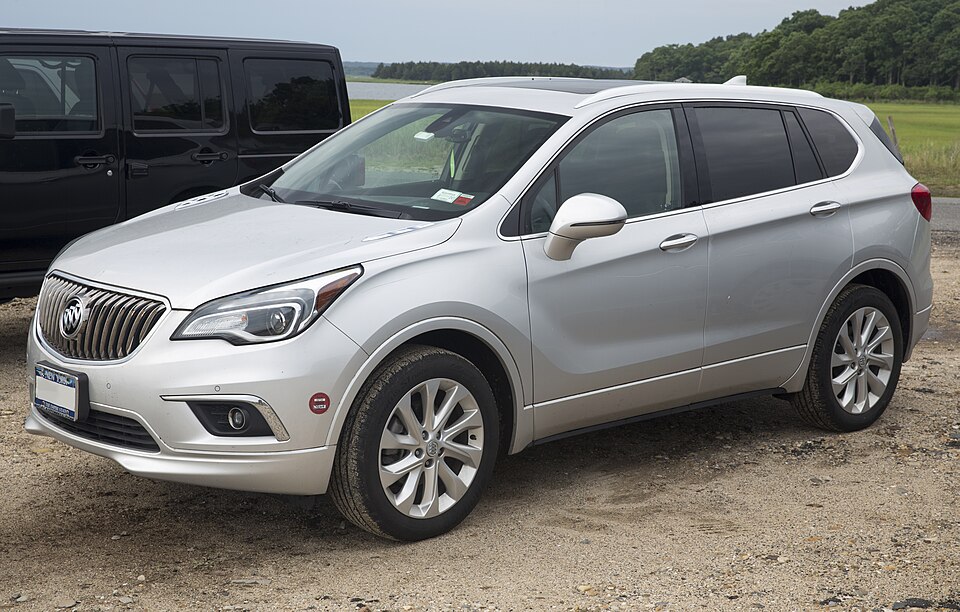
Highest complaint count among 10 Envision model years — the most of any year.
4recalls
81complaints
2crashes
2fires
3injuries
22,000median miles
Owner complaints filed with NHTSA, not verified and not adjusted for sales. Ranking compares this model's own years only.
Does your car have an open recall? Recalls apply to specific vehicles. Only a VIN lookup on NHTSA's official site shows whether yours is affected and still unrepaired.
May 31, 2018 · NHTSA campaign 18V358000 · 895 vehicles
Problem: General Motors LLC (GM) is recalling certain 2015-2018 GMC Canyon, 2016-2017 Buick Envision, 2016-2018 Chevrolet Colorado and Malibu, 2017-2018 GMC Acadia, 2018 Buick LaCrosse, Cadillac ATS, Chevrolet Equinox, and GMC Terrain vehicles. The high pressure fuel pump may detach from its mounting flange, possibly resulting in the pump damaging the high pressure fuel line.
Risk: A damaged fuel line can create a fuel leak, increasing the risk of a fire.
Remedy & notes
GM will notify owners, and dealers will replace the high pressure fuel pump, and high pressure fuel pipe, free of charge. The recall began July 2, 2018. Owners may contact Buick customer service at 1-800-521-7300, Cadillac customer service at 1-800-458-8006, Chevrolet customer service at 1-800-222-1020, or GMC customer service at 1-800-462-8782. GM's number for this recall is 18188.
Owners may also contact the National Highway Traffic Safety Administration Vehicle Safety Hotline at 1-888-327-4236 (TTY 1-800-424-9153), or go to www.safercar.gov.
Structure
Jun 29, 2017 · NHTSA campaign 17V412000 · 10 vehicles
Problem: General Motors LLC (GM) is recalling certain 2016-2017 Buick Envision vehicles. The affected vehicles received a replacement headliner as part of a repair. These service parts might not have had impact energy-absorbing foam blocks attached. As such, these vehicles fail to comply with the requirements of Federal Motor Safety Standard (FMVSS) number 201, "Occupant protection in interior impact."
Risk: If the service parts do not have energy-absorbing foam blocks, there may be an increased risk of occupant injury in the event of a crash.
Remedy & notes
GM will notify owners, and dealers will replace the headliner assembly, free of charge. The recall began on July 28, 2017. Owners may contact Buick customer service at 1-800-521-7300. GM's number for this recall is 17275.
Owners may also contact the National Highway Traffic Safety Administration Vehicle Safety Hotline at 1-888-327-4236 (TTY 1-800-424-9153), or go to www.safercar.gov.
Equipment
Jun 27, 2017 · NHTSA campaign 17V404000 · 768 vehicles
Problem: General Motors LLC (GM) is recalling certain 2016-2017 Buick Envision vehicles. An accessory NSV Universal Tablet Holder may have been installed incorrectly onto the front seat head restraints, preventing the head restraint posts from fully engaging in the seat back. If so, the head restraints would fail to comply with the requirements of Federal Motor Vehicle Safety Standard (FMVSS) number 202a, "Head Restraints."
Risk: If the head restraint posts are not fully engaging in the seat back, the head restraint may loosen or dislodge, increasing the risk of injury in a crash.
Remedy & notes
GM will notify owners, and dealers will inspect the head restraints and tablet holders for the correct installation, reinstalling them as necessary, free of charge. The recall began July 27, 2017. Owners may contact Buick customer service at 1-800-521-7300. GM's number for this recall is 17239/17258.
Owners may also contact the National Highway Traffic Safety Administration Vehicle Safety Hotline at 1-888-327-4236 (TTY 1-800-424-9153), or go to www.safercar.gov.
Problem: General Motors LLC (GM) is recalling certain 2016-2017 Buick Envision vehicles manufactured February 4, 2016, to April 25, 2016. The Tire and Loading Information label may display the incorrect maximum weight information. As such, these vehicles fail to comply with the requirements of Federal Motor Vehicle Safety Standard (FMVSS) number 110, "Tire Selection and Rims."
Risk: Incorrect weight information may cause an owner to overload the vehicle. Overloading may reduce vehicle control, increasing the risk of a crash.
Remedy & notes
GM will notify owners, and dealers will install a corrected label as necessary, free of charge. The began on August 22, 2016. Owners may contact Buick customer service at 1-800-521-7300. GM's number for this recall is 56340.
Owners may also contact the National Highway Traffic Safety Administration Vehicle Safety Hotline at 1-888-327-4236 (TTY 1-800-424-9153), or go to www.safercar.gov.
Recall text as published by NHTSA and the manufacturer.
Owner complaints filed with NHTSA; one complaint can name several areas. Not verified by NHTSA.
Complaints by year filed
2017 vs. other Buick Envision years
Owner complaints by model year; the darker bar is the 2017. Click a bar to switch year.
Questions
Does the 2017 Buick Envision have recalls?
Yes — NHTSA lists 4 recall campaigns covering the 2017 Buick Envision, the latest from May 31, 2018 (fuel system). A recall applies to specific vehicles: enter your VIN at nhtsa.gov/recalls to see whether yours is affected and still open.
What are the most common problems with the 2017 Buick Envision?
Owner complaints filed with NHTSA most often mention electrical system (25), service brakes (22), engine (12). Complaints are consumer reports and are not verified by NHTSA.
 Recalls by Model