2001 Acura TL recalls and problems

The 2001 Acura TL has 3 recalls and 149 owner complaints on file with NHTSA; the most reported problem area is power train.

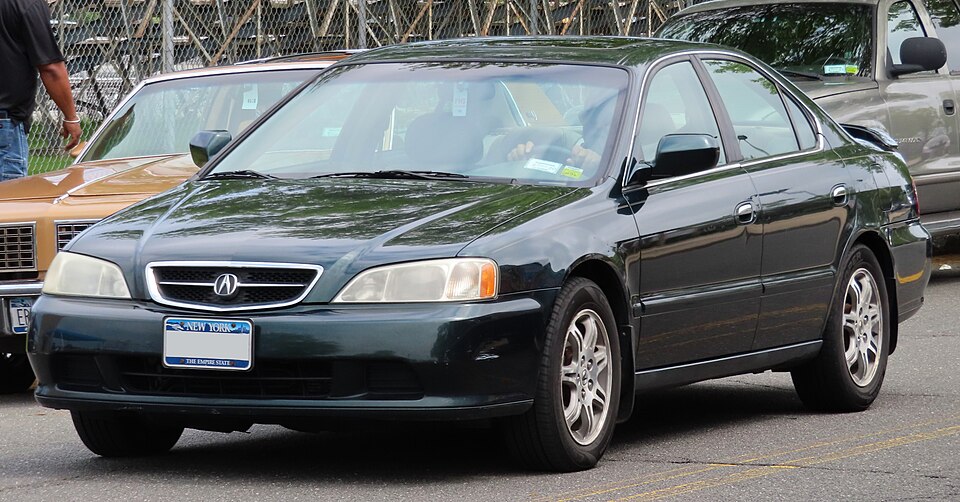
2000 Acura Tl
Pictured: a 2000 model; the 2001 may differ in details. Photo: 2000 Acura Tl by Kevauto, CC BY-SA 4.0, via Wikimedia Commons
How the 2001 compares
Fewest complaintsMost complaints

Average complaint count among 15 TL model years — 7th most.

3recalls
149complaints
8crashes
2fires
5injuries
82,373median miles

Owner complaints filed with NHTSA, not verified and not adjusted for sales. Ranking compares this model's own years only.

Does your car have an open recall?
Recalls apply to specific vehicles. Only a VIN lookup on NHTSA's official site shows whether yours is affected and still unrepaired.
Check your VIN →

3 recalls

Air Bags

Jan 17, 2020 · NHTSA campaign 20V027000 · 875,966 vehicles

Problem: Honda (American Honda Motor Co.) is recalling certain 2001-2002 Acura 3.2CL, 2000-2003 Acura 3.5RL, 2000-2001 Acura 3.2TL, Honda CR-V and Honda Odyssey, 2001-2002 Acura MDX and 2000 Accord Coupe, Accord Sedan, Civic Coupe, and Civic Sedan vehicles. These vehicles may have received a replacement driver frontal air bag module as part of a vehicle repair. Due to a manufacturing issue, the replacement NADI inflator may absorb moisture, causing the inflator to rupture or the air bag cushion to underinflate.

Risk: In the event of a crash necessitating air bag deployment, an inflator rupture may result in metal fragments striking the driver or other occupants. An underinflated air bag cushion may not properly protect the occupant. These scenarios increase the risk of serious injury or death.

Remedy & notes

Honda will notify owners, and dealers will inspect the air bags in the vehicles, replacing the driver frontal air bag inflator with an inflator of a different design, as necessary, free of charge. The recall began October 1, 2020. Owners may contact American Honda's Customer Support & Campaign Center at 1-888-234-2138.

Owners may also contact the National Highway Traffic Safety Administration Vehicle Safety Hotline at 1-888-327-4236 (TTY 1-800-424-9153), or go to www.safercar.gov.

Power Train

Apr 15, 2004 · NHTSA campaign 04V176000 · 1,099,796 vehicles

Problem: On some MINI vans, sport utility and passenger vehicles, certain operating conditions can result in heat build-up between the countershaft and secondary shaft second gears in the automatic transmission, eventually leading to gear tooth chipping or gear breakage.

Original NHTSA wording

ON SOME MINI VANS, SPORT UTILITY AND PASSENGER VEHICLES, CERTAIN OPERATING CONDITIONS CAN RESULT IN HEAT BUILD-UP BETWEEN THE COUNTERSHAFT AND SECONDARY SHAFT SECOND GEARS IN THE AUTOMATIC TRANSMISSION, EVENTUALLY LEADING TO GEAR TOOTH CHIPPING OR GEAR BREAKAGE.

Risk: Gear failure could result in transmission lockup, which could result in a crash.

Original NHTSA wording

GEAR FAILURE COULD RESULT IN TRANSMISSION LOCKUP, WHICH COULD RESULT IN A CRASH.

Remedy & notes

On vehicles with 15,000 miles or less, the dealer will update the transmission with a simple revision to the oil cooler return line to increase lubrication to the second gear. On vehicles with more than 15,000 miles, the dealer will inspect the transmission to identify gears that have already experienced discoloration due to overheating. If discoloration exists, the transmission will be replaced if discoloration is not present, the dealer will perform the revision to the oil cooler return line. The recall began on April 21, 2004, for pilot, odyssey, and mdx owners. Owners of the accord vehicles will start receiving letters on June 28, 2004, and on June 29, 2004, for owners of the tl and cl vehicles. Owners should contact Honda at 1-800-999-1009 or Acura at 1-800-382-2238.

Honda recall nos. P30 (odyssey and pilot),P31 (mdx), P38 (accord) and P39 (Acura).customers can also contact the national highway traffic safety administration's auto safety hotline at 1-888-DASH-2-DOT (1-888-327-4236).

Seat Belts

Aug 14, 2001 · NHTSA campaign 01V166002 · 8,168 vehicles

Problem: Vehicle description: The following vehicles were repaired with incorrect parts: 2002 Acura 3.2TL sedans with replacement buckles installed per recall 01V-166001; certain 2000 Acura 3.2TL vehicles with replacement buckles installed as product update repairs; and certain 2000-2002 Acura 3.2TL vehicles with replacement buckles installed as warranty or collision repairs. Repairs were made from March 9 through July 27, 2001. Some of the noncompliant buckles were mislabeled and redistributed to Acura dealers to be used as recall repair parts. Honda also determined that incorrect front seat belt buckle replacement parts were used for some product update repairs of 2000 Acura 3.2TL vehicles, and warranty or collision repairs of 2000-2002 3.2TL vehicles. These seat belt buckles May not comply with requirements of FMVSS no. 209, "seat belt assemblies."

Original NHTSA wording

VEHICLE DESCRIPTION: THE FOLLOWING VEHICLES WERE REPAIRED WITH INCORRECT PARTS: 2002 ACURA 3.2TL SEDANS WITH REPLACEMENT BUCKLES INSTALLED PER RECALL 01V-166001; CERTAIN 2000 ACURA 3.2TL VEHICLES WITH REPLACEMENT BUCKLES INSTALLED AS PRODUCT UPDATE REPAIRS; AND CERTAIN 2000-2002 ACURA 3.2TL VEHICLES WITH REPLACEMENT BUCKLES INSTALLED AS WARRANTY OR COLLISION REPAIRS. REPAIRS WERE MADE FROM MARCH 9 THROUGH JULY 27, 2001. SOME OF THE NONCOMPLIANT BUCKLES WERE MISLABELED AND REDISTRIBUTED TO ACURA DEALERS TO BE USED AS RECALL REPAIR PARTS. HONDA ALSO DETERMINED THAT INCORRECT FRONT SEAT BELT BUCKLE REPLACEMENT PARTS WERE USED FOR SOME PRODUCT UPDATE REPAIRS OF 2000 ACURA 3.2TL VEHICLES, AND WARRANTY OR COLLISION REPAIRS OF 2000-2002 3.2TL VEHICLES. THESE SEAT BELT BUCKLES MAY NOT COMPLY WITH REQUIREMENTS OF FMVSS NO. 209, "SEAT BELT ASSEMBLIES."

Risk: In the event of a crash, the seat occupant May not be properly restrained.

Original NHTSA wording

IN THE EVENT OF A CRASH, THE SEAT OCCUPANT MAY NOT BE PROPERLY RESTRAINED.

Remedy & notes

Dealers will inspect, and if necessary, replace the front seat belt buckles. Owner notification began August 20, 2001. Owners who take their vehicles to an authorized dealer on an agreed upon service date and do not receive the free remedy within a reasonable time should contact Acura at 1-800-999-1009.

Also contact the national highway traffic safety administration's auto safety hotline at 1-888-DASH-2-DOT (1-888-327-4236).

Recall text as published by NHTSA and the manufacturer.

What owners complain about

Owner complaints filed with NHTSA; one complaint can name several areas. Not verified by NHTSA.

Complaints by year filed

2000: 1 complaints20002001: 6 complaints2002: 27 complaints2002272003: 20 complaints2004: 14 complaints20042005: 15 complaints2006: 5 complaints20062007: 7 complaints2008: 5 complaints20082009: 5 complaints2010: 8 complaints20102011: 9 complaints2012: 1 complaints20122013: 7 complaints2015: 2 complaints20152016: 3 complaints2017: 1 complaints20172019: 3 complaints2020: 8 complaints20202021: 1 complaints2026: 1 complaints20261

NHTSA investigations

AUTOMATIC TRANSMISSION SUDDEN DOWNSHIFT

PE02081 · opened Oct 28, 2002 · closed Mar 5, 2003
Summary

SEE ATTACHED REPORT.

2001 vs. other Acura TL years

Owner complaints by model year; the darker bar is the 2001. Click a bar to switch year.

Questions

Does the 2001 Acura TL have recalls?

Yes — NHTSA lists 3 recall campaigns covering the 2001 Acura TL, the latest from Jan 17, 2020 (air bags). A recall applies to specific vehicles: enter your VIN at nhtsa.gov/recalls to see whether yours is affected and still open.

What are the most common problems with the 2001 Acura TL?

Owner complaints filed with NHTSA most often mention power train (103), air bags (15), vehicle speed control (9). Complaints are consumer reports and are not verified by NHTSA.